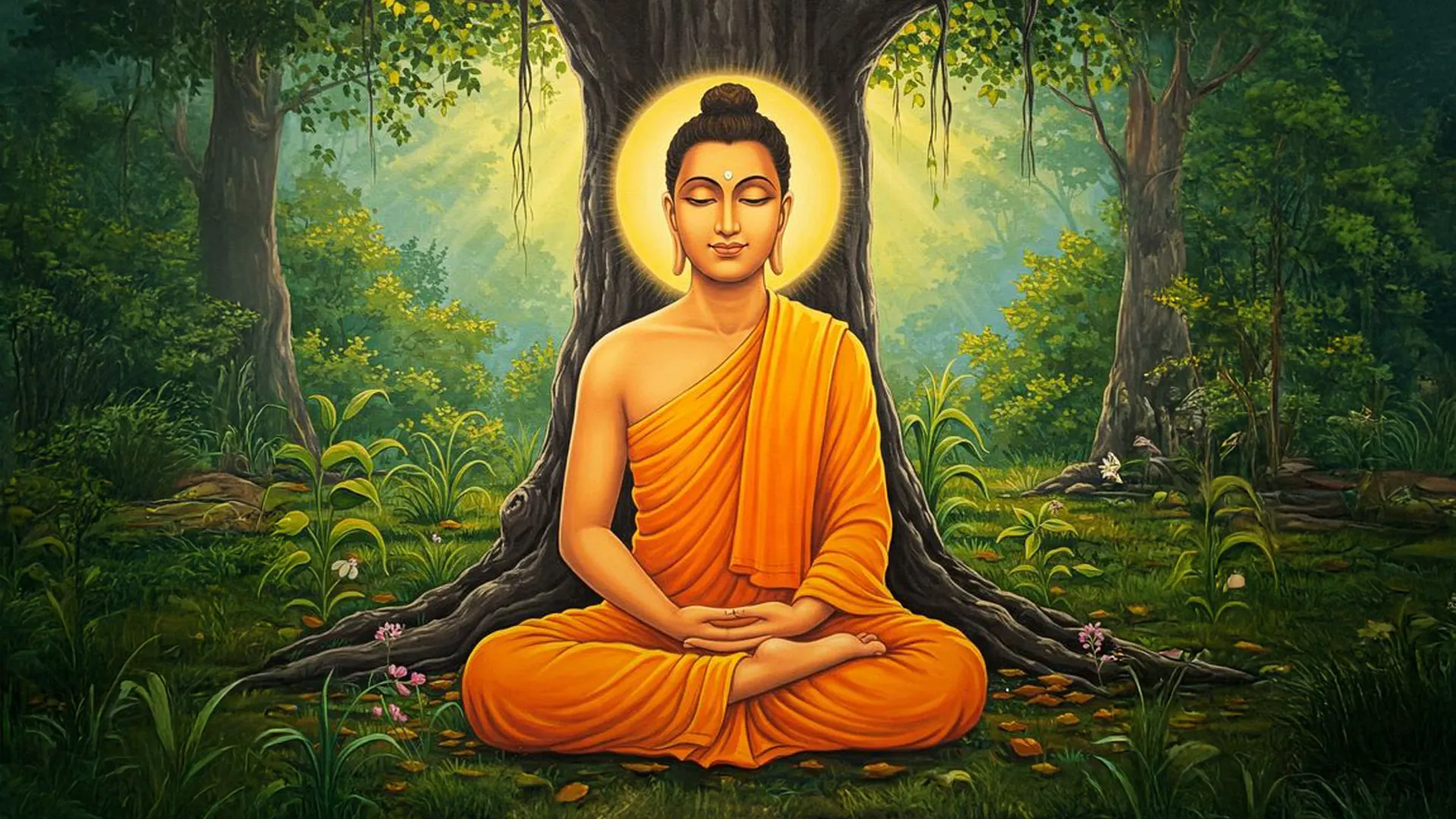
The Depth of True Wisdom
In the words of the Buddha, "Him I call a Brahmana whose knowledge is deep, who possesses wisdom, who knows the right way and the wrong, and has attained the highest end." This statement encapsulates the essence of what it means to be truly wise and knowledgeable. It invites us to reflect on the nature of wisdom, not merely as an accumulation of facts but as a profound understanding of life that guides our actions toward the ultimate truth. In a world often distracted by superficial knowledge, this teaching serves as a beacon, urging us to seek deeper insights and a more meaningful existence.
As we delve into this quote, we find that it speaks to the heart of spiritual attainment. The Buddha emphasizes that true wisdom is not just intellectual; it is experiential and transformative. It requires discernment—the ability to distinguish between right and wrong—and culminates in the realization of the highest end, which can be interpreted as enlightenment or liberation from suffering. This journey toward wisdom is not a solitary endeavor but a communal one, where the insights gained can uplift not only the individual but also those around them.
The image / the metaphor
The imagery in the Buddha's quote evokes a sense of depth and richness. The term "Brahmana" traditionally refers to a person of high spiritual standing, yet here it is redefined through the lens of knowledge and wisdom. The verbs "knows," "possesses," and "attained" suggest an active engagement with life and learning, indicating that wisdom is not a static state but a dynamic process. The felt sense of this quote is one of aspiration; it invites us to strive for a profound understanding that transcends mere academic knowledge.
In the speaker's tradition
Within the context of Buddhism, the concepts of dharma and prajna are essential to understanding the quote's implications. Dharma refers to the teachings and laws that govern the universe, while prajna signifies the wisdom that arises from understanding these truths. The Buddha's emphasis on deep knowledge aligns with the idea of kenosis, or self-emptying, where one must let go of preconceived notions to truly grasp the essence of reality. This process of letting go is crucial for attaining the highest end, as it opens the mind to the vastness of sunyata, or emptiness, which is central to Buddhist philosophy.
Furthermore, the Dhammapada, from which this quote is drawn, serves as a guide to ethical living and mental cultivation. It is filled with verses that encourage practitioners to cultivate wisdom and discernment. For instance, the text often contrasts the wise and the foolish, illustrating the consequences of ignorance versus the rewards of insight. This duality reinforces the importance of striving for a deeper understanding, as it is through wisdom that one can navigate the complexities of life and ultimately attain liberation.
Living the teaching
Consider a modern scenario where this teaching can be applied: a workplace conflict. Imagine two colleagues who disagree on a project direction. One approaches the situation with a surface-level understanding, focusing solely on winning the argument. In contrast, the other embodies the qualities of the Brahmana described by the Buddha. They listen deeply, seek to understand the underlying motivations of their colleague, and navigate the disagreement with wisdom and compassion. This approach not only resolves the conflict but also fosters a collaborative environment, illustrating how deep knowledge and discernment can transform interpersonal dynamics.
In a different context, think about a personal relationship that is strained due to misunderstandings. Applying the Buddha's teaching here means taking the time to reflect on one's own biases and assumptions. By cultivating awareness and empathy, one can engage in open dialogue, recognizing the difference between right and wrong not as a rigid dichotomy but as a spectrum of human experience. This practice of discernment and understanding can lead to healing and deeper connection, embodying the essence of wisdom that the Buddha extols.
A reflection
As we contemplate the Buddha's words, we are invited to ask ourselves: "What does it mean for me to attain deep knowledge and wisdom in my life?" This question encourages a personal exploration of our values, beliefs, and the ways we engage with the world. It challenges us to consider how we can cultivate a deeper understanding of ourselves and others, ultimately guiding us toward the highest end of our spiritual journey.




Join the BrightStar Community
Stay connected with daily inspiration, event announcements, and community wisdom