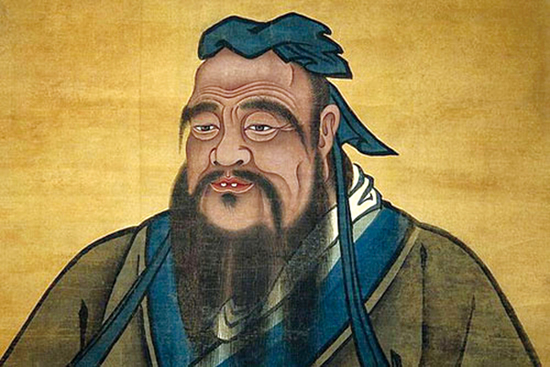
The Courage to Act: A Confucian Reflection
Confucius poignantly states, "To see what is right and not to do it is want of courage." This assertion invites us to consider the profound relationship between perception and action, emphasizing that recognizing moral clarity is only half the journey. The stakes are high; in a world rife with ethical dilemmas, the courage to act upon our convictions is essential for personal integrity and societal harmony. Without this courage, our insights remain dormant, and we risk becoming mere spectators in the unfolding narrative of our lives.
Delving deeper, we uncover the layers of meaning embedded in this quote. It challenges us to confront our own hesitations and fears, urging us to transform our understanding of what is right into tangible actions. This transformation is not merely a personal endeavor; it reverberates through our communities and influences the moral fabric of society. In essence, Confucius calls us to embody our values, suggesting that true wisdom is not just in knowing but in doing, thereby bridging the gap between thought and action.
The image / the metaphor
At its core, the quote evokes a vivid image of a person standing at a crossroads, fully aware of the path that leads to righteousness yet paralyzed by the fear of stepping forward. The verbs "see" and "do" create a dynamic tension between awareness and action, highlighting the struggle many face when confronted with moral choices. This imagery resonates deeply, as it reflects the internal conflict that often arises when we grapple with our ethical responsibilities.
Moreover, the metaphor extends beyond individual experience to encompass the collective human condition. It suggests that courage is not merely a personal trait but a communal necessity. When individuals fail to act on their understanding of what is right, the consequences ripple outward, affecting families, communities, and even nations. Thus, the act of courage becomes a shared responsibility, urging us to consider how our inaction can contribute to a larger moral failure.
In the speaker's tradition
Within the rich tapestry of Confucian thought, this quote resonates with the concept of "ren," often translated as humaneness or benevolence. Ren emphasizes the importance of moral character and the cultivation of virtues that promote social harmony. In this light, the courage to act upon one's understanding of rightness is not only a personal virtue but a societal imperative, fostering a culture where ethical behavior is the norm rather than the exception.
Furthermore, the Analects, where this quote is found, serves as a foundational text that encapsulates Confucius's teachings on morality and ethics. In a similar vein, the idea of "li," or proper conduct, complements the notion of courage by providing a framework for how one should act in various social contexts. Together, these concepts underscore the importance of aligning one's actions with moral insight, reinforcing the belief that true wisdom is manifested through courageous deeds.
Living the teaching
Consider a modern scenario where this teaching finds relevance: a workplace environment where an employee witnesses unethical practices. The individual may recognize the wrongness of the situation, yet fear of repercussions or a desire to maintain harmony may prevent them from speaking out. This internal struggle illustrates the essence of Confucius's teaching; the challenge lies not in knowing what is right but in having the courage to advocate for it, even at personal cost.
In a different context, think about relationships where one partner may recognize the need for open communication but hesitates to express their feelings due to fear of conflict. Here, the courage to act—by initiating a difficult conversation—can lead to deeper understanding and connection. This application of Confucian wisdom reminds us that courage is not solely about grand gestures; it often manifests in the quiet, everyday choices we make to uphold our values and foster authenticity in our interactions.
A reflection
As we reflect on Confucius's profound insight, we are invited to examine our own lives through the lens of courage and action. What instances can we identify where we have seen what is right but hesitated to act? In this contemplation, let us ask ourselves: How can we cultivate the courage to align our actions with our moral understanding, thereby contributing to a more just and compassionate world?




Join the BrightStar Community
Stay connected with daily inspiration, event announcements, and community wisdom