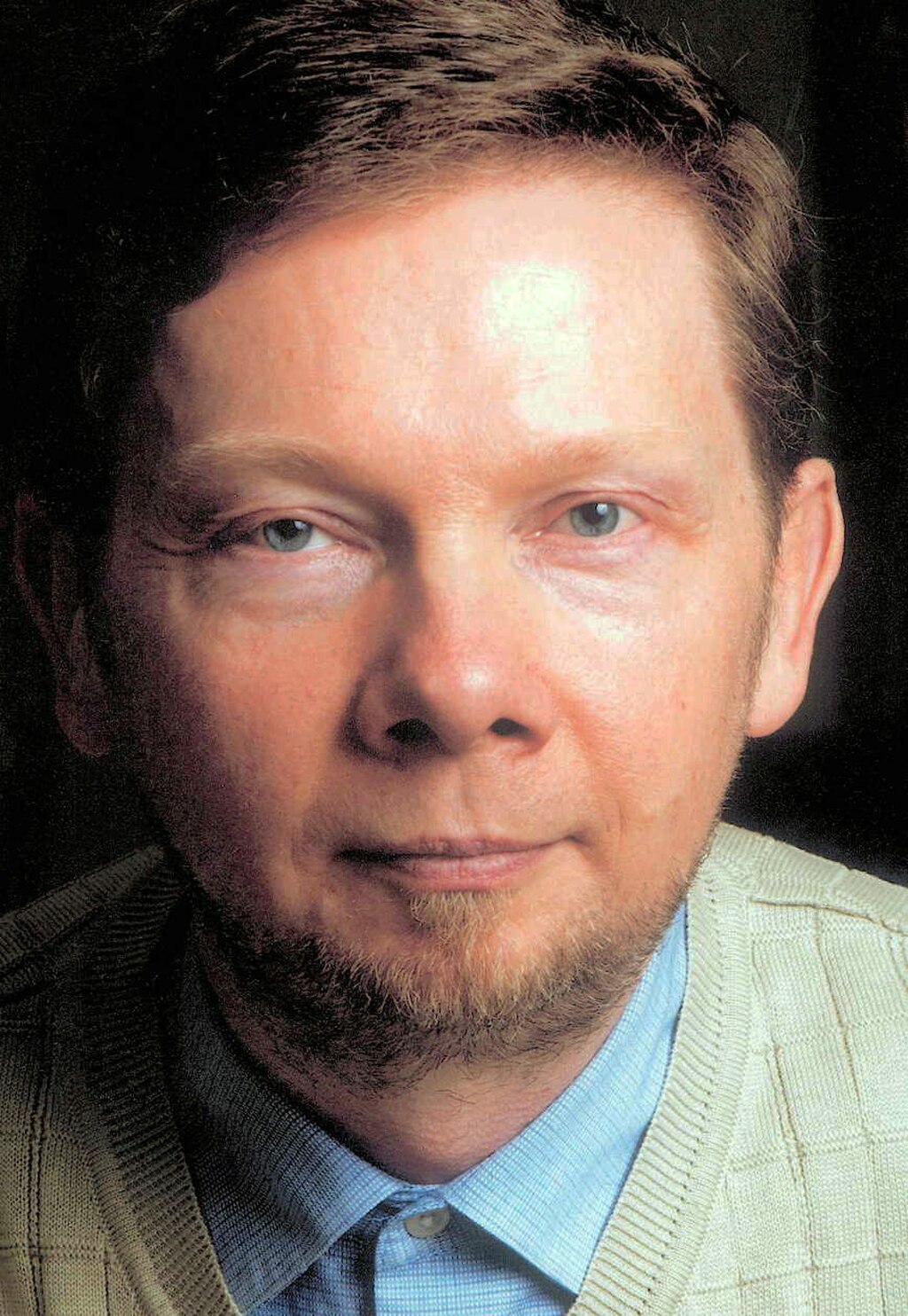
Awakening to the Essence of Being
The quote by Eckhart Tolle, "Become aware of being aware. Say or think 'I am' and add nothing to it," invites us to explore the profound depths of consciousness. It beckons us to recognize our own awareness as a fundamental aspect of existence, urging us to strip away the layers of identity and thought that often cloud our perception. This teaching is not merely philosophical; it is a transformative practice that can lead to a deeper understanding of our true nature and the essence of being itself.
In a world filled with distractions and incessant chatter, Tolle's words remind us of the importance of stillness and presence. By focusing on the simple affirmation of "I am," we are encouraged to connect with the essence of our being, free from the narratives and labels that typically define us. This practice of awareness is not just a mental exercise; it is an invitation to experience life more fully, to engage with the present moment, and to cultivate a sense of inner peace that transcends the chaos of daily existence.
The image / the metaphor
The imagery in Tolle's quote is striking in its simplicity. The act of "becoming aware of being aware" suggests a dual layer of consciousness, where one observes not just the thoughts and feelings that arise, but also the very act of observation itself. The phrase "I am" serves as a powerful anchor, a declaration of existence that is devoid of any additional qualifiers or judgments. This distilled essence of self invites a profound stillness, allowing us to experience the purity of being without the clutter of external influences.
In the speaker's tradition
Eckhart Tolle's teachings are deeply rooted in the non-dual tradition, which emphasizes the interconnectedness of all existence and the illusion of separateness. Concepts such as *sunyata* (emptiness) in Buddhism and *fana* (annihilation of the self) in Sufism resonate with Tolle's call to recognize the essence of being. In this context, the practice of awareness becomes a pathway to transcend the ego and experience the unity of consciousness that underlies all forms of life.
In his work, Tolle often draws upon the wisdom found in various spiritual texts, such as the *Tao Te Ching*, which speaks to the importance of simplicity and being present. The idea of "I am" echoes the teachings of the *Upanishads*, where the realization of the self as *Brahman* (the ultimate reality) is central. By aligning with this essence, we can cultivate a deeper understanding of our place in the cosmos and the interconnected web of existence.
Living the teaching
Consider a modern scenario where this teaching can be applied: imagine a busy day filled with meetings, deadlines, and distractions. In such moments, it is easy to become overwhelmed and lose sight of our inner calm. By taking a brief pause to affirm "I am," we can ground ourselves in the present, reconnecting with our essence and allowing the noise of the external world to fade away. This simple practice can transform our experience, enabling us to approach our tasks with clarity and focus.
In the realm of relationships, the teaching of awareness can also be profoundly impactful. During a disagreement with a loved one, instead of reacting impulsively, we can take a moment to center ourselves and acknowledge our shared humanity. By saying "I am," we remind ourselves of our intrinsic value beyond the conflict, fostering empathy and understanding. This practice not only deepens our connections but also cultivates a space for healing and reconciliation.
A reflection
As we contemplate Tolle's invitation to "become aware of being aware," we are left with a profound question to ponder: What does it mean for me to simply exist, free from the stories I tell myself? This inquiry invites us to explore the layers of our identity and the essence of our being, encouraging a journey inward that can lead to greater self-awareness and peace. In embracing this question, we open ourselves to the possibility of transformation and a deeper connection with the world around us.




Join the BrightStar Community
Stay connected with daily inspiration, event announcements, and community wisdom