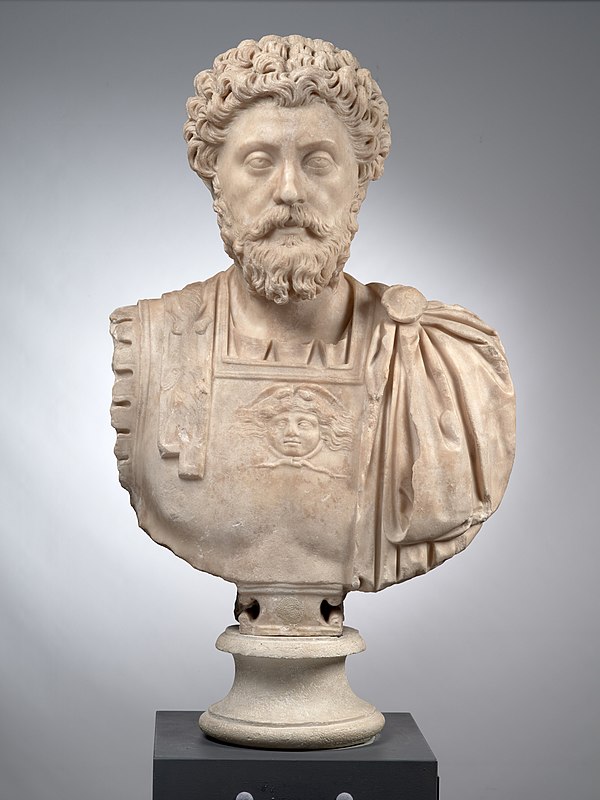
The Equanimity of Existence
In the profound words of Marcus Aurelius, "Death and life, success and failure, pain and pleasure, honor and dishonor, all these things equally happen to good men and bad." This statement encapsulates the essence of human experience, suggesting that the dualities we often cling to—success and failure, joy and sorrow—are not exclusive to any moral standing. The stakes of this realization are high; it invites us to cultivate a sense of acceptance and equanimity in the face of life's inevitable fluctuations, urging us to transcend the superficial judgments we often impose on ourselves and others.
As we delve deeper into this quote, we uncover a profound invitation to embrace the full spectrum of existence. Aurelius, a Stoic philosopher and Roman emperor, reminds us that life is a tapestry woven with contrasting threads. The acknowledgment that both good and bad fortune befall everyone serves as a powerful equalizer, prompting us to reflect on our responses to life's vicissitudes. This perspective not only fosters resilience but also encourages a compassionate understanding of the shared human condition, where suffering and joy intermingle without regard for virtue or vice.
The image / the metaphor
At first glance, the imagery in Aurelius's quote evokes a sense of balance, where the scales of existence are tipped neither in favor of the virtuous nor the wicked. The verbs—"happen," "equally," "all these things"—convey a sense of inevitability and universality. Life's experiences are not rewards or punishments meted out based on moral character; rather, they are inherent aspects of the human journey. This realization can be both liberating and daunting, as it strips away the illusion of control we often cling to in our pursuit of happiness and success.
Diving deeper into the metaphor, we see that Aurelius is not merely cataloging the dualities of existence; he is inviting us to recognize the transient nature of all experiences. The juxtaposition of life and death, pleasure and pain, suggests that these states are not oppositional but rather interconnected. Just as day follows night, so too do joy and sorrow coexist, reminding us that our emotional responses are often fleeting. This understanding encourages a mindful approach to life, where we can appreciate moments of joy without clinging to them and endure moments of pain without despair.
In the speaker's tradition
Marcus Aurelius's insights are deeply rooted in Stoic philosophy, which emphasizes the importance of accepting what we cannot control while focusing on our responses to external events. This aligns with the concept of *apatheia*, a state of being free from destructive emotions, allowing us to maintain equanimity amidst life's challenges. In this context, Aurelius's quote serves as a reminder that both fortune and misfortune are part of the natural order, echoing the Buddhist notion of *sunyata*, or emptiness, which teaches us that all phenomena are transient and interconnected.
Moreover, Aurelius's reflections resonate with the Stoic practice of *premeditatio malorum*, or the premeditation of evils, where one anticipates potential hardships to cultivate resilience. This practice encourages us to prepare mentally for the inevitable ups and downs of life, fostering a sense of acceptance that aligns with Aurelius's assertion that both good and bad befall all individuals. In this light, his teachings invite us to embrace the full range of human experience, cultivating a profound sense of inner peace regardless of external circumstances.
Living the teaching
Consider a modern scenario where this teaching might resonate: a professional facing a sudden job loss. The initial reaction may be one of despair, feeling that this misfortune is a personal failure. However, by reflecting on Aurelius's wisdom, one can recognize that job loss is a common experience, affecting both the diligent and the negligent alike. This understanding can transform the experience from one of shame to an opportunity for growth, prompting the individual to reassess their skills, explore new paths, and ultimately emerge stronger and more resilient.
In a different context, imagine a relationship strained by misunderstandings and conflicts. Here, Aurelius's quote serves as a reminder that both honor and dishonor can arise in any partnership, regardless of the intentions of those involved. By embracing this perspective, individuals can approach their relationships with greater compassion, recognizing that both partners are navigating their own struggles. This awareness fosters a space for dialogue and healing, allowing love and understanding to flourish even amidst challenges.
A reflection
As we contemplate the wisdom of Marcus Aurelius, we are invited to reflect on our own lives: How do we respond to the dualities of existence? Are we able to embrace both joy and sorrow, success and failure, with equanimity? In a world that often encourages us to seek only the positive, Aurelius's teachings challenge us to find peace in the acceptance of life's inherent uncertainties. Consider this question: What would it look like to approach your current challenges with the understanding that they are part of a larger tapestry of human experience?




Join the BrightStar Community
Stay connected with daily inspiration, event announcements, and community wisdom