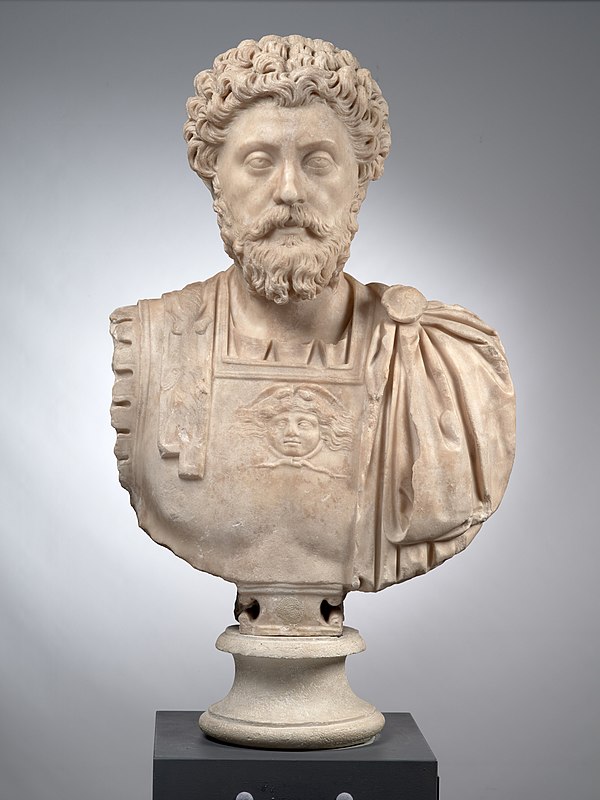
The Alchemy of Thought: Crafting Our Lives
Marcus Aurelius, the Stoic philosopher and Roman emperor, profoundly asserts, "Each man's life is what his thoughts make of it." This statement encapsulates the essence of human experience, suggesting that our internal landscape shapes our external reality. The stakes are high; understanding this relationship between thought and life can empower us to take control of our destinies, transforming suffering into resilience and chaos into clarity. In a world often dominated by external circumstances, Aurelius invites us to turn inward, to recognize the profound influence of our thoughts on our lived experience.
Delving deeper, we find that Aurelius's insight is not merely a call for positive thinking; it is an invitation to engage in a rigorous examination of our mental habits. Our thoughts, often automatic and unexamined, can dictate our emotional responses and, consequently, our actions. By cultivating awareness of our thought patterns, we can begin to discern which thoughts serve us and which ones hinder our growth. This process of introspection and refinement is at the heart of Stoic practice, urging us to take responsibility for our mental states and, by extension, our lives.
The image / the metaphor
At its core, Aurelius's quote employs a powerful metaphor: the idea that life is a canvas painted by our thoughts. The verbs "is" and "make" suggest an active, ongoing process, where thoughts are not passive reflections but dynamic forces that shape our reality. This imagery evokes a sense of agency; we are not mere spectators in our lives but artists wielding the brush of our minds. The felt sense of this metaphor is one of empowerment, as it reminds us that we possess the ability to influence our experiences through the lens of our thoughts.
Going deeper, we can see that this metaphor also speaks to the transformative potential of our inner dialogue. Just as an artist selects colors and strokes to create a desired effect, we can choose our thoughts with intention. This choice can lead to a life that reflects our values and aspirations rather than one dictated by external circumstances or negative self-perceptions. In this way, Aurelius encourages us to become conscious creators of our own narratives, shaping our lives with the clarity and purpose that arise from mindful thought.
In the speaker's tradition
Marcus Aurelius's teachings are deeply rooted in the Stoic tradition, which emphasizes the importance of rationality, self-control, and virtue. Central to Stoicism is the concept of logos, the rational principle that governs the universe and human thought. By aligning our thoughts with logos, we cultivate a sense of harmony with the world around us. This alignment is akin to the Buddhist concept of sunyata, or emptiness, which invites us to recognize the impermanent nature of our thoughts and attachments, allowing us to respond to life with equanimity rather than reactivity.
In his work, Aurelius often reflects on the transient nature of life and the importance of focusing on what is within our control. This resonates with the Stoic practice of dharma in Eastern philosophies, where one’s duty and right action are determined by the alignment of thoughts and actions with a greater cosmic order. In this light, Aurelius's assertion becomes a call to cultivate a disciplined mind, one that recognizes the power of thought as both a tool for personal growth and a means of contributing to the greater good.
Living the teaching
Consider a modern scenario where this teaching can be applied: a professional facing a challenging work environment. The stress of deadlines, interpersonal conflicts, and performance pressures can easily lead to a negative mindset. However, by consciously shifting thoughts from a focus on external challenges to an emphasis on personal growth and resilience, the individual can transform their experience. Instead of feeling overwhelmed, they might begin to see opportunities for learning and development, thereby altering their emotional response and overall experience in the workplace.
Another application of Aurelius's teaching can be found in personal relationships. Imagine a situation where misunderstandings arise between friends or partners. The initial reaction might be one of frustration or blame, fueled by negative thoughts about the other person’s intentions. However, by recognizing that these thoughts are not absolute truths but rather interpretations, one can choose to approach the situation with empathy and understanding. This shift in perspective not only fosters healthier communication but also strengthens the bond between individuals, illustrating how our thoughts can shape the quality of our relationships.
A reflection
As we contemplate Marcus Aurelius's profound assertion, we are invited to reflect on the nature of our own thoughts and their impact on our lives. What narratives do we tell ourselves, and how do they shape our experiences? In moments of difficulty, can we pause to examine our thoughts and choose a more constructive perspective? This inquiry not only deepens our understanding of ourselves but also empowers us to craft a life that resonates with our true values and aspirations.




Join the BrightStar Community
Stay connected with daily inspiration, event announcements, and community wisdom