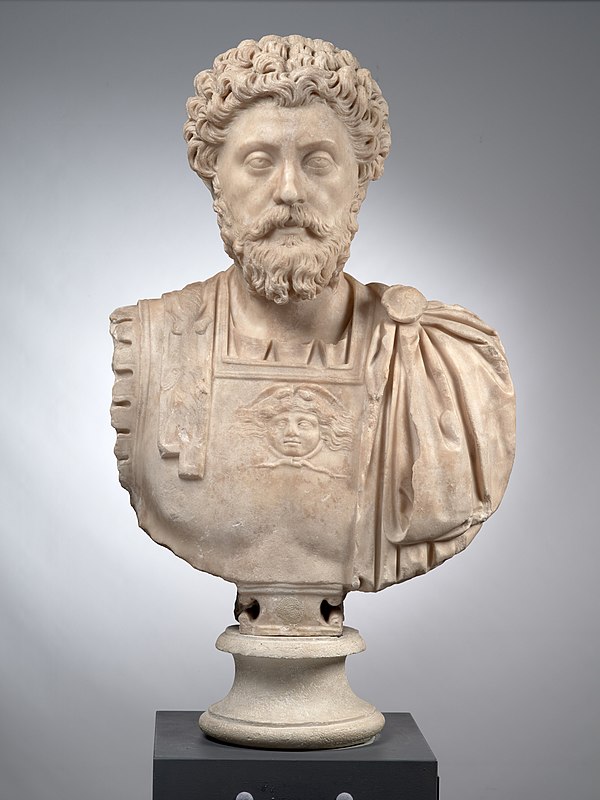
Embracing Life: The Courage to Begin
Marcus Aurelius reminds us that the true fear lies not in death itself, but in the failure to truly live. This profound insight challenges us to confront our own existence and the choices we make each day. In a world often preoccupied with the inevitability of death, Aurelius invites us to shift our focus toward the richness of life, urging us to embrace our potential and the experiences that define our humanity. The stakes are high: to live fully is to engage with the world, to cultivate relationships, and to pursue our passions, all while acknowledging the transient nature of our time here.
In this context, Aurelius's words resonate deeply with the universal human experience. The fear of death can paralyze us, leading to a life half-lived, filled with regrets and unfulfilled dreams. By reframing our perspective, we are encouraged to act with courage and intention, to seize the moments that matter. This call to action is not merely about physical existence but about the quality of our lives, the depth of our connections, and the authenticity of our choices. In essence, Aurelius beckons us to awaken from the slumber of complacency and to engage wholeheartedly with the gift of life.
The image / the metaphor
The imagery in Aurelius's quote is striking and evocative. The juxtaposition of death and life serves as a powerful metaphor for the human condition. Death, often viewed as the ultimate end, is presented here as a natural part of existence, while the act of truly living is portrayed as a courageous endeavor. The verbs "fear" and "begin" highlight the emotional landscape of our choices; to fear is to be immobilized, while to begin is to embrace the unknown with open arms. This dynamic creates a felt sense of urgency, urging us to take action rather than remain passive observers of our own lives.
Diving deeper into the metaphor, we can see that Aurelius is not merely speaking about the physical act of living but about the essence of existence itself. To "begin to live" suggests a conscious choice to engage with our surroundings, to pursue our passions, and to connect with others. It implies a journey of self-discovery, where each step taken is a testament to our willingness to confront our fears and uncertainties. This metaphorical framework invites us to consider what it truly means to live, challenging us to reflect on our own lives and the choices we make each day.
In the speaker's tradition
Marcus Aurelius stands as a central figure in Stoicism, a philosophical tradition that emphasizes rationality, virtue, and the acceptance of fate. Within this framework, the concepts of *ataraxia* (tranquility) and *eudaimonia* (flourishing) are paramount. Aurelius's assertion that we should fear not death but the failure to live aligns with the Stoic belief that a life well-lived is one marked by virtue and purpose. This perspective encourages us to cultivate resilience in the face of adversity, to embrace our responsibilities, and to act in accordance with our values.
In his *Meditations*, Aurelius often reflects on the transient nature of life, echoing sentiments found in other Stoic texts, such as those by Epictetus and Seneca. For instance, Epictetus teaches that we should focus on what is within our control and accept what is not, a principle that resonates with Aurelius's call to live fully. By recognizing the impermanence of life, we are empowered to make choices that align with our true selves, ultimately leading to a more meaningful existence. This Stoic wisdom serves as a guiding light, illuminating the path toward a life rich in purpose and authenticity.
Living the teaching
Consider a modern scenario where this teaching can be applied: a person stuck in a monotonous job, feeling unfulfilled and fearful of making a change. The fear of leaving the familiar for the unknown can be paralyzing, yet Aurelius's words serve as a powerful reminder that the real danger lies in remaining stagnant. By choosing to explore new opportunities, whether through pursuing a passion project or seeking a different career path, this individual can begin to reclaim their life. The act of stepping into the unknown becomes a courageous declaration of their desire to live fully, embracing the possibility of failure as part of the journey.
Another application of Aurelius's teaching can be found in relationships. Imagine someone who hesitates to express their feelings to a loved one, fearing rejection or vulnerability. This hesitation can lead to a life devoid of deep connections, filled with unspoken words and missed opportunities. By choosing to communicate openly and authentically, they embody the essence of living fully, risking discomfort for the sake of genuine connection. In this way, Aurelius's wisdom encourages us to confront our fears in all aspects of life, fostering a deeper sense of intimacy and understanding with ourselves and others.
A reflection
As we contemplate Marcus Aurelius's profound insight, we are invited to reflect on our own lives and the choices we make. Are there areas where we are allowing fear to dictate our actions, preventing us from fully engaging with the world around us? In what ways can we begin to live more authentically, embracing the courage to pursue our passions and connect deeply with others? These questions serve as a gentle nudge, urging us to examine our lives and consider how we might step into the fullness of our existence, rather than merely existing in the shadows of our fears.


Join the BrightStar Community
Stay connected with daily inspiration, event announcements, and community wisdom