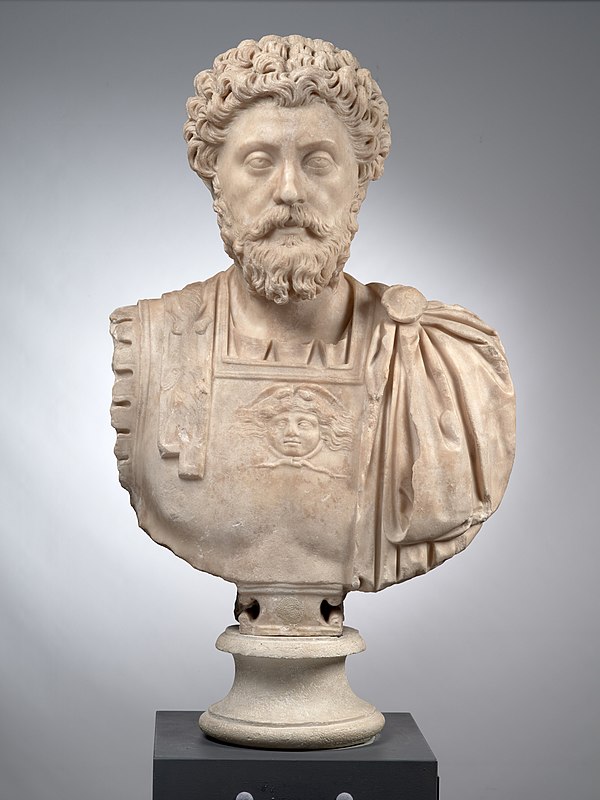
The Inner Landscape of Happiness
Marcus Aurelius, the Stoic philosopher and Roman Emperor, profoundly asserts that "Very little is needed to make a happy life; it is all within yourself, in your way of thinking." This statement invites us to explore the essence of happiness, suggesting that it is not found in external circumstances or material possessions, but rather in our internal mindset. The stakes of this realization are high; in a world often preoccupied with the pursuit of external validation and success, Aurelius challenges us to shift our focus inward, emphasizing the power of our thoughts and perceptions in shaping our experience of life.
In a society that frequently equates happiness with accumulation—be it wealth, status, or relationships—Aurelius's wisdom serves as a gentle reminder of the simplicity inherent in true contentment. By asserting that happiness is a matter of perspective, he encourages us to cultivate a mindset that embraces gratitude, acceptance, and resilience. This perspective not only liberates us from the relentless chase for external approval but also empowers us to find joy in the present moment, regardless of our circumstances.
The image / the metaphor
At the heart of Aurelius's quote lies a powerful metaphor: happiness as an internal state rather than an external achievement. The phrase "very little is needed" evokes a sense of simplicity, suggesting that the complexities of life can often obscure the fundamental truths about our well-being. The choice of words like "within yourself" emphasizes the intimate relationship between our thoughts and our emotional state, inviting us to look inward for the sources of our happiness rather than outward.
Diving deeper into this metaphor, we can see that Aurelius is not merely advocating for a passive acceptance of life’s circumstances but rather a proactive engagement with our thoughts. The "way of thinking" he refers to is an active process of reflection and choice, where we can train our minds to focus on what is essential and meaningful. This internal landscape, shaped by our perceptions and attitudes, becomes the fertile ground from which happiness can grow, independent of external validation.
In the speaker's tradition
Marcus Aurelius's insights are deeply rooted in the Stoic tradition, which emphasizes the importance of virtue, reason, and self-control in the pursuit of a good life. Central to Stoicism is the concept of 'apatheia,' or the ability to maintain equanimity in the face of life's challenges. This aligns closely with the idea that happiness is a product of our internal state rather than external circumstances. In this light, Aurelius's assertion resonates with the Buddhist concept of 'sunyata,' or emptiness, which teaches that our attachments and desires often cloud our perception of reality and hinder our ability to experience true contentment.
Moreover, Aurelius's reflections in "Meditations" echo the teachings found in other Stoic texts, such as those of Epictetus, who famously stated that "it's not what happens to you, but how you react to it that matters." This shared emphasis on the power of perception and response underscores a fundamental tenet of Stoicism: that our happiness is largely determined by our inner life and the choices we make about how to interpret our experiences.
Living the teaching
Consider a modern scenario where this teaching might resonate: a person facing job loss. In the immediate aftermath, feelings of despair and inadequacy may arise, driven by societal expectations of success. However, by embracing Aurelius's wisdom, this individual can shift their focus inward, recognizing that their worth is not defined by their job title. Instead, they can cultivate a mindset of resilience, viewing this challenge as an opportunity for growth and self-discovery, ultimately leading to a more profound sense of happiness that is not contingent upon external validation.
Another application of this teaching can be found in relationships, particularly during conflicts. When disagreements arise, it is easy to fall into a cycle of blame and resentment. However, by adopting Aurelius's perspective, one can choose to approach the situation with empathy and understanding, recognizing that their happiness does not depend on the other person's actions but rather on their own responses. This shift in mindset fosters healthier interactions and deeper connections, illustrating how the cultivation of inner peace can transform our external relationships.
A reflection
As we contemplate Marcus Aurelius's profound assertion, we are invited to reflect on the nature of our own happiness. What thoughts or beliefs might be obstructing our ability to experience joy in the present moment? In what ways can we cultivate a mindset that embraces simplicity and gratitude, allowing us to recognize that the key to a happy life lies within ourselves? This inquiry encourages us to explore the depths of our inner landscape, revealing the transformative power of our thoughts in shaping our experience of life.


Join the BrightStar Community
Stay connected with daily inspiration, event announcements, and community wisdom