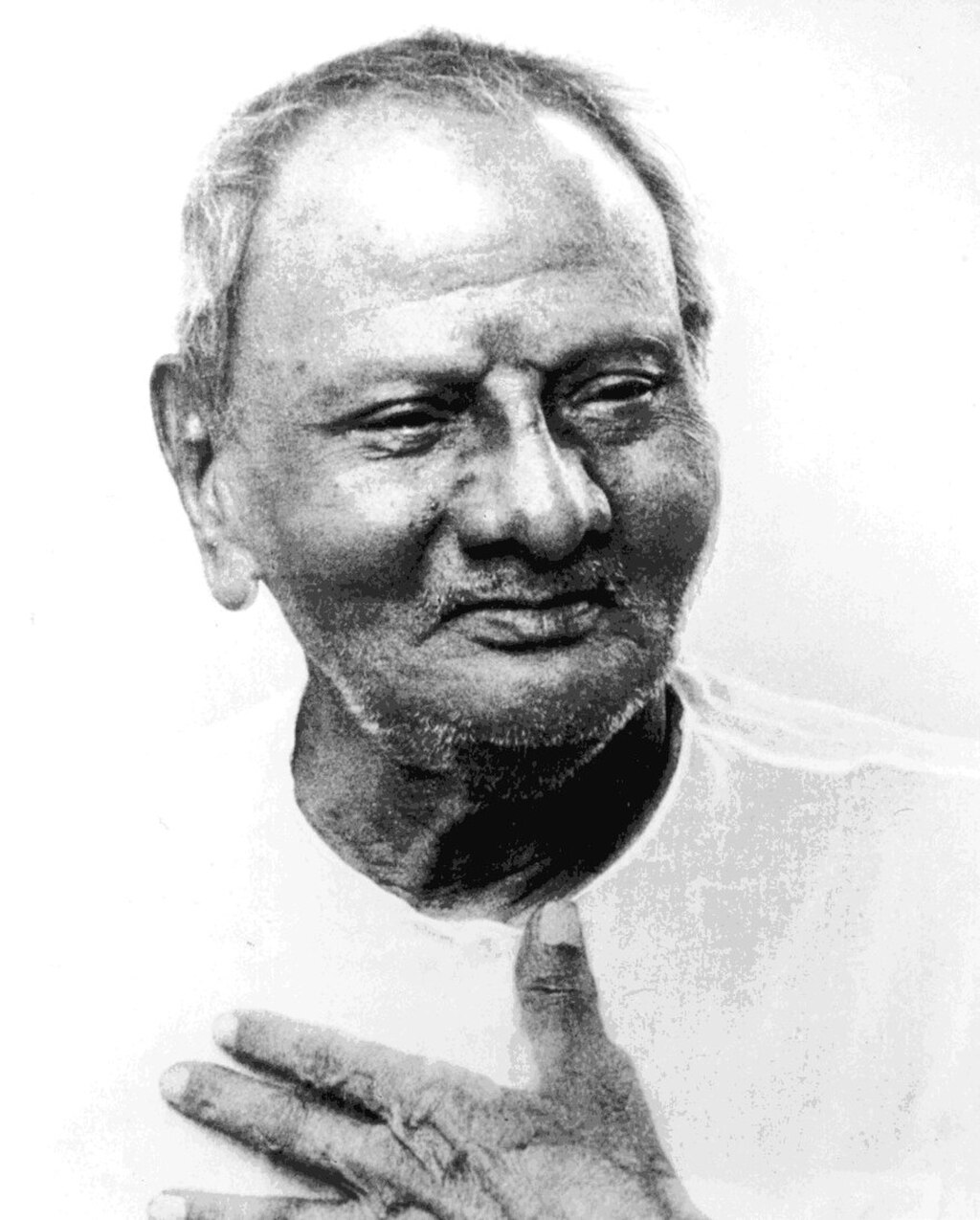
Beyond Awareness: The Journey to the Absolute
Nisargadatta Maharaj's profound assertion, "Beyond awareness lies the absolute," invites us to explore the depths of our consciousness and the nature of existence itself. This statement serves as a compass for those seeking to transcend the limitations of ordinary awareness and touch the essence of reality. In a world often dominated by distractions and superficial understandings, this teaching beckons us to delve deeper, revealing the transformative potential that lies in recognizing the absolute beyond our immediate perceptions.
To grasp the significance of this quote, we must first consider what it means to be aware. Awareness, in its most basic form, is the recognition of thoughts, feelings, and sensations as they arise. However, Maharaj suggests that this awareness is merely a gateway, a preliminary stage on the path to a more profound understanding of existence. The absolute, as he describes it, represents a state of being that transcends the dualities and limitations of our everyday experiences, urging us to seek a deeper connection with the essence of life itself.
The image / the metaphor
The imagery in Maharaj's quote evokes a journey—a movement from the surface of a vast ocean to its unfathomable depths. Awareness can be likened to the waves that dance upon the water, visible and dynamic, yet ultimately transient. The absolute, in contrast, is the stillness of the ocean's depths, a realm untouched by the turbulence of thought and emotion. This metaphor invites us to consider the nature of our own awareness: are we merely skimming the surface, or are we willing to dive deeper into the stillness that lies beneath?
Delving further into this metaphor, we can see that the act of moving beyond awareness requires courage and commitment. It is not merely a passive observation but an active engagement with the essence of our being. Just as a diver must relinquish the safety of the surface to explore the wonders below, we too must be willing to let go of our familiar patterns of thought and perception. This journey is not without its challenges, as it demands a surrendering of the ego and a willingness to confront the unknown.
In the speaker's tradition
Nisargadatta Maharaj's teachings are deeply rooted in the non-dual tradition, which emphasizes the interconnectedness of all existence and the illusion of separateness. Concepts such as *advaita* (non-duality) and *sunyata* (emptiness) resonate with the essence of his message. In this context, the absolute represents the ultimate reality that transcends the dualistic nature of our perceptions, inviting us to recognize our inherent unity with all that is. This understanding aligns with the notion of *kenosis*, or self-emptying, where one relinquishes the ego to experience the fullness of existence.
In his seminal work, "I Am That," Maharaj articulates the idea that the self is not confined to the individual ego but is part of a greater whole. This perspective echoes the teachings of other non-dual sages, such as Ramana Maharshi, who emphasized the importance of self-inquiry in realizing the true nature of the self. By engaging in this inquiry, we are invited to peel away the layers of identification that obscure our understanding of the absolute, ultimately leading us to a direct experience of our true nature.
Living the teaching
Consider a modern scenario where the teaching of moving beyond awareness can be applied: a moment of frustration in a busy workplace. In the heat of the moment, one might become consumed by thoughts of inadequacy or anger, identifying with these emotions as part of their reality. However, by recognizing that these feelings are transient and that awareness itself is a tool for observation, one can step back and access a deeper sense of calm. This shift allows for a more constructive response, transforming a potentially negative experience into an opportunity for growth and understanding.
In the realm of relationships, the teaching of transcending awareness can also be profoundly impactful. Imagine a disagreement with a loved one, where emotions run high and misunderstandings abound. By practicing the art of awareness—observing one's thoughts and feelings without attachment—individuals can create space for empathy and understanding. This practice not only fosters deeper connections but also encourages a recognition of the absolute love that underlies all relationships, transcending the temporary conflicts that may arise.
A reflection
As we contemplate Nisargadatta Maharaj's invitation to look beyond awareness, we are left with a profound question: What lies beneath the surface of our own awareness, waiting to be discovered? This inquiry invites us to engage in a contemplative practice, encouraging us to explore the depths of our being and the interconnectedness of all existence. In this exploration, we may find that the absolute is not a distant goal but an ever-present reality, accessible through the quieting of the mind and the opening of the heart.




Join the BrightStar Community
Stay connected with daily inspiration, event announcements, and community wisdom