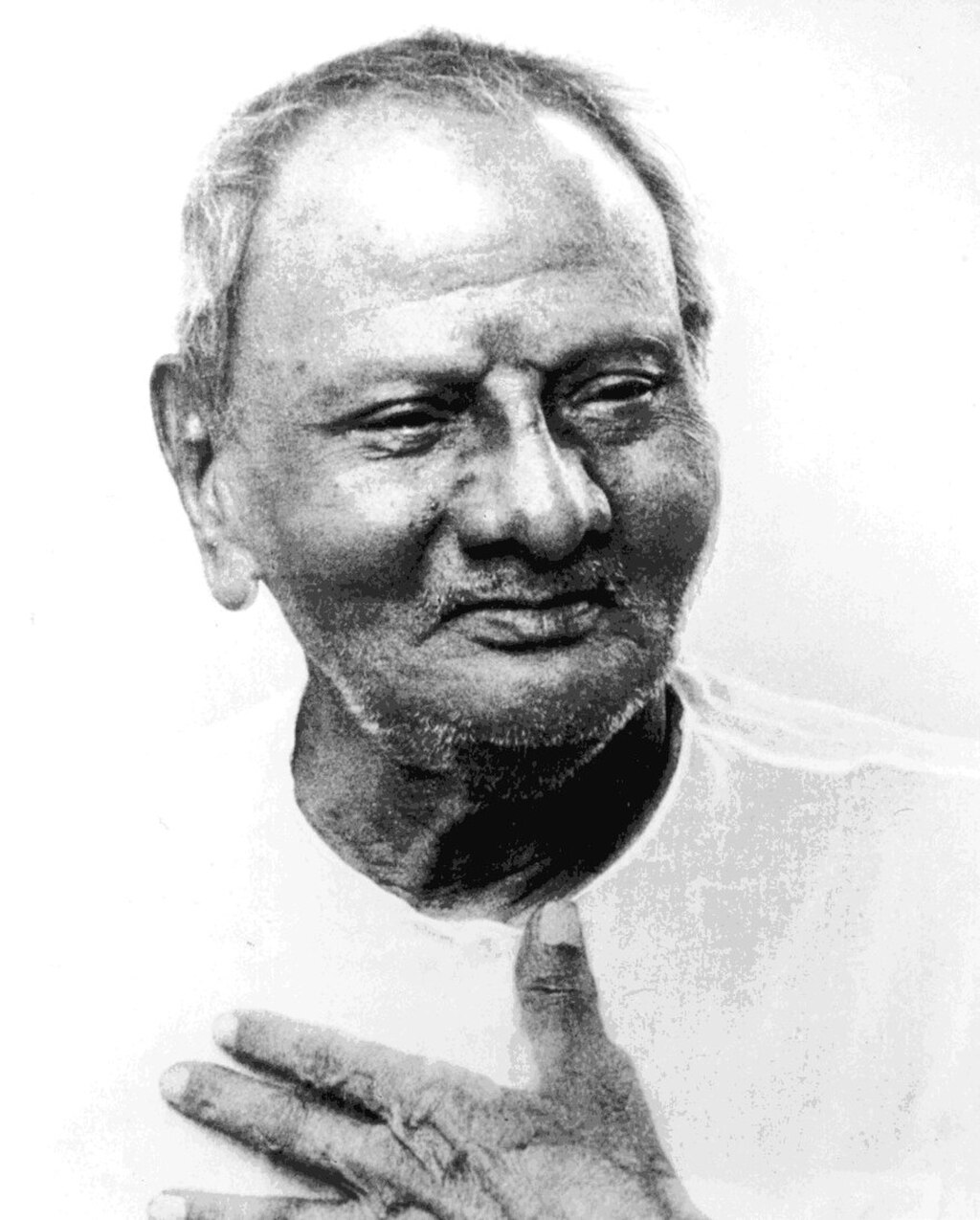
The Doorway to the Eternal: Embracing the 'I Am'
Nisargadatta Maharaj's profound assertion, "The 'I am' is the doorway to the eternal," invites us to explore the essence of our being beyond the transient identities we often cling to. This statement serves as a pivotal reminder that our true nature transcends the ephemeral experiences of life, urging us to recognize the deeper reality that lies within. Understanding this concept is not merely an intellectual exercise; it is a transformative journey that can lead to profound peace and liberation.
In a world that often emphasizes external validation and material success, the invitation to turn inward and contemplate the 'I am' can feel both daunting and liberating. Maharaj's words challenge us to confront the layers of conditioning that obscure our true selves. By recognizing the 'I am' as a gateway to the eternal, we are encouraged to embark on a path of self-inquiry, ultimately leading us to a state of unity with the cosmos and a deeper understanding of our place within it.
The image / the metaphor
The imagery of a "doorway" conjures a sense of transition and possibility. A doorway is not merely an entrance; it symbolizes a threshold between two realms: the known and the unknown, the finite and the infinite. The verb "is" in Maharaj's quote asserts a present reality, suggesting that the 'I am' is not a distant goal but an immediate experience available to us. This metaphor invites us to step through the doorway of our own consciousness, where the eternal awaits, urging us to leave behind the distractions of the mind.
Diving deeper into this metaphor, we can see that the 'I am' represents the essence of our existence, a pure awareness that is often overshadowed by the complexities of our thoughts and emotions. The act of recognizing the 'I am' as a doorway implies an active engagement with our inner selves, a willingness to explore the depths of our being. This exploration is not merely about understanding who we are but about experiencing the profound interconnectedness of all life, where the individual self dissolves into the universal consciousness.
In the speaker's tradition
Nisargadatta Maharaj's teachings are rooted in the non-dual tradition, which emphasizes the unity of all existence and the illusory nature of separateness. Concepts such as dharma, or the inherent nature of reality, and sunyata, the emptiness that allows for the fullness of being, resonate deeply with the idea of the 'I am' as a doorway. In this context, the 'I am' serves as a bridge to understanding the nature of reality, where the individual self is seen as a manifestation of the universal consciousness.
In his seminal work, "I Am That," Maharaj articulates the importance of self-inquiry and the recognition of the 'I am' as a means to transcend the limitations of the ego. This aligns with the teachings of other non-dual philosophers, such as Ramana Maharshi, who emphasized the practice of self-inquiry as a path to liberation. Both teachers guide us toward the realization that our true nature is not confined to our thoughts or identities but is an expansive awareness that connects us to the eternal.
Living the teaching
Consider a modern scenario where the teaching of the 'I am' can be applied: a person grappling with anxiety about their future. In moments of overwhelming worry, they can pause and turn their attention inward, asking themselves, "Who am I beyond these thoughts?" By anchoring themselves in the awareness of the 'I am,' they can find solace in the present moment, recognizing that their essence is not defined by external circumstances but by a deeper, unchanging reality.
In relationships, the teaching of the 'I am' can also illuminate our interactions with others. When faced with conflict, one might reflect on their own identity and the roles they play. By recognizing the 'I am' in themselves and in their partner, they can approach the situation with compassion and understanding, transcending the ego-driven need to be right. This shift in perspective fosters deeper connections and allows for healing, as both individuals acknowledge their shared essence beyond the surface-level disagreements.
A reflection
As we contemplate Maharaj's assertion that "the 'I am' is the doorway to the eternal," we are invited to reflect on our own experiences of self-awareness. What does it mean for you to recognize the 'I am' in your daily life? In what ways can you cultivate a deeper connection to this awareness, allowing it to guide you toward a more profound understanding of your existence and your relationship with the world around you?




Join the BrightStar Community
Stay connected with daily inspiration, event announcements, and community wisdom