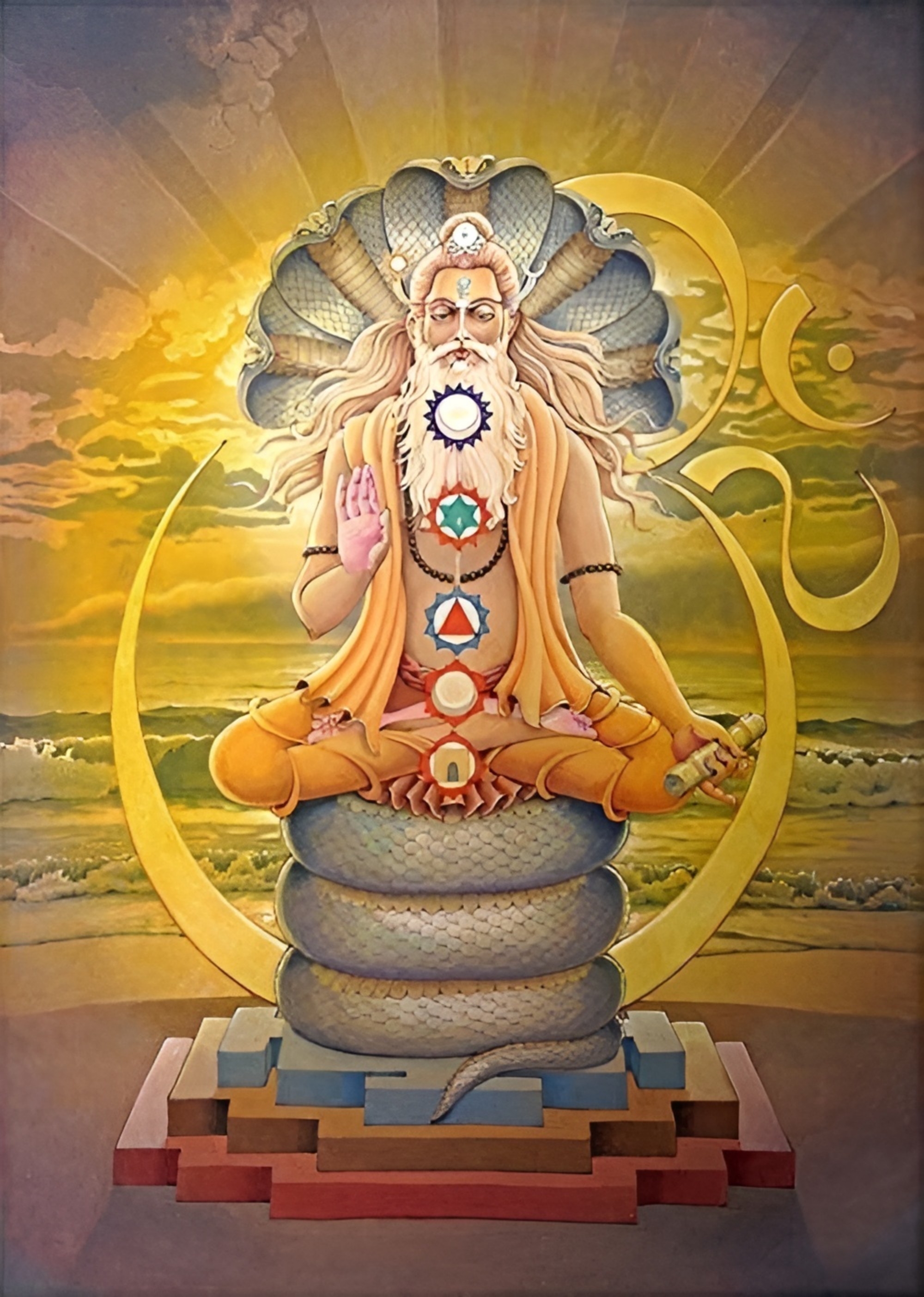
The Undisturbed Flow: A Journey into Samadhi
Patanjali's assertion that "by undisturbed flow of consciousness on a single object, samadhi follows" invites us to explore the profound depths of focused awareness. In essence, he suggests that the attainment of samadhi, a state of deep meditative absorption, is contingent upon our ability to maintain an unwavering focus on a singular object of contemplation. This teaching holds significant implications for our spiritual practice, as it emphasizes the necessity of cultivating a steady and undistracted mind in our pursuit of higher states of consciousness.
As we delve deeper into this quote, we recognize that the "undisturbed flow of consciousness" is not merely a passive state; it is an active engagement with the present moment. This flow requires discipline, intention, and a willingness to let go of the myriad distractions that often cloud our minds. In a world filled with constant stimuli and competing demands for our attention, Patanjali's wisdom serves as a gentle reminder of the power of focused awareness in achieving a profound connection with our inner selves and the universe around us.
The image / the metaphor
The imagery in Patanjali's quote evokes a river flowing steadily towards a single destination. The "undisturbed flow of consciousness" suggests a tranquil stream, unimpeded by rocks or debris, moving effortlessly towards the ocean of samadhi. The choice of the word "undisturbed" highlights the importance of maintaining a calm and centered mind, free from the turbulence of thoughts and distractions. This metaphor encapsulates the essence of meditation, where the practitioner learns to navigate the currents of their own mind with grace and intention.
Diving deeper into this metaphor, we can envision the object of focus as a guiding star, illuminating the path towards spiritual awakening. Just as a sailor relies on the North Star to navigate the vastness of the ocean, the practitioner must anchor their consciousness to a single point of concentration. This steadfastness not only fosters clarity but also cultivates a sense of purpose and direction in our spiritual journey. In this way, the flow of consciousness becomes a sacred dance, harmonizing the mind, body, and spirit in pursuit of the ultimate goal of samadhi.
In the speaker's tradition
Patanjali's teachings are rooted in the ancient tradition of yoga, which encompasses a holistic approach to self-realization and spiritual growth. Central to this tradition is the concept of dharma, or one's rightful path, which guides individuals towards their true nature. The practice of samadhi is intricately linked to the principles of kenosis, or self-emptying, as well as the notion of sunyata, or emptiness, found in Buddhist philosophy. By surrendering the distractions of the ego and embracing a singular focus, practitioners can experience the profound stillness that leads to enlightenment.
In the Yoga Sutras, Patanjali elaborates on the stages of meditation, emphasizing the importance of concentration (dharana) as a precursor to the experience of samadhi. This progression mirrors the teachings found in other spiritual texts, such as the Bhagavad Gita, where the practice of devotion (bhakti) is highlighted as a means to attain union with the divine. Both texts underscore the necessity of unwavering focus and dedication in the pursuit of spiritual awakening, reinforcing Patanjali's assertion that a steady flow of consciousness is essential for reaching the depths of samadhi.
Living the teaching
Consider a modern scenario where this teaching can be applied: a busy professional striving to balance work and personal life. Amidst the chaos of deadlines and responsibilities, the individual may find themselves overwhelmed, their mind scattered across numerous tasks. By consciously choosing to focus on a single task—be it a project at work or a moment of connection with a loved one—they can cultivate an undisturbed flow of consciousness. This shift not only enhances productivity but also fosters a deeper sense of presence and fulfillment in their daily life.
In a different context, imagine a couple navigating a challenging moment in their relationship. Instead of allowing distractions and misunderstandings to cloud their communication, they can choose to focus on a single aspect of their connection—perhaps a shared memory or a common goal. By anchoring their consciousness to this point of unity, they create a space for healing and understanding, allowing the flow of love and compassion to guide them through the difficulty. In both scenarios, the practice of maintaining focused awareness transforms ordinary experiences into opportunities for growth and connection.
A reflection
As we contemplate Patanjali's profound insight, we are invited to reflect on our own lives: What is the singular object of focus that can guide us towards a deeper state of awareness? In a world filled with distractions, how can we cultivate an undisturbed flow of consciousness that leads us to our own experience of samadhi? This question encourages us to explore the essence of our being and the practices that can help us align with our true purpose.




Join the BrightStar Community
Stay connected with daily inspiration, event announcements, and community wisdom