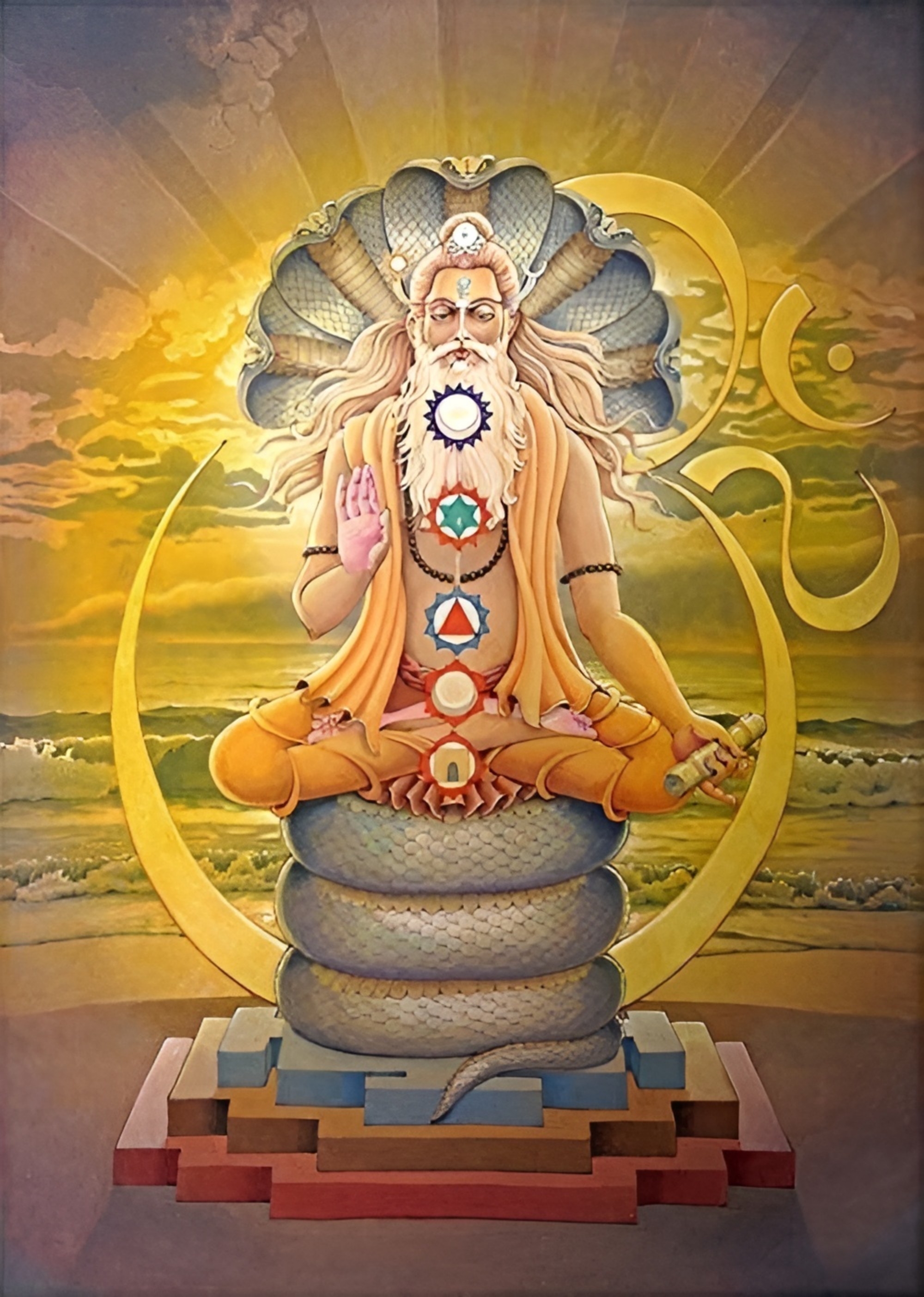
The Seedless State: Embracing Liberation through Samadhi
Patanjali's assertion that "On the suppression of even this — all is suppressed, and one rests in seedless samadhi" invites us to explore the profound depths of consciousness and liberation. In this statement, he emphasizes the necessity of relinquishing even the subtlest attachments and distractions to experience the ultimate state of samadhi, where the self dissolves into a boundless expanse of awareness. This teaching is not merely philosophical; it serves as a guiding principle for practitioners seeking liberation from the cycles of suffering and ignorance.
To understand the weight of Patanjali's words, we must delve into the essence of samadhi, particularly the notion of "seedless" or "nirbija" samadhi. This state represents a profound stillness, a cessation of all mental fluctuations and identifications. It is a call to transcend the ego and the myriad distractions that cloud our perception, urging us to seek a deeper, unconditioned state of being. In a world rife with noise and chaos, this teaching resonates with those yearning for clarity and peace.
The image / the metaphor
The imagery in Patanjali's quote evokes a sense of profound stillness and the relinquishment of all that binds us. The term "seedless" suggests a state free from the potential for rebirth or re-emergence of desires and attachments. It paints a picture of a fertile ground that has been cleared of all seeds, allowing for a pure experience of existence without the interference of past conditioning or future aspirations. The verbs "suppression" and "rests" imply an active engagement with the mind, where one must consciously let go of even the faintest traces of attachment to attain this elevated state.
Diving deeper into the metaphor, we can perceive "seedless samadhi" as an invitation to cultivate an inner landscape devoid of the weeds of distraction and desire. Just as a gardener must diligently remove unwanted plants to allow the desired blooms to flourish, so too must we engage in the inner work of self-examination and release. This process is not merely about suppression; it is about transformation, allowing the mind to settle into a state of pure awareness where the essence of our being can emerge unencumbered.
In the speaker's tradition
Patanjali's teachings are situated within the rich tapestry of yoga philosophy, which emphasizes the journey toward self-realization and liberation (moksha). Concepts such as dharma, or righteous living, and prajna, or wisdom, are integral to this path. The notion of kenosis, or self-emptying, resonates with the idea of relinquishing the ego and its attachments, creating space for the divine to manifest within us. This aligns with the Buddhist concept of sunyata, or emptiness, which also speaks to the liberation found in letting go of the self and its desires.
In the Yoga Sutras, Patanjali outlines the eight limbs of yoga, with samadhi being the culmination of this practice. The Sutras guide practitioners through ethical living, physical discipline, and mental focus, ultimately leading to the experience of samadhi. This journey is echoed in the Bhagavad Gita, where Krishna speaks of the importance of selfless action and devotion (bhakti) as pathways to realizing one's true nature. Both texts emphasize that liberation is not a destination but a continuous unfolding of awareness.
Living the teaching
Consider a modern scenario where the pressures of daily life create a cacophony of distractions. Imagine a busy professional, overwhelmed by deadlines and responsibilities, struggling to find moments of peace. In such a context, Patanjali's teaching becomes a beacon of hope. By recognizing the need to suppress not just the overt distractions but also the subtle anxieties and attachments to outcomes, this individual can begin to cultivate a practice of mindfulness. This practice allows them to step back from the chaos, creating a space for seedless samadhi to emerge amidst the noise.
In relationships, the application of this teaching can be equally transformative. Picture a couple facing conflict, where each partner clings to their perspectives and grievances. By embracing the essence of seedless samadhi, they can learn to let go of their attachments to being right or winning the argument. This shift fosters a deeper connection, allowing for genuine understanding and compassion to flourish. In both scenarios, the practice of letting go becomes a pathway to liberation, revealing the profound peace that resides within when we release our grasp on the transient.
A reflection
As we contemplate Patanjali's profound insight, we are invited to reflect on our own lives: What attachments or distractions are we clinging to that prevent us from experiencing the fullness of our being? In what ways can we cultivate a seedless state of awareness, free from the burdens of desire and expectation? This inquiry opens the door to deeper self-understanding and the potential for liberation, guiding us toward a more authentic existence.




Join the BrightStar Community
Stay connected with daily inspiration, event announcements, and community wisdom