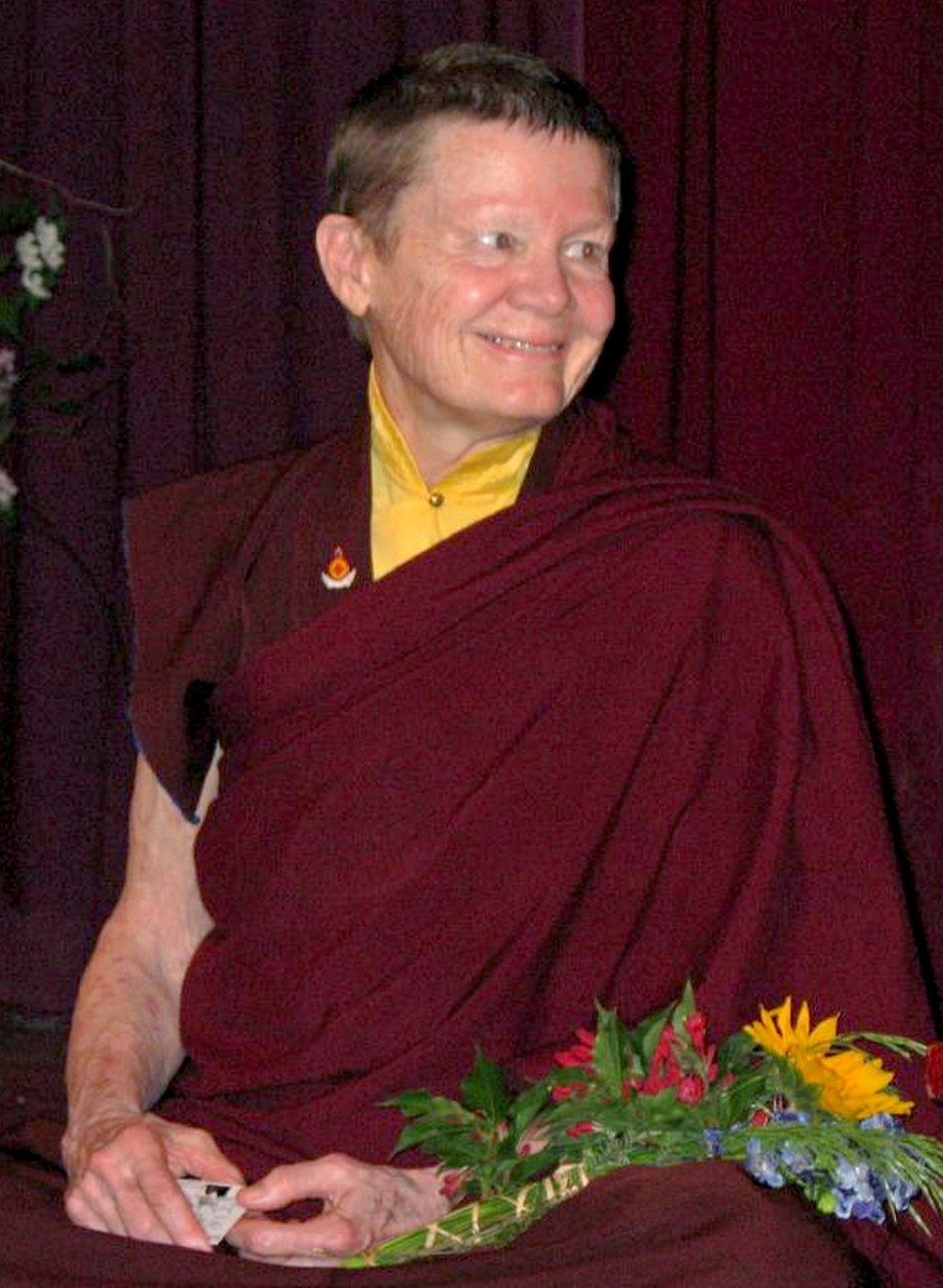
Embracing Life: The Courage to Meet Our Resistance
Pema Chödrön's assertion that "the way to dissolve our resistance to life is to meet it face to face" invites us into a profound engagement with our experiences, particularly those that evoke discomfort or fear. This quote encapsulates the essence of spiritual growth: the willingness to confront our inner turmoil rather than evade it. In a world often characterized by avoidance and distraction, Chödrön's wisdom serves as a reminder that true liberation lies in our ability to face the challenges of existence directly.
To meet life face to face is to cultivate a presence that acknowledges both joy and suffering as integral parts of our journey. This act of presence requires a radical acceptance of our circumstances, allowing us to dissolve the barriers we construct against the inevitable flow of life. By embracing this teaching, we open ourselves to transformation and healing, recognizing that resistance only serves to deepen our suffering. In this light, Chödrön's words become a call to courage, urging us to engage with life authentically and wholeheartedly.
The image / the metaphor
The imagery in Chödrön's quote evokes a sense of confrontation, suggesting that resistance is not merely an abstract concept but a tangible force that can be met directly. The phrase "meet it face to face" conjures the image of standing before a formidable opponent, one that embodies our fears, anxieties, and unresolved emotions. This act of meeting implies a willingness to engage with these aspects of ourselves, to look them in the eye, and to acknowledge their presence without flinching. The verbs chosen—"dissolve" and "meet"—speak to the dynamic interplay between acceptance and transformation, highlighting that our resistance can be softened through direct engagement.
Diving deeper into this metaphor, we can see that meeting life face to face is not about confrontation in the traditional sense; rather, it is an invitation to embrace vulnerability. It suggests that by allowing ourselves to be fully present with our experiences, we can begin to unravel the tightly held beliefs and fears that keep us stuck. This process is akin to the alchemical transformation of lead into gold, where the raw materials of our suffering can be transmuted into wisdom and compassion. In this way, Chödrön's teaching encourages us to view our resistance not as an enemy but as a teacher, guiding us toward deeper understanding and acceptance.
In the speaker's tradition
Pema Chödrön's teachings are deeply rooted in the Buddhist tradition, where concepts such as dharma and sunyata (emptiness) play pivotal roles in understanding the nature of existence. In Buddhism, resistance is often viewed as a manifestation of ignorance—an unwillingness to see things as they truly are. By meeting life face to face, we engage with the dharma, the truth of our experiences, which allows us to cultivate prajna, or wisdom. This wisdom arises from a direct encounter with our suffering, leading to a profound realization of the interconnectedness of all beings and the impermanence of our circumstances.
A relevant text that echoes this sentiment is the Heart Sutra, which teaches that form is emptiness and emptiness is form. This paradoxical understanding encourages us to confront our fears and attachments, recognizing that they are transient and ultimately illusory. By embracing the emptiness of our resistance, we can dissolve the barriers that separate us from the fullness of life. Chödrön's invitation to meet life face to face aligns seamlessly with this Buddhist perspective, emphasizing that true liberation comes from engaging with our experiences rather than fleeing from them.
Living the teaching
Consider a modern scenario where this teaching can be applied: a person facing a significant life change, such as a job loss or the end of a relationship. The instinctive response may be to resist the discomfort, to cling to the familiar, or to distract oneself with busyness. However, by choosing to meet this change face to face, the individual can begin to explore the emotions that arise—fear, sadness, uncertainty—without judgment. This process of acknowledgment allows for a deeper understanding of oneself and the circumstances, ultimately leading to personal growth and resilience.
Another application of this teaching can be found within the realm of relationships. When conflicts arise, the tendency is often to avoid confrontation or to suppress feelings. Yet, by meeting the discomfort of these moments directly, individuals can engage in open and honest communication. This willingness to face the truth of their emotions fosters intimacy and connection, transforming potential discord into an opportunity for deeper understanding and compassion. In both scenarios, the act of meeting life face to face becomes a transformative practice, leading to greater authenticity and presence.
A reflection
As we contemplate Pema Chödrön's profound insight, we are invited to reflect on our own lives: What are the areas where we resist the flow of life? In what ways might we benefit from meeting our fears and discomforts directly? This contemplative question encourages us to explore the spaces within ourselves that long for acknowledgment and acceptance, guiding us toward a more authentic and liberated existence.




Join the BrightStar Community
Stay connected with daily inspiration, event announcements, and community wisdom