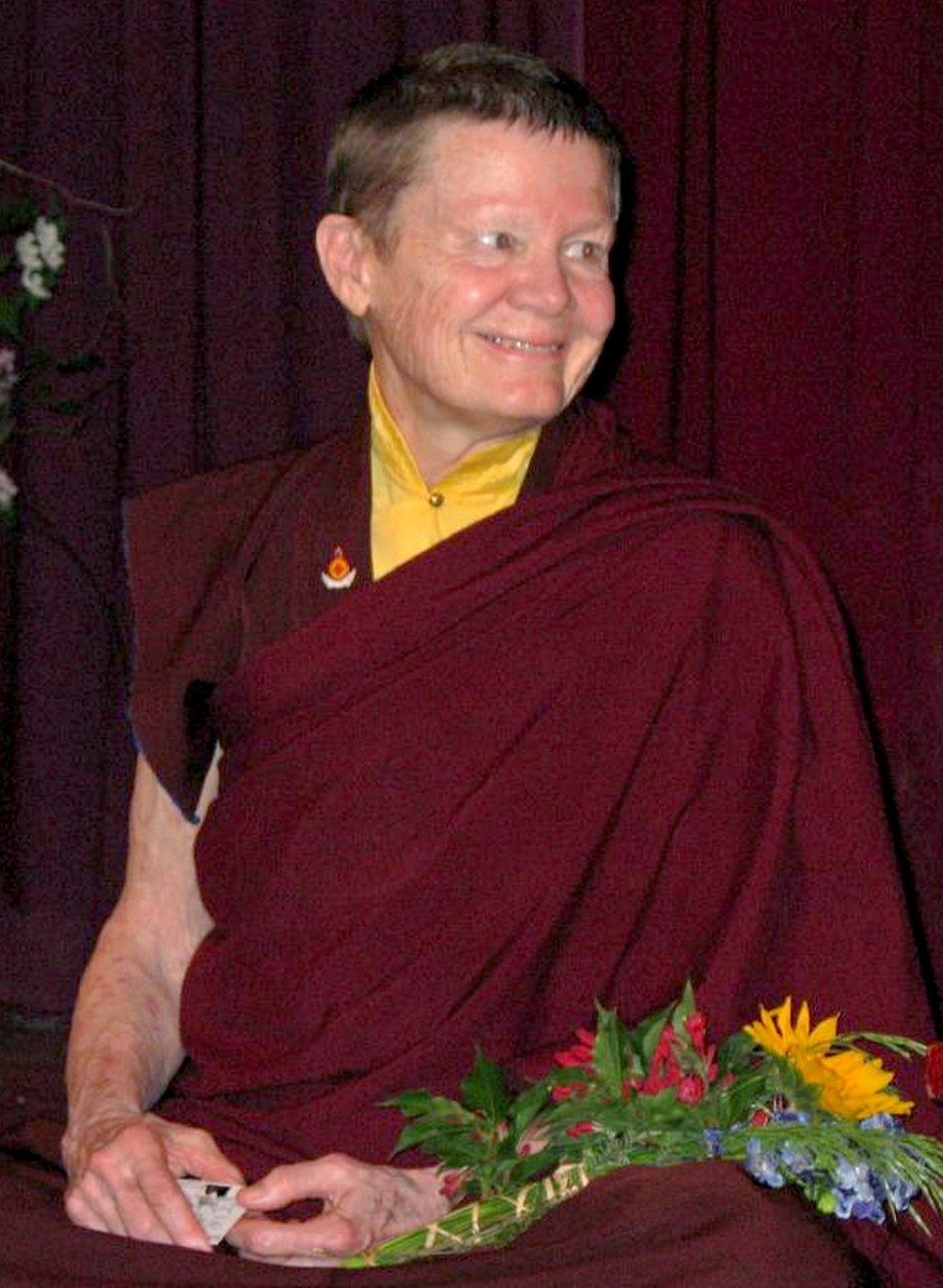
The Courage to Embrace Fear
Pema Chödrön's assertion that "to stay open and curious in the face of what frightens us is the gateway to courage" invites us to reconsider our relationship with fear. In a world often dominated by anxiety and uncertainty, the ability to remain receptive and inquisitive amidst our fears becomes a profound act of bravery. This perspective not only challenges our instinctual responses to fear but also opens a pathway to deeper understanding and personal growth. Courage, then, is not merely the absence of fear but the willingness to engage with it, transforming our vulnerabilities into sources of strength.
Chödrön's words resonate deeply in a culture that frequently equates fear with weakness. By framing openness and curiosity as essential components of courage, she encourages us to shift our focus from avoidance to engagement. This shift is crucial; it suggests that our fears, rather than being obstacles, can serve as gateways to new insights and experiences. In this light, the act of confronting what frightens us becomes a transformative journey, one that can lead us to a more authentic and courageous existence.
The image / the metaphor
The imagery in Chödrön's quote evokes a sense of vulnerability and strength intertwined. The verbs "stay open" and "curious" suggest a dynamic state of being, one that requires active participation rather than passive acceptance. To remain open implies a willingness to experience discomfort, while curiosity invites exploration and inquiry. Together, these actions create a fertile ground for courage to blossom, emphasizing that it is through our engagement with fear that we cultivate resilience.
Diving deeper into the metaphor, we can envision fear as a landscape filled with shadows and uncertainties. To navigate this terrain, we must adopt a mindset that embraces exploration rather than retreat. This journey through the unknown can be daunting, yet it is precisely in this space of discomfort that we discover our capacity for courage. By approaching fear with openness and curiosity, we transform it from a barrier into a bridge, leading us toward greater self-awareness and personal evolution.
In the speaker's tradition
Pema Chödrön's teachings are deeply rooted in the Buddhist tradition, which emphasizes the importance of understanding and transforming suffering. Concepts such as *dharma*—the path of truth—and *sunyata*—the emptiness of inherent existence—play a crucial role in her philosophy. In this context, staying open and curious in the face of fear aligns with the practice of *prajna*, or wisdom, which encourages us to see beyond our immediate reactions and to recognize the impermanent nature of our experiences. This wisdom allows us to approach fear not as a fixed entity but as a fluid aspect of our existence.
In her book, *The Places That Scare You*, Chödrön draws upon the teachings of the Buddha, who encouraged his followers to confront their fears as a means of liberation. The Buddha's emphasis on mindfulness and awareness serves as a foundation for Chödrön's message, reminding us that true courage arises from a deep understanding of our inner landscape. By cultivating mindfulness, we can learn to observe our fears without judgment, allowing us to respond with curiosity rather than reactivity.
Living the teaching
Consider a modern scenario where this teaching might resonate: a professional facing a daunting presentation. The fear of judgment and failure can be paralyzing, leading to avoidance or procrastination. However, if one approaches this fear with openness and curiosity, the experience transforms. Instead of viewing the presentation as a threat, it becomes an opportunity for growth—an invitation to explore one's capabilities and to connect with the audience authentically. This shift in perspective not only alleviates anxiety but also fosters a sense of empowerment.
This teaching can also be applied in personal relationships, particularly during conflicts. When faced with a disagreement, the instinct might be to defend oneself or to withdraw. Yet, if we choose to remain open and curious about the other person's perspective, we create space for understanding and connection. This approach not only deepens our relationships but also cultivates a courageous heart, willing to embrace vulnerability and the unknown in the pursuit of harmony.
A reflection
As we contemplate Chödrön's insight, we are invited to reflect on our own relationship with fear. What fears have we been avoiding, and how might we approach them with a sense of openness and curiosity? In this inquiry lies the potential for profound transformation, as we learn to navigate the landscapes of our fears with courage and grace. By embracing this practice, we can begin to uncover the gateways to our own courage, allowing us to live more fully and authentically.


Join the BrightStar Community
Stay connected with daily inspiration, event announcements, and community wisdom