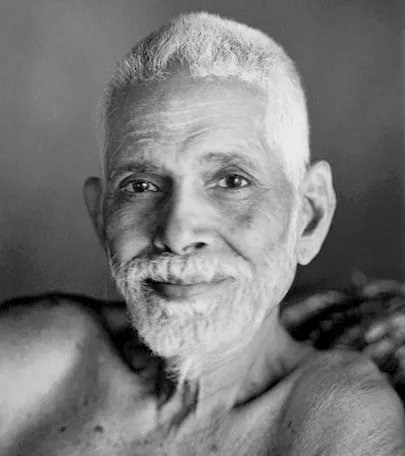
The Source of Our Troubles: A Journey Within
Ramana Maharshi's assertion that "All troubles are due to thoughts. Trace the source of these thoughts and abide there. Then there is no further trouble" invites us to explore the intricate relationship between our mental landscape and our emotional well-being. At its core, this quote challenges us to recognize that the root of our suffering often lies not in external circumstances, but in the thoughts we entertain. By tracing these thoughts back to their source, we can find a pathway to inner peace, a state of being that transcends the chaos of our minds.
This teaching resonates deeply in a world where distractions abound and mental noise often drowns out our innate sense of tranquility. Maharshi's words serve as a gentle reminder that our thoughts, while powerful, are not immutable truths. Instead, they are fleeting phenomena that can be examined and understood. By turning our attention inward and investigating the origins of our thoughts, we can cultivate a profound sense of peace that is not contingent upon external validation or circumstances.
The image / the metaphor
The imagery in Maharshi's quote evokes a journey of self-discovery, where the act of tracing thoughts becomes a metaphorical excavation. The verb "trace" suggests a careful, deliberate action, akin to following a thread back to its origin. This process requires patience and introspection, as we sift through the layers of our mental fabric to uncover the root causes of our distress. The phrase "abide there" implies a state of being that is both grounded and aware, a sanctuary where we can dwell in the essence of our true nature, free from the turbulence of incessant thought.
In the speaker's tradition
Ramana Maharshi's teachings are deeply rooted in the Advaita Vedanta tradition, which emphasizes the non-duality of existence and the illusory nature of the self. Concepts such as *dharma* (righteous duty) and *prajna* (wisdom) play a crucial role in understanding the implications of his quote. By tracing our thoughts back to their source, we engage in a form of self-inquiry that aligns with the practice of *atma vichara*, or self-investigation, a cornerstone of Maharshi's teachings. This process not only reveals the transient nature of our thoughts but also illuminates the deeper truth of our being, which is unconditioned and eternal.
In the context of Hindu philosophy, Maharshi's insights echo the teachings found in texts such as the *Bhagavad Gita*, where the importance of self-awareness and the discernment of the self from the mind is emphasized. The Gita teaches that true peace arises from understanding the nature of the self, transcending the dualities of pleasure and pain, and recognizing the eternal essence that underlies all existence. Maharshi's call to trace our thoughts aligns with this quest for self-realization, urging us to look beyond the ephemeral to discover the unchanging reality within.
Living the teaching
Consider a modern scenario where this teaching might resonate: a person grappling with anxiety about an upcoming presentation at work. The mind races with thoughts of potential failure, judgment, and inadequacy. In this moment, Maharshi's guidance encourages the individual to pause and trace these thoughts back to their origin. By asking questions such as, "What is the source of this fear?" or "Why do I feel inadequate?" the person can begin to unravel the layers of their anxiety, ultimately discovering that these thoughts are not definitive truths but rather reflections of past experiences and societal expectations.
In a different context, imagine a relationship strained by misunderstandings and unspoken grievances. Here, the practice of tracing thoughts can foster deeper communication and empathy. By encouraging both partners to explore the origins of their feelings—perhaps rooted in past wounds or unmet needs—they can create a space for healing. This process not only alleviates immediate tensions but also cultivates a more profound understanding of one another, allowing love and compassion to flourish in the relationship.
A reflection
As we contemplate Maharshi's profound insight, we are invited to engage in a reflective practice: What thoughts are currently causing me distress, and where do they originate? This question serves as a gateway to deeper self-inquiry, prompting us to explore the narratives we hold and the beliefs that shape our experiences. By tracing these thoughts back to their source, we may uncover not only the roots of our troubles but also the potential for liberation and peace that lies within.




Join the BrightStar Community
Stay connected with daily inspiration, event announcements, and community wisdom