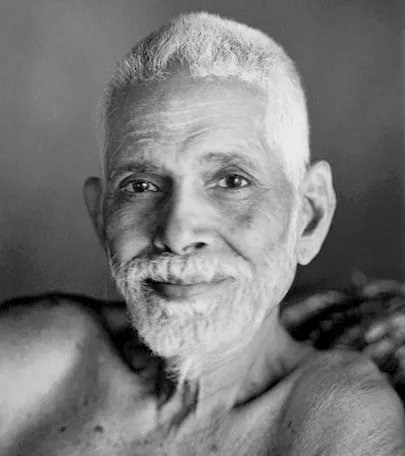
The Ever-Present Reality of Being
Ramana Maharshi's assertion that "It is false to speak of realization. What is there to realize? The real is as it is, ever," invites us to reconsider our understanding of existence and enlightenment. This statement challenges the notion that realization is a destination or an achievement, suggesting instead that reality is a constant presence, unchanging and always accessible. The stakes of this teaching are profound; they compel us to look beyond the illusions of our striving minds and recognize the inherent truth of our being.
In a world often dominated by the pursuit of goals and the desire for transformation, Maharshi's words serve as a gentle reminder of the simplicity of existence. They encourage us to embrace the present moment, to acknowledge that what we seek is not something to be attained but rather something to be recognized within ourselves. This perspective shifts the focus from an external quest for enlightenment to an internal journey of self-discovery, inviting us to explore the depths of our own consciousness.
The image / the metaphor
At the heart of Maharshi's quote lies a profound simplicity. The use of the word "realization" implies an act of uncovering or achieving something that is hidden, yet Maharshi refutes this notion by asserting that the real is already present and unchanging. The imagery evokes a sense of immediacy and permanence, suggesting that our true nature is not something to be grasped or acquired but rather something to be acknowledged. The verbs chosen—"speak," "realize," "is"—highlight a contrast between the transient nature of our thoughts and the eternal quality of reality.
Diving deeper into the metaphor, we can see that Maharshi's teaching encourages us to let go of the incessant chatter of the mind that often distracts us from the essence of our being. The idea that "the real is as it is, ever" invites us to cultivate a sense of presence, to be fully engaged in the here and now. This perspective aligns with the notion of being grounded in the present moment, where the past and future dissolve, and we can experience life in its purest form.
In the speaker's tradition
Ramana Maharshi's teachings are deeply rooted in the Advaita Vedanta tradition, which emphasizes non-duality and the oneness of existence. Concepts such as *dharma* (righteousness) and *prajna* (wisdom) resonate with his assertion that realization is not a separate endeavor but an understanding of our inherent nature. The idea of *sunyata*, or emptiness, also parallels Maharshi's perspective, as it points to the absence of a separate self and the recognition of the interconnectedness of all beings.
In the context of his teachings, we can draw parallels to the *Upanishads*, where the essence of reality is described as *Brahman*, the ultimate, unchanging truth. The *Mandukya Upanishad*, for instance, speaks of the nature of consciousness and the realization of the self as identical to the universal consciousness. This ancient wisdom reinforces Maharshi's assertion that there is nothing to realize beyond the acknowledgment of our true nature, which is ever-present and unaltered.
Living the teaching
Consider a modern scenario where an individual is caught in the relentless pursuit of success—whether in their career, relationships, or personal growth. This person may feel a constant sense of inadequacy, believing that they must achieve certain milestones to attain happiness or fulfillment. Maharshi's teaching serves as a powerful antidote to this mindset, reminding them that the essence of their being is already complete and whole, independent of external accomplishments. By embracing this understanding, they can shift their focus from striving to simply being, allowing for a more profound sense of peace and contentment.
In the realm of relationships, Maharshi's insights can also be transformative. Imagine a situation where misunderstandings and conflicts arise between partners, leading to feelings of disconnection. By applying the principle that "the real is as it is, ever," individuals can cultivate a deeper awareness of their shared humanity, recognizing that beneath the surface of their disagreements lies a fundamental unity. This perspective encourages compassion and understanding, allowing for healing and reconnection as they acknowledge the ever-present reality of love and connection that exists between them.
A reflection
As we contemplate Maharshi's profound statement, we are invited to reflect on our own understanding of reality and self. What does it mean to recognize that the essence of who we are is already present, unchanging, and complete? In a world that often encourages us to seek outside ourselves for validation and fulfillment, how can we cultivate a deeper awareness of our inherent nature? This contemplation invites us to explore the depths of our being and to embrace the simplicity of existence, allowing the truth of our reality to unfold in its own time.


Join the BrightStar Community
Stay connected with daily inspiration, event announcements, and community wisdom