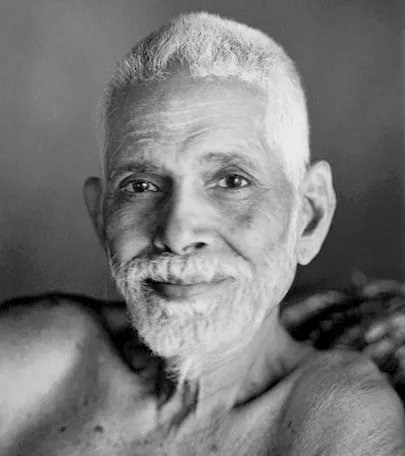
Beyond the Veil of the Body: Understanding Consciousness and the Self
In the profound words of Ramana Maharshi, "Mind is consciousness limited by body. The Self is unconditioned consciousness." This statement invites us to explore the intricate relationship between our mental faculties and the essence of our being. Maharshi's insight challenges us to recognize how our thoughts and perceptions, often confined by physicality, can obscure the vastness of our true nature. Understanding this distinction is not merely an intellectual exercise; it has the potential to transform our experience of life and our relationship with ourselves and others.
As we delve deeper into this quote, we uncover layers of meaning that resonate with the core of human experience. The mind, with its incessant chatter and limitations, often dictates our sense of identity and reality. In contrast, the Self represents a boundless consciousness that transcends the physical realm. This exploration is not just philosophical; it is a spiritual journey that invites us to peel away the layers of conditioning and discover the unconditioned essence of who we truly are.
The image / the metaphor
At first glance, the imagery in Maharshi's quote evokes a sense of confinement and liberation. The phrase "mind is consciousness limited by body" conjures an image of a cage, where the mind, with all its thoughts and emotions, is trapped within the confines of physical existence. The verbs chosen—"is" and "limited"—suggest a static condition, one that many of us experience daily. This limitation is not merely a physical one; it extends to our perceptions, beliefs, and the narratives we construct about ourselves and the world around us.
Diving deeper into the metaphor, we can see that the mind's limitations are not inherently negative; they are part of the human experience. However, Maharshi invites us to recognize that these limitations can obscure our awareness of the Self, which is described as "unconditioned consciousness." This unconditioned state is akin to a vast ocean, where the waves of thought and emotion rise and fall but do not define the water itself. The challenge lies in learning to navigate the waves while remaining anchored in the depths of our true nature.
In the speaker's tradition
Ramana Maharshi's teachings are deeply rooted in the Advaita Vedanta tradition, which emphasizes non-duality and the oneness of existence. Concepts such as dharma, the moral order of the universe, and prajna, or wisdom, play significant roles in understanding the relationship between the mind and the Self. In this context, the mind is often seen as a tool that can either lead us toward enlightenment or entrap us in illusion. The practice of self-inquiry, or "atma vichara," is central to Maharshi's teachings, guiding seekers to question the nature of their thoughts and ultimately realize their true essence.
In the Upanishads, ancient texts that form the philosophical foundation of Hindu thought, we find echoes of Maharshi's insights. The concept of "Brahman," the ultimate reality, aligns with the notion of unconditioned consciousness. The Upanishads teach that the individual self (Atman) is not separate from Brahman, emphasizing the interconnectedness of all existence. This profound realization invites us to transcend the limitations of the mind and experience the unity of all life.
Living the teaching
Consider a modern scenario where this teaching can be applied: a busy professional overwhelmed by the demands of work and life. The constant barrage of emails, meetings, and deadlines can create a sense of mental clutter, leading to stress and anxiety. In such moments, the individual may identify solely with their role as a worker, forgetting the deeper essence of their being. By reflecting on Maharshi's teaching, one can begin to separate their identity from their job, recognizing that while the mind may be preoccupied, the Self remains untouched and expansive.
In relationships, this teaching can also illuminate the dynamics we often encounter. Imagine a conflict arising between partners, where each person is entrenched in their perspective, driven by emotional reactions. Here, the mind's limitations can lead to misunderstandings and hurt. However, by embracing the idea of unconditioned consciousness, both individuals can step back and recognize that their true selves are not defined by the conflict. This awareness fosters compassion and understanding, allowing for a deeper connection that transcends the immediate emotional turmoil.
A reflection
As we contemplate Ramana Maharshi's profound words, we are invited to explore the nature of our own consciousness. How often do we find ourselves identifying solely with our thoughts, emotions, and physical experiences? In moments of stillness, we can ask ourselves: What lies beyond the confines of my mind? This question serves as a gateway to deeper self-inquiry, encouraging us to connect with the unconditioned consciousness that resides within us all.




Join the BrightStar Community
Stay connected with daily inspiration, event announcements, and community wisdom