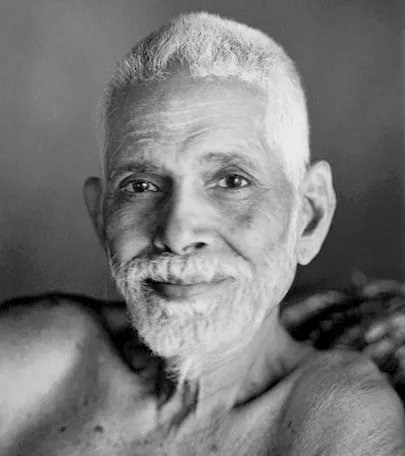
The Profound Service of Self-Realization
Ramana Maharshi's assertion that "Your own Self-Realization is the greatest service you can render the world" invites us to consider the transformative power of individual awakening. In a world often preoccupied with external actions and societal contributions, this quote challenges us to look inward. It suggests that the most profound impact we can have on the world stems not from our deeds alone but from the depth of our understanding of ourselves. This realization, rooted in the essence of who we are, reverberates outward, influencing those around us in ways we may not immediately perceive.
Delving deeper, Maharshi's words illuminate a path that intertwines personal growth with collective well-being. The journey of self-realization is not merely a solitary endeavor; it is a ripple effect that extends far beyond the individual. When we awaken to our true nature, we align ourselves with a universal consciousness that transcends personal boundaries. This alignment fosters compassion, understanding, and love, which are essential for healing the world. Thus, the act of realizing one's self becomes a sacred service, a gift that enriches the tapestry of human experience.
The image / the metaphor
At first glance, the imagery in Maharshi's quote evokes a sense of personal responsibility and profound potential. The term "Self-Realization" implies a journey toward understanding one's true essence, a process that is both intimate and expansive. The verbs "render" and "service" suggest an active engagement with the world, where the fruits of one's inner work manifest as contributions to the greater good. This interplay between self and service creates a dynamic relationship, emphasizing that our inner transformations are not isolated but are inherently linked to the collective experience of humanity.
Going deeper, the metaphor of self-realization as service invites us to reconsider the nature of altruism. It suggests that true service arises not from obligation or duty but from a deep-seated understanding of interconnectedness. When we realize our own nature, we come to see the world as an extension of ourselves. This realization transforms our actions from mere tasks into expressions of love and compassion, allowing us to serve authentically and wholeheartedly. In this light, self-realization becomes a wellspring of genuine service, flowing naturally from the depths of our being.
In the speaker's tradition
Ramana Maharshi's teachings are rooted in the non-dual tradition, which emphasizes the unity of all existence. Concepts such as *advaita* (non-duality) and *moksha* (liberation) are central to understanding his perspective. In this context, self-realization is not merely a personal achievement but a recognition of the interconnectedness of all beings. The idea of *kenosis*, or self-emptying, resonates here, as it suggests that true realization involves shedding the ego and embracing a more expansive sense of self that encompasses the entire cosmos. This aligns with the notion of *sunyata* (emptiness) found in Buddhist thought, where the realization of emptiness leads to compassion for all sentient beings.
In Maharshi's own words, as captured in *Talks*, he emphasizes that the realization of the Self is the ultimate goal of human existence. This aligns with the teachings of other spiritual luminaries who have articulated similar truths. For instance, the *Bhagavad Gita* speaks of *dharma* (righteous duty) as being fulfilled through self-knowledge, suggesting that understanding oneself is the foundation for acting in the world. Thus, Maharshi's quote serves as a bridge between individual awakening and the broader spiritual responsibilities we hold toward one another.
Living the teaching
Consider a modern scenario where an individual grapples with their career choices. Many people find themselves in jobs that feel unfulfilling, often driven by societal expectations or financial necessity. However, if one were to embrace Maharshi's teaching, they might begin to explore their true passions and values, leading to a profound shift in their approach to work. By prioritizing self-realization, they could discover a vocation that not only brings them joy but also serves the community in a meaningful way. This transformation illustrates how personal awakening can lead to a more authentic and impactful life.
In relationships, the application of this teaching can be equally transformative. Imagine a couple facing a conflict rooted in misunderstandings and unmet needs. If each partner commits to their own self-realization, they may uncover deeper layers of their own motivations and fears. This introspection can foster empathy and compassion, allowing them to approach their differences with a renewed sense of understanding. By prioritizing their inner journeys, they not only enhance their relationship but also contribute to a more harmonious environment for those around them, embodying the essence of Maharshi's message.
A reflection
As we contemplate Ramana Maharshi's profound assertion, we are invited to reflect on the nature of our own self-realization. How might our journey toward understanding ourselves serve the world around us? In what ways can we cultivate a deeper awareness of our interconnectedness with others? These questions beckon us to explore the transformative potential of our inner work, reminding us that our personal awakening is not just a solitary pursuit but a vital contribution to the collective human experience.


Join the BrightStar Community
Stay connected with daily inspiration, event announcements, and community wisdom