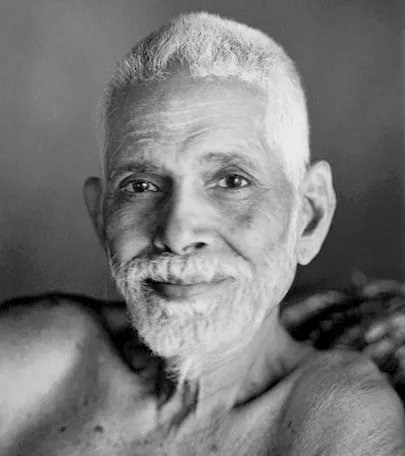
The Essence of Existence: Unraveling the Self
In the profound assertion, "The Self alone exists and is real," Ramana Maharshi invites us to explore the nature of our existence. This statement challenges the very fabric of our understanding, urging us to look beyond the transient and the illusory. It beckons us to recognize that the essence of our being is not found in the external world, but in the depths of our own consciousness. The stakes are high; to grasp this truth is to awaken to a reality that transcends the mundane, leading us toward liberation and self-realization.
As we delve deeper into this quote, we begin to understand that the notion of the "Self" is not merely an abstract concept but a living reality that permeates our existence. Maharshi's words resonate with the timeless wisdom of the Upanishads, which speak of the Self (Atman) as the ultimate truth. This exploration is not just philosophical; it is a call to introspection and a journey toward understanding our true nature. In a world often dominated by distractions and superficial identities, this teaching serves as a beacon, guiding us back to the core of who we are.
The image / the metaphor
The imagery in Maharshi's quote is striking in its simplicity yet profound in its implications. The phrase "The Self alone exists" suggests a singular, unchanging reality that stands apart from the chaos of the external world. The use of the word "exists" implies a state of being that is not contingent upon external validation or material circumstances. It evokes a sense of permanence and stability, contrasting sharply with the fleeting nature of worldly experiences. This dichotomy invites us to reflect on what we consider real and to question the solidity of our perceived identities.
Diving deeper into the metaphor, we can see that the "Self" represents not just an individual identity but a universal consciousness that connects all beings. This interconnectedness is reminiscent of the concept of Brahman in Hindu philosophy, where the individual self (Atman) is ultimately one with the universal self. Maharshi's assertion encourages us to transcend the limitations of ego and personal narrative, inviting us to experience the profound unity that underlies all existence. In this light, the Self becomes a mirror reflecting the essence of the cosmos, urging us to recognize our place within the grand tapestry of life.
In the speaker's tradition
Ramana Maharshi's teachings are deeply rooted in the Advaita Vedanta tradition, which emphasizes non-duality and the oneness of existence. Central to this philosophy is the concept of dharma, which guides individuals toward realizing their true nature and fulfilling their purpose in life. Maharshi's emphasis on the Self aligns with the idea of kenosis, or self-emptying, where one relinquishes the false self to embrace the true essence of being. This journey toward self-realization is not merely an intellectual exercise; it is a transformative process that requires deep introspection and surrender.
In the context of sacred texts, the Upanishads provide a rich backdrop for understanding Maharshi's assertion. For instance, the Chandogya Upanishad states, "Tat Tvam Asi," meaning "That Thou Art," which encapsulates the essence of non-duality. This phrase reinforces the idea that the individual self is not separate from the universal consciousness. By recognizing this unity, we can begin to dissolve the barriers that separate us from our true nature and from one another, echoing Maharshi's call to awaken to the reality of the Self.
Living the teaching
Consider a modern scenario where the teaching of Maharshi might resonate: a person grappling with the pressures of societal expectations and the relentless pursuit of success. In such a context, the realization that "The Self alone exists and is real" can serve as a profound anchor. It invites the individual to step back from the incessant noise of ambition and comparison, encouraging them to reconnect with their inner essence. This shift in perspective can lead to a more authentic way of living, where actions are aligned with one's true self rather than external validation.
Another application of this teaching can be found in interpersonal relationships. When conflicts arise, it is easy to become entangled in the drama of ego and personal grievances. However, reflecting on Maharshi's words can help us recognize that the essence of our being is shared with others. By approaching relationships with the understanding that we are all expressions of the same underlying reality, we can cultivate compassion and empathy. This perspective fosters deeper connections and allows us to navigate challenges with grace, ultimately leading to a more harmonious existence.
A reflection
As we contemplate the depth of Ramana Maharshi's assertion, we are left with a poignant question: How can I cultivate a deeper awareness of the Self in my daily life? This inquiry invites us to explore the practices and reflections that can help us connect with our true nature. In a world filled with distractions, it is essential to carve out moments of stillness and introspection, allowing the essence of the Self to emerge and guide us on our journey toward realization.




Join the BrightStar Community
Stay connected with daily inspiration, event announcements, and community wisdom