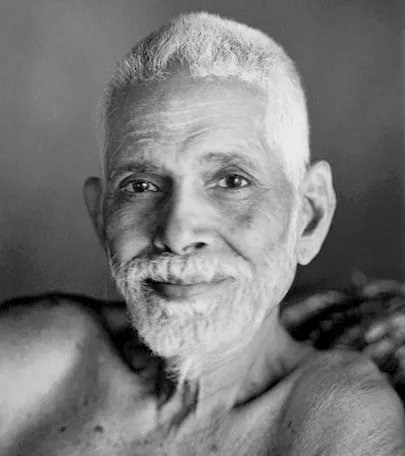
The Essence of Being: A Journey Beyond Investigation
In the words of Ramana Maharshi, "There is no investigation into the Atman in samadhi. There is the experience of pure being." This profound statement invites us to explore the distinction between intellectual inquiry and direct experience. The stakes are high; in a world often dominated by analysis and rationality, Maharshi beckons us toward a deeper understanding of existence itself, urging us to transcend the confines of thought and enter into the realm of pure awareness.
To grasp the essence of this teaching, we must recognize that samadhi, a state of meditative absorption, is not merely a mental exercise but a profound realization of one's true nature. In this state, the seeker does not engage in the usual processes of questioning or analysis; rather, they surrender to the experience of being, where the Atman—the true self—reveals itself in its unadulterated form. This distinction between investigation and experience is crucial, as it highlights the limitations of the intellect in comprehending the infinite nature of existence.
The image / the metaphor
At the heart of Maharshi's quote lies a vivid imagery that contrasts the act of investigation with the experience of being. The term "investigation" suggests a methodical approach, one that relies on the faculties of the mind to dissect and analyze. In contrast, "pure being" evokes a sense of immediacy and wholeness, where the seeker is enveloped in an experience that transcends the duality of subject and object. The verbs chosen—"investigation" and "experience"—serve to delineate two fundamentally different approaches to understanding the self.
Diving deeper into this metaphor, we can see that the act of investigation often leads to fragmentation, as the mind attempts to categorize and label experiences. However, in samadhi, the seeker encounters a state of unity, where the boundaries of the self dissolve, and the essence of being is felt in its entirety. This experience is akin to stepping into a vast ocean, where the individual wave recognizes its oneness with the water, transcending the illusion of separateness. In this way, Maharshi invites us to move beyond the confines of thought and into the expansive realm of pure existence.
In the speaker's tradition
Ramana Maharshi's teachings are deeply rooted in the Advaita Vedanta tradition, which emphasizes non-duality and the realization of the self as one with Brahman, the ultimate reality. Concepts such as dharma, the moral order, and prajna, or wisdom, play significant roles in this tradition, guiding seekers toward the realization of their true nature. The notion of kenosis, or self-emptying, resonates here as well, as it reflects the surrender of the ego in favor of a deeper connection with the Atman.
In the context of Hindu scriptures, the Upanishads provide a rich tapestry of insights that align with Maharshi's teachings. For instance, the Chandogya Upanishad speaks of the Atman as the essence of all beings, stating, "Tat Tvam Asi" or "That Thou Art." This profound realization echoes Maharshi's assertion that in samadhi, one does not investigate the Atman; rather, one experiences the truth of their being, recognizing their unity with the cosmos. Such texts serve as a foundation for understanding the transformative power of direct experience over intellectual inquiry.
Living the teaching
Consider a modern scenario where this teaching finds resonance: a busy professional grappling with the demands of work and life. In the midst of deadlines and responsibilities, the individual may feel overwhelmed, caught in a cycle of constant analysis and problem-solving. Maharshi's teaching invites this person to pause, to step back from the incessant mental chatter, and to enter a state of being—perhaps through meditation or mindful breathing. In this moment of stillness, they may discover a profound sense of peace and clarity that transcends the chaos of their thoughts.
Another application of this teaching can be found in relationships, particularly during moments of conflict. When faced with misunderstandings or emotional turmoil, individuals often resort to analysis, dissecting the situation to find fault or blame. However, Maharshi's wisdom encourages us to shift our focus from investigation to presence. By embracing the experience of being—listening deeply, feeling compassion, and allowing the heart to guide our responses—we can transcend the conflict and foster a deeper connection with others. This shift from analysis to experience can transform not only our relationships but also our understanding of ourselves.
A reflection
As we contemplate Maharshi's profound insight, we are left with a contemplative question: In what areas of your life do you find yourself caught in the cycle of investigation, and how might you invite the experience of pure being into those moments? This inquiry invites us to reflect on the balance between thought and experience, urging us to embrace the fullness of existence beyond the confines of our minds.




Join the BrightStar Community
Stay connected with daily inspiration, event announcements, and community wisdom