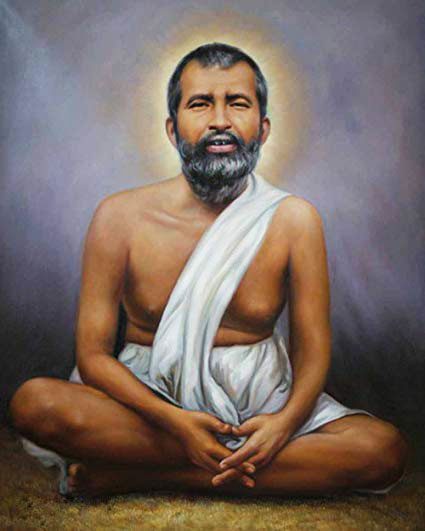
Paths to the Divine: Understanding Sri Ramakrishna's Insight
In the profound words of Sri Ramakrishna, "All religions are paths, but the paths are not God." This statement invites us to explore the intricate relationship between the myriad expressions of faith and the ultimate reality they seek to convey. It emphasizes that while religions serve as valuable guides on our spiritual journeys, they are not the destination itself. Recognizing this distinction is crucial in a world often divided by dogma and doctrine, as it encourages a more inclusive and expansive understanding of spirituality.
Ramakrishna's assertion serves as a gentle reminder that the essence of spirituality transcends the confines of any single religious tradition. It beckons us to look beyond the rituals and beliefs that can sometimes obscure the deeper truths of existence. By acknowledging that all paths lead to the same divine source, we can cultivate a sense of unity and compassion among diverse faiths, fostering a more harmonious world where the essence of spirituality can flourish.
The image / the metaphor
At its core, the quote presents a vivid metaphor of paths leading toward a singular destination. The imagery of paths evokes a sense of movement and exploration, suggesting that each religion offers a unique route through the landscape of spirituality. The verbs chosen—"are" and "are not"—create a clear distinction between the means and the end, inviting us to consider the purpose of our spiritual endeavors. This metaphor encourages us to appreciate the diversity of religious expressions while remaining mindful of their limitations in encapsulating the divine.
Diving deeper into this metaphor, we can envision the paths as various trails in a vast forest, each leading toward a central clearing where the divine presence resides. While the paths may differ in terrain, scenery, and challenges, they all converge at the same point. This imagery not only highlights the validity of each path but also suggests that the journey itself is as significant as the destination. The experiences, lessons, and transformations encountered along the way enrich our understanding of the divine, reminding us that the paths are essential, yet they do not define the essence of God.
In the speaker's tradition
Within the rich tapestry of Hindu philosophy, Sri Ramakrishna's perspective resonates deeply with concepts such as dharma, bhakti, and prajna. Dharma, or righteous duty, emphasizes the importance of following one's chosen path with sincerity and devotion, while bhakti highlights the emotional connection to the divine that transcends mere ritualistic practices. Prajna, or wisdom, invites us to discern the essence of these paths, urging us to seek the underlying truth that unites them. Ramakrishna's teaching encourages practitioners to embrace their unique spiritual journeys while recognizing the shared goal of realizing the divine.
This idea is echoed in the Bhagavad Gita, where Lord Krishna speaks of the various paths to liberation, including the path of knowledge (jnana), the path of devotion (bhakti), and the path of selfless action (karma). Each path is valid and leads to the same ultimate truth, reinforcing Ramakrishna's assertion that while religions may differ, they all serve as vehicles for the soul's journey toward God. The Gita's teachings remind us that the essence of spirituality lies not in the external forms but in the inner transformation that occurs as we traverse these paths.
Living the teaching
In our modern world, the teaching of Ramakrishna can be applied to the way we engage with the diverse beliefs and practices of others. Consider a workplace where individuals come from various religious backgrounds. Instead of allowing differences to create division, one can embrace the idea that each person's faith is a unique path leading to a shared understanding of humanity and purpose. By fostering an environment of respect and curiosity, we can learn from one another's experiences and insights, enriching our own spiritual journeys in the process.
Another application of this teaching can be found in personal relationships, particularly during moments of conflict or misunderstanding. When faced with differing beliefs or values, we can remind ourselves that these differences are merely paths that reflect deeper truths. By approaching conversations with empathy and an open heart, we can navigate disagreements with grace, recognizing that beneath the surface, we all seek connection, love, and understanding. This perspective allows us to cultivate deeper bonds and a sense of unity, even amidst diversity.
A reflection
As we contemplate Sri Ramakrishna's profound insight, we are invited to reflect on our own spiritual journeys. How do we perceive the paths we and others walk? Are we open to learning from the diverse expressions of faith around us, or do we cling to rigid beliefs that may limit our understanding? In this spirit of inquiry, let us ask ourselves: What can I learn from the paths of others that will enrich my own journey toward the divine?


Join the BrightStar Community
Stay connected with daily inspiration, event announcements, and community wisdom