The Heart of Divine Longing
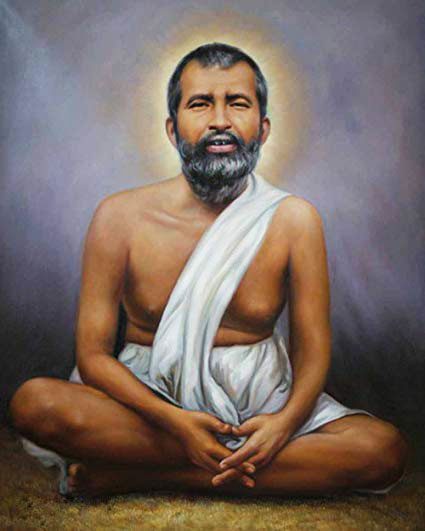
In the profound words of Sri Ramakrishna, "Do not seek anything from God except His love," we are invited to reconsider the nature of our spiritual pursuits. This quote encapsulates a transformative approach to devotion, urging us to prioritize love above all else in our relationship with the divine. In a world often driven by desires and material aspirations, this teaching serves as a gentle reminder of the essence of spiritual fulfillment: the unconditional love that transcends all other forms of seeking.
Ramakrishna's assertion challenges us to reflect on our motivations in spiritual practice. Are we drawn to God for the gifts we hope to receive, or do we seek a deeper connection rooted in love? This distinction is crucial, as it shifts our focus from transactional spirituality to a more profound, relational understanding of the divine. By embracing this perspective, we open ourselves to a transformative experience that can reshape our lives and deepen our understanding of love itself.
The image / the metaphor
At first glance, the quote presents a straightforward directive: to seek love rather than material or spiritual rewards from God. The imagery of seeking evokes a sense of longing, a quest that is both personal and universal. The verb "seek" implies an active pursuit, suggesting that love is not merely given but must also be desired and cultivated. This pursuit of divine love is akin to a traveler yearning for a distant shore, where the heart finds its true home.
Diving deeper into the metaphor, we can see that love, in this context, is not a commodity to be acquired but a state of being to be realized. It speaks to the essence of bhakti, or devotion, where the relationship with the divine is characterized by love and surrender. This love is not possessive or conditional; rather, it is expansive and liberating, inviting us to dissolve the boundaries of the self in the embrace of the divine. In this way, seeking God's love becomes a journey toward self-discovery and unity with all that is.
In the speaker's tradition
Sri Ramakrishna's teachings are deeply rooted in the Hindu tradition, particularly within the framework of bhakti, which emphasizes love and devotion as the highest forms of spiritual practice. This perspective aligns with the concept of dharma, where one's duty is to cultivate a loving relationship with the divine. In this light, seeking God's love becomes an expression of one's true nature, a reflection of the divine within us all. The idea of kenosis, or self-emptying, resonates here, as we are called to let go of our ego-driven desires in favor of a more profound connection with the divine.
Moreover, Ramakrishna's emphasis on love can be paralleled with the teachings found in the Bhagavad Gita, where the nature of devotion is explored through the lens of selfless love and surrender. In Chapter 12, Krishna speaks of the various paths to realization, highlighting that the path of love is the most accessible and fulfilling. This echoes Ramakrishna's sentiment, reinforcing the notion that love is the ultimate goal of spiritual practice, transcending the need for material or spiritual gains.
Living the teaching
Consider a modern scenario where this teaching might resonate: a person facing a challenging period in their life, perhaps dealing with loss or uncertainty. In such moments, it is easy to fall into the trap of seeking answers or solutions from the divine, hoping for relief or guidance. However, if we embrace Ramakrishna's teaching, we might shift our focus from seeking outcomes to cultivating a relationship grounded in love. This could manifest as a quiet moment of prayer or meditation, where the individual simply rests in the presence of the divine, allowing love to fill the spaces of fear and doubt.
Another application of this teaching can be found in our relationships with others. When conflicts arise, we often seek validation or justification for our feelings. However, if we approach these situations with the intention of embodying love—both for ourselves and for others—we can transform our interactions. By prioritizing love over the need to be right or understood, we create a space for healing and connection, reflecting the divine love that Ramakrishna encourages us to seek.
A reflection
As we contemplate the depth of Ramakrishna's words, we might ask ourselves: What does it mean to seek only God's love in my life? This question invites us to explore our motivations and desires, encouraging a deeper understanding of our spiritual journey. In this inquiry, we may discover that the love we seek is not a distant goal but a present reality, waiting to be embraced within our hearts.


Join the BrightStar Community
Stay connected with daily inspiration, event announcements, and community wisdom