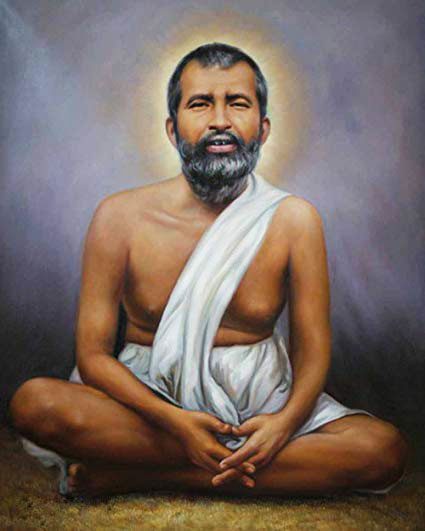
The Path of Inner Purity: A Journey Towards Selfless Service
“First become a saint; then think of others.” In this profound statement, Sri Ramakrishna invites us to embark on a transformative journey of self-realization before extending our hands to help others. The essence of this teaching lies in the understanding that true service emerges from a place of inner purity and spiritual maturity. To genuinely uplift others, we must first cultivate our own sanctity, as the quality of our inner life directly influences our capacity to serve the world around us.
This quote resonates deeply in a world often characterized by hurried altruism and superficial acts of kindness. Sri Ramakrishna’s wisdom challenges us to reconsider the foundation upon which our service is built. It urges us to engage in a process of self-examination and spiritual growth, suggesting that the journey inward is not merely a personal endeavor but a prerequisite for meaningful engagement with the outer world. The stakes are high: without this inner transformation, our attempts to help others may lack authenticity and depth.
The image / the metaphor
At its core, the quote presents a striking image of a two-step process: first, the individual must attain a state of holiness, and only then can they turn their attention outward. The verb “become” implies a journey, a metamorphosis that requires effort, dedication, and time. The notion of “saint” evokes a sense of purity, moral integrity, and spiritual depth, suggesting that this transformation is not merely about external appearances but about an inner alignment with higher values and truths.
In the speaker's tradition
To fully appreciate Sri Ramakrishna's teaching, we must situate it within the rich tapestry of Hindu philosophy. Concepts such as dharma, or righteous duty, and bhakti, or devotion, are central to understanding the spiritual framework he embodies. The journey towards becoming a saint aligns with the practice of kenosis, the self-emptying of one’s ego to make room for divine grace. This process of inner purification is essential for realizing one’s true self, or atman, which is ultimately connected to the universal consciousness, or Brahman.
In the Bhagavad Gita, a foundational text in Hindu philosophy, we find a parallel teaching in the idea of selfless action (karma yoga). Lord Krishna advises Arjuna to perform his duty without attachment to the fruits of his actions. This resonates with Sri Ramakrishna’s assertion that true service arises from a place of spiritual maturity. When we act from a state of inner sanctity, our actions become expressions of divine love rather than mere obligations, reflecting the essence of selfless service.
Living the teaching
Consider a modern scenario where this teaching can be applied: a community volunteer program aimed at helping the homeless. While the intention to serve is noble, if the volunteers have not engaged in their own inner work, their efforts may be limited to surface-level assistance. They might provide food or shelter but lack the deeper understanding and compassion needed to address the root causes of homelessness. By first cultivating their own spiritual growth and understanding, these volunteers can approach their service with empathy and insight, fostering genuine connections and transformative change.
Another application of this teaching can be found in personal relationships. Imagine a situation where one partner feels overwhelmed and unappreciated. If they attempt to support their partner without first addressing their own feelings of inadequacy or resentment, their efforts may lead to further discord. By taking the time to reflect, heal, and grow individually, they can approach their relationship with a renewed sense of love and understanding, ultimately enriching both their lives and the life of their partner. This illustrates how the journey towards becoming a saint is not just an individual pursuit but a pathway to deeper, more meaningful connections with others.
A reflection
As we contemplate Sri Ramakrishna’s profound teaching, we are invited to reflect on our own spiritual journeys. Are we prioritizing our inner growth before extending ourselves to others? In what ways can we deepen our understanding of ourselves to enhance our capacity for service? These questions encourage us to engage in a contemplative practice that honors both our individual paths and our collective responsibilities, reminding us that the journey towards becoming a saint is both a personal and communal endeavor.




Join the BrightStar Community
Stay connected with daily inspiration, event announcements, and community wisdom