The Silence Beyond Argument
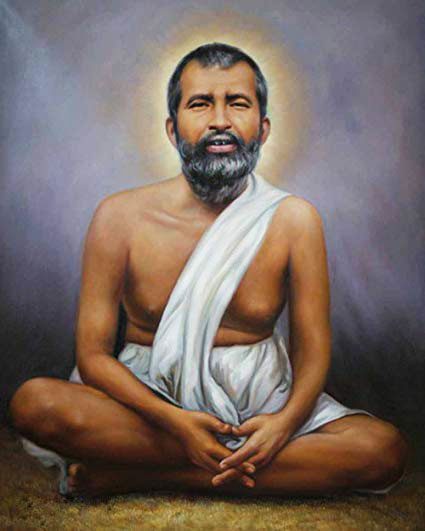
In the profound words of Sri Ramakrishna, "He who has known God can never argue." This statement invites us to reflect on the transformative nature of spiritual realization, suggesting that true knowledge of the divine transcends the need for debate or contention. When one has genuinely encountered the essence of God, the urgency to prove oneself right or to engage in intellectual sparring diminishes, revealing a deeper understanding rooted in humility and love. This insight is crucial in a world often rife with conflict and division, where the quest for truth can devolve into mere argumentation.
Ramakrishna's assertion speaks to a fundamental shift in consciousness that occurs upon the realization of the divine. It suggests that the experience of God is not merely an intellectual exercise but a profound encounter that reshapes one's entire being. In this light, the quote serves as a reminder that true wisdom is not about winning arguments but about embodying a state of being that reflects divine love and understanding. This perspective invites us to consider how our own spiritual journeys might lead us away from divisive discourse and toward a more compassionate engagement with the world around us.
The image / the metaphor
At first glance, the imagery in Ramakrishna's quote evokes a sense of peace and resolution. The phrase "has known God" implies a deep, intimate experience, one that goes beyond mere belief or intellectual assent. The verb "argue" carries with it connotations of conflict, struggle, and the desire to assert one's position. In juxtaposing these two elements, Ramakrishna highlights the transformative power of divine knowledge, suggesting that such an experience renders the need for argument obsolete. The felt sense here is one of tranquility, where the heart is aligned with a higher truth that transcends the dualities of right and wrong.
Diving deeper into the metaphor, we can see that the act of knowing God is akin to awakening from a dream of separation and conflict. In this awakened state, the distinctions that often fuel arguments—such as ego, pride, and the need for validation—begin to dissolve. The realization of God brings forth a profound humility, where one recognizes the interconnectedness of all beings. This humility is not a passive resignation but an active engagement with life that fosters compassion and understanding, allowing one to navigate the complexities of human relationships without the need for defensiveness or contention.
In the speaker's tradition
Sri Ramakrishna's teachings are deeply rooted in the Hindu tradition, where concepts such as dharma, bhakti, and prajna play pivotal roles in understanding the nature of existence and the divine. Dharma, or righteous duty, emphasizes the importance of living in harmony with the cosmic order, while bhakti, or devotion, highlights the path of love and surrender to God. In this context, the idea that one who has known God can never argue aligns with the principles of humility and selflessness found in these teachings. The realization of God leads to a state of kenosis, or self-emptying, where the individual ego is relinquished in favor of a greater unity with the divine.
Moreover, this sentiment resonates with the Buddhist concept of sunyata, or emptiness, which suggests that clinging to fixed views and identities leads to suffering. Just as the realization of sunyata encourages a letting go of attachment to self, Ramakrishna's assertion invites us to release our attachment to being right. In the Bhagavad Gita, Krishna imparts wisdom on the importance of performing one's duty without attachment to the fruits of action, echoing the sentiment that true knowledge of the divine leads to a life of service rather than contention.
Living the teaching
Consider a modern scenario where this teaching might resonate: a heated discussion among friends about political beliefs. Each person is passionately defending their viewpoint, and the conversation quickly escalates into an argument. In this moment, the wisdom of Ramakrishna's quote serves as a gentle reminder that true understanding transcends the need to win debates. If one of the participants were to embody the essence of having "known God," they might instead approach the conversation with a spirit of openness and curiosity, seeking to understand rather than to convince. This shift in perspective can transform the dynamic from one of conflict to one of connection.
Similarly, in personal relationships, the application of this teaching can be profound. Imagine a disagreement with a loved one, where both parties are entrenched in their positions. By invoking the spirit of Ramakrishna's insight, one might choose to step back from the argument, recognizing that the love shared between them is far more significant than the need to be right. This act of humility can pave the way for deeper understanding and reconciliation, allowing both individuals to move beyond their differences and nurture the bond that unites them.
A reflection
As we contemplate the depth of Ramakrishna's words, we are invited to reflect on our own lives: In what areas do we find ourselves clinging to the need to argue or prove our point? How might our understanding of the divine reshape our interactions with others? By engaging with these questions, we can begin to explore the transformative potential of knowing God, allowing it to guide us toward a more compassionate and harmonious existence.




Join the BrightStar Community
Stay connected with daily inspiration, event announcements, and community wisdom