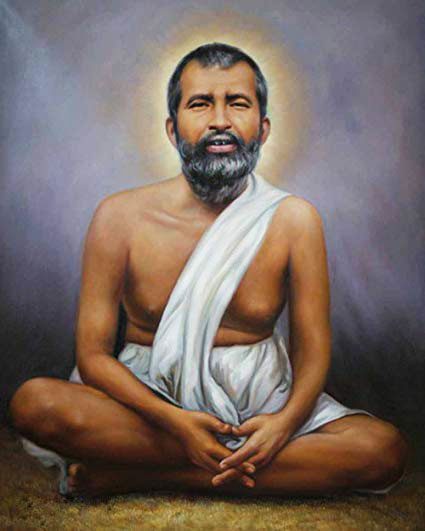
The Cleansing Power of Love and Repentance
Sri Ramakrishna's poignant assertion that "tears of repentance and tears of love wash away the sins of millions of births" invites us to explore the profound relationship between emotional expression and spiritual purification. In this statement, he emphasizes that the act of genuinely feeling remorse for past actions, coupled with the capacity to love deeply, serves as a transformative force capable of cleansing the soul. This notion is not merely a poetic flourish; it speaks to the heart of spiritual evolution and the human experience, where our emotional states can lead us toward liberation or entrapment.
To delve deeper, we must recognize that tears, whether born from sorrow or joy, symbolize a release of the burdens we carry. In the context of spiritual practice, these tears become a medium through which we confront our past misdeeds and embrace the love that connects us to the divine and to one another. This duality of emotion—repentance and love—serves as a bridge, allowing us to transcend the limitations of our previous lives and move toward a state of purity and enlightenment.
The image / the metaphor
The imagery of tears in Ramakrishna's quote evokes a visceral sense of vulnerability and authenticity. Tears of repentance suggest a deep acknowledgment of one's shortcomings and the weight of past actions, while tears of love reflect an openness to the divine and to others. The verbs "wash away" imply a cleansing process, one that is active and transformative, suggesting that these emotional expressions are not merely passive experiences but rather powerful catalysts for change.
Metaphorically, tears can be seen as a sacred water that nourishes the soul, washing away the grime of ignorance and ego. In this light, the act of crying becomes a spiritual practice, a form of catharsis that allows individuals to confront their inner darkness and emerge renewed. This duality of love and repentance highlights the intricate dance between suffering and joy, illustrating how both are essential for spiritual growth and understanding.
In the speaker's tradition
Within the rich tapestry of Hindu philosophy, Ramakrishna's insights resonate deeply with concepts such as bhakti, or devotion, and dharma, the moral order of the universe. Bhakti emphasizes the importance of love and surrender to the divine, while dharma calls for righteous living and ethical conduct. The interplay between these concepts underscores the necessity of both love and repentance in the journey toward spiritual fulfillment. The tears of repentance signify an acknowledgment of one's failures in adhering to dharma, while tears of love reflect the devotion that can guide one back to the path of righteousness.
This idea finds echoes in various Hindu texts, such as the Bhagavad Gita, where Lord Krishna speaks of the importance of surrendering one's ego and embracing a path of devotion. In Chapter 9, Verse 22, Krishna assures that those who are devoted to Him will have their needs met, suggesting that love and devotion can indeed wash away the burdens of past actions. This connection between emotional expression and spiritual liberation is a recurring theme in the teachings of many saints and sages within the tradition.
Living the teaching
Consider a modern scenario where an individual grapples with feelings of guilt over past mistakes—perhaps a broken relationship or a missed opportunity. In such moments, the act of allowing oneself to feel sorrow, to cry, can be a powerful step toward healing. By embracing these tears of repentance, one acknowledges the pain of past actions and opens the door to forgiveness, both of oneself and of others. This emotional release can lead to a renewed sense of purpose and a commitment to love more fully in the future.
In the context of relationships, the teaching can manifest in moments of conflict or misunderstanding. When we allow ourselves to express love, even amidst anger or resentment, we create space for reconciliation. Tears of love can emerge when we recognize our shared humanity and the interconnectedness of our experiences. This practice of vulnerability fosters deeper connections and encourages a cycle of love and forgiveness, illustrating how the teachings of Ramakrishna can be woven into the fabric of our daily lives.
A reflection
As we contemplate the depth of Sri Ramakrishna's words, we might ask ourselves: How can I cultivate a practice of emotional honesty that embraces both my regrets and my capacity for love? This question invites us to explore the ways in which we can engage with our emotions authentically, recognizing that both repentance and love are essential components of our spiritual journey. In this exploration, we may find that our tears—whether of sorrow or joy—are not signs of weakness but rather expressions of our deepest truths, guiding us toward a more profound connection with ourselves and the divine.




Join the BrightStar Community
Stay connected with daily inspiration, event announcements, and community wisdom