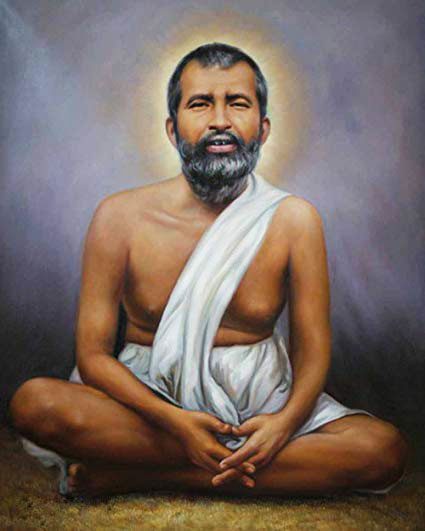
Bound by Love: The Courage to Live Fearlessly
In the tender words of Sri Ramakrishna, "Why should you fear, my child? Have I not bound you with a thousand cords of love?" This profound statement invites us to explore the intricate relationship between love and fear, suggesting that love serves as a protective force against the anxieties that often plague our lives. The stakes are high; in a world rife with uncertainty, understanding this connection can lead to a transformative experience, allowing us to navigate life with a sense of security and purpose.
Ramakrishna's assertion is not merely a comforting platitude; it is a call to awaken to the reality of divine love that envelops us. This love is not passive; it is dynamic and active, urging us to confront our fears rather than retreat from them. By recognizing that we are bound by love, we can cultivate a sense of fearlessness that empowers us to engage with life’s challenges, fostering resilience and deepening our spiritual journey.
The image / the metaphor
At the heart of Ramakrishna's quote lies a rich tapestry of imagery. The phrase "bound you with a thousand cords of love" evokes a sense of being securely tethered, suggesting that love is not just an abstract feeling but a tangible force that connects us to the divine and to one another. The choice of the word "cords" implies strength and durability; these are not flimsy threads but robust ties that can withstand the trials of life. This imagery invites us to feel the warmth and safety that love provides, contrasting sharply with the isolating nature of fear.
Diving deeper into the metaphor, we can see that these "cords" symbolize the myriad ways in which love manifests in our lives—through relationships, community, and spiritual practice. Each cord represents a connection that nurtures our spirit and fortifies us against fear. In this light, love becomes a sanctuary, a refuge where we can find solace and strength, reminding us that we are never truly alone in our struggles.
In the speaker's tradition
To fully appreciate Ramakrishna's message, we must situate it within the broader context of Hindu philosophy, particularly the concepts of bhakti and dharma. Bhakti, or devotion, emphasizes the importance of love and surrender to the divine, suggesting that through deep devotion, one can transcend fear and experience a profound sense of security. Dharma, on the other hand, refers to the moral and ethical duties that guide our actions; when we align ourselves with our dharma, we find that love naturally flows, creating a protective barrier against fear and uncertainty.
In the Bhagavad Gita, a foundational text in Hinduism, Lord Krishna reassures Arjuna, saying, "Fear not, for I am with you." This echoes Ramakrishna's sentiment, reinforcing the idea that divine love is a constant presence in our lives. The Gita teaches that by surrendering to this love and fulfilling our dharma, we can cultivate a fearless heart, one that is resilient in the face of life's inevitable challenges.
Living the teaching
Consider a modern scenario where this teaching resonates: a young professional facing the daunting prospect of a job interview. The fear of rejection looms large, often paralyzing individuals and preventing them from showcasing their true potential. By internalizing Ramakrishna's message, one can approach the interview with a sense of calm, recognizing that they are supported by the "cords of love"—the encouragement of family, friends, and the divine. This awareness can transform the experience from one of anxiety to an opportunity for authentic expression.
Another application of this teaching can be found in personal relationships. Imagine a couple navigating a difficult conversation, where fear of conflict threatens to stifle open communication. By invoking the understanding that they are bound by love, they can approach the discussion with vulnerability and courage, allowing their connection to deepen rather than fracture. In daily practice, this might manifest as a commitment to honest dialogue, fostering an environment where love can flourish and fear diminishes.
A reflection
As we contemplate Ramakrishna's words, we are invited to reflect on our own lives: What fears hold us back from fully embracing the love that surrounds us? In moments of anxiety, can we remind ourselves of the "thousand cords of love" that bind us to our community, our beliefs, and the divine? This contemplation encourages us to explore the ways in which love can act as a powerful antidote to fear, guiding us toward a more fearless existence.




Join the BrightStar Community
Stay connected with daily inspiration, event announcements, and community wisdom