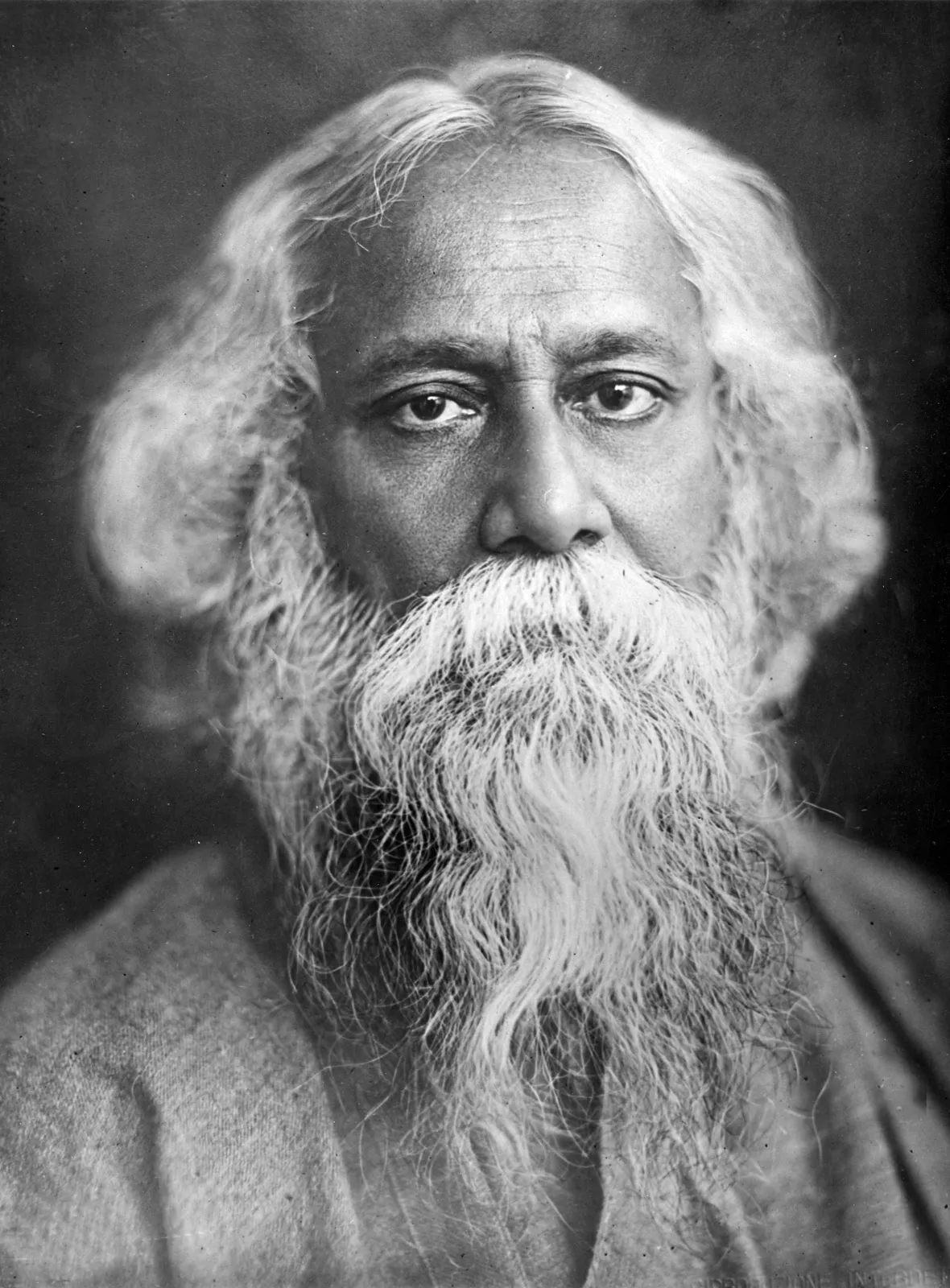
Awakening the Soul: The Call of Inner and Outer Longing
Rabindranath Tagore's poignant inquiry, "That which oppresses me, is it my soul trying to come out in the open, or the soul of the world knocking at my heart for its entrance?" invites us to explore the duality of our inner struggles and the external forces that shape our existence. This question resonates deeply within the human experience, as it encapsulates the tension between personal longing and the collective consciousness. Understanding this dynamic is essential for anyone seeking to navigate the complexities of selfhood and connection in a world that often feels overwhelming.
In this quote, Tagore deftly articulates a profound existential dilemma: the struggle between the individual soul's desire for expression and the universal soul's call for recognition. This tension is not merely a philosophical musing; it is a lived reality for many. The weight of our personal burdens can often feel like a barrier to our true selves, while simultaneously, the world around us beckons us to engage, to contribute, and to connect. This interplay of internal and external forces is a rich ground for contemplation, urging us to examine the nature of our own oppression and the potential liberation that lies in acknowledging both our individual and collective identities.
The image / the metaphor
Tagore's quote is imbued with vivid imagery that evokes a sense of struggle and yearning. The word "oppresses" suggests a heavy weight, an internal conflict that can feel suffocating. The notion of the soul "trying to come out in the open" conjures images of a flower striving to bloom, or a bird yearning to break free from its cage. This metaphor of emergence speaks to the innate desire within each of us to express our true nature, to reveal the essence that lies dormant beneath layers of societal expectation and personal fear.
Delving deeper into the metaphor, we can see that the "soul of the world" represents a collective consciousness, a shared longing for connection and understanding. This duality highlights the interplay between the individual and the universal, suggesting that our personal struggles are not isolated but rather part of a larger tapestry of human experience. The heart, as the site of this encounter, symbolizes both vulnerability and strength, a place where the personal and the collective can meet and transform. In this light, Tagore's words become a call to embrace our inner turmoil as a pathway to greater awareness and connection.
In the speaker's tradition
Rabindranath Tagore's exploration of the soul's duality is deeply rooted in the Hindu tradition, which emphasizes the interconnectedness of all beings. Concepts such as dharma, the moral order of the universe, and bhakti, the path of devotion, resonate with the themes present in his quote. The idea of kenosis, or self-emptying, aligns with the notion of allowing the soul to emerge, while the concept of sunyata, or emptiness, invites us to recognize the space where personal and collective longings intersect. Tagore's work embodies the essence of these teachings, urging us to engage with both our individual paths and the greater cosmic journey.
In the Bhagavad Gita, a foundational text in Hindu philosophy, the dialogue between Arjuna and Krishna reflects a similar tension between personal duty and universal responsibility. Arjuna's struggle to fulfill his dharma amidst the chaos of battle mirrors the conflict Tagore articulates. Krishna's guidance emphasizes the importance of recognizing one's place within the larger whole, suggesting that true liberation comes from understanding and embracing both the individual and the collective dimensions of existence. This interplay of self and world is a central theme in Tagore's poetry and philosophy, inviting us to reflect on our own roles within the vast tapestry of life.
Living the teaching
Consider a modern scenario where this teaching resonates: an individual grappling with career dissatisfaction. They may feel a profound sense of oppression, caught between the desire to pursue a passion and the societal pressures to conform to a more conventional path. In this moment, Tagore's question serves as a guiding light, prompting the individual to reflect on whether their discomfort stems from an unexpressed inner calling or a yearning to contribute to something greater than themselves. By engaging with this inquiry, they may find the courage to explore new avenues that align with both their personal aspirations and the needs of the world around them.
In the context of relationships, Tagore's insight can illuminate the complexities of connection. Imagine a couple facing a communication breakdown, each partner feeling misunderstood and oppressed by unexpressed emotions. Here, the quote invites them to consider whether their struggles arise from their individual fears or from a deeper, shared longing for intimacy and understanding. By acknowledging this duality, they can begin to bridge the gap between their personal experiences and the collective desire for connection, fostering a space where both souls can emerge and flourish.
A reflection
As we contemplate Tagore's profound question, we are invited to explore the nature of our own oppressions and longings. What is it that stirs within us, yearning for expression? Are we listening to the whispers of our own souls, or are we attuned to the call of the world around us? In this moment of reflection, let us ask ourselves: How can we create space for both our individual truths and the collective needs of humanity to coexist harmoniously within our hearts?




Join the BrightStar Community
Stay connected with daily inspiration, event announcements, and community wisdom