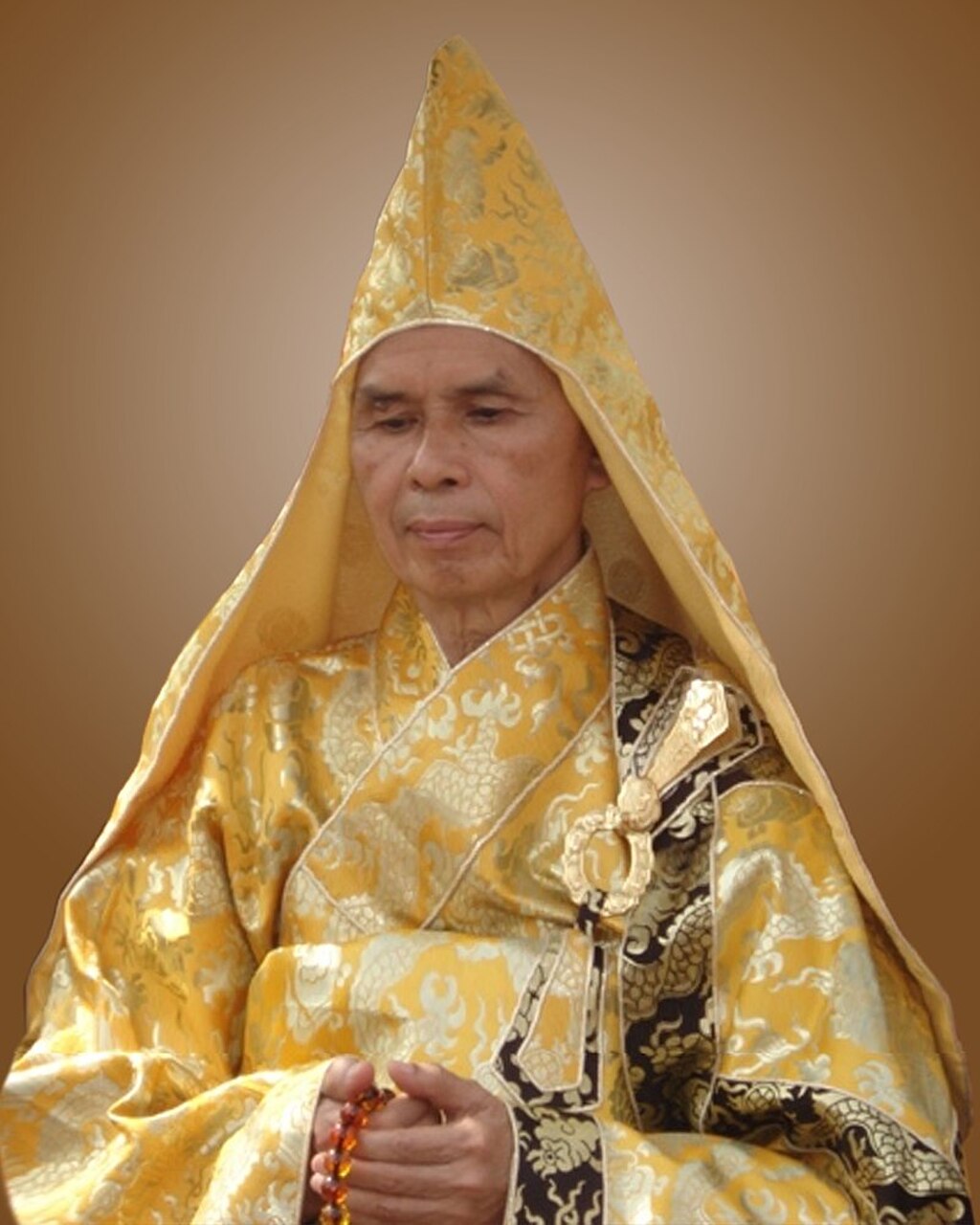
Awakening to the Present: The Depth of Mindfulness
Thich Nhat Hanh invites us to embrace the present moment with a profound sense of mindfulness, suggesting that when we are fully engaged in the now, our comprehension of life deepens significantly. This insight is not merely a call to awareness; it is an invitation to experience life in its fullness. In a world often characterized by distraction and haste, the ability to ground ourselves in the present becomes a vital practice that enriches our understanding of ourselves and our surroundings.
Mindfulness, as articulated by Thich Nhat Hanh, is more than just a technique; it is a way of being that fosters a deeper connection to our experiences. By cultivating this awareness, we can peel back the layers of our habitual responses and preconceived notions, allowing for a clearer perception of reality. This deepened understanding is not only transformative for the individual but also ripples outward, influencing our relationships and interactions with the world around us.
The image / the metaphor
The imagery in Thich Nhat Hanh's quote evokes a sense of immersion in the present moment, where the act of being mindful serves as a gateway to deeper understanding. The verbs "are" and "touch" suggest a gentle yet profound engagement with life, emphasizing the importance of presence over mere observation. This tactile sense of connection implies that understanding is not a distant intellectual exercise but rather an intimate experience that unfolds as we anchor ourselves in the now.
Delving deeper into the metaphor, we can see that mindfulness acts as a lens through which the complexities of life become clearer. Just as a magnifying glass reveals the intricate details of a leaf, mindfulness allows us to perceive the subtleties of our thoughts, emotions, and interactions. This clarity is not just about seeing more; it is about understanding the interconnectedness of all things, fostering compassion and insight that transcends superficial judgments.
In the speaker's tradition
Thich Nhat Hanh's teachings are rooted in the rich soil of Buddhist philosophy, where concepts such as dharma and prajna play pivotal roles. Dharma, often understood as the truth or law of the universe, invites us to align our lives with the deeper currents of existence. Prajna, or wisdom, emerges from this alignment, cultivated through the practice of mindfulness. In this context, mindfulness becomes a vehicle for realizing the interconnectedness of all beings, leading to a compassionate understanding of our shared human experience.
In his seminal work, "The Miracle of Mindfulness," Thich Nhat Hanh emphasizes that mindfulness is not merely a practice but a way of life that can transform our understanding of suffering and joy. This echoes the teachings found in the Heart Sutra, where the concept of sunyata, or emptiness, reveals that our perceptions are often clouded by attachment and aversion. By practicing mindfulness, we can begin to see through these illusions, cultivating a deeper awareness that aligns with the fundamental truths of existence.
Living the teaching
Consider a modern scenario where the practice of mindfulness can be particularly impactful: the daily commute. Many individuals find themselves lost in thoughts of the day ahead or the tasks left undone, often missing the beauty of the world around them. By consciously choosing to be present during this time—observing the sights, sounds, and sensations of the journey—one can transform a mundane experience into a rich tapestry of awareness. This simple shift not only enhances the commute but also fosters a greater appreciation for life itself.
In relationships, the application of mindfulness can be equally profound. Imagine a moment of conflict with a loved one, where emotions run high and communication falters. By grounding oneself in the present and practicing active listening, one can create space for understanding rather than reaction. This mindful approach allows for a deeper connection, as both parties become more attuned to each other's feelings and perspectives, paving the way for resolution and healing.
A reflection
As we contemplate Thich Nhat Hanh's insight into mindfulness and understanding, we are invited to reflect on our own relationship with the present moment. How often do we find ourselves caught in the web of past regrets or future anxieties, missing the richness of now? In what ways can we cultivate a deeper awareness in our daily lives, allowing for a more profound understanding of ourselves and our interactions with others? This contemplation can serve as a guiding light on our journey toward greater mindfulness and connection.




Join the BrightStar Community
Stay connected with daily inspiration, event announcements, and community wisdom