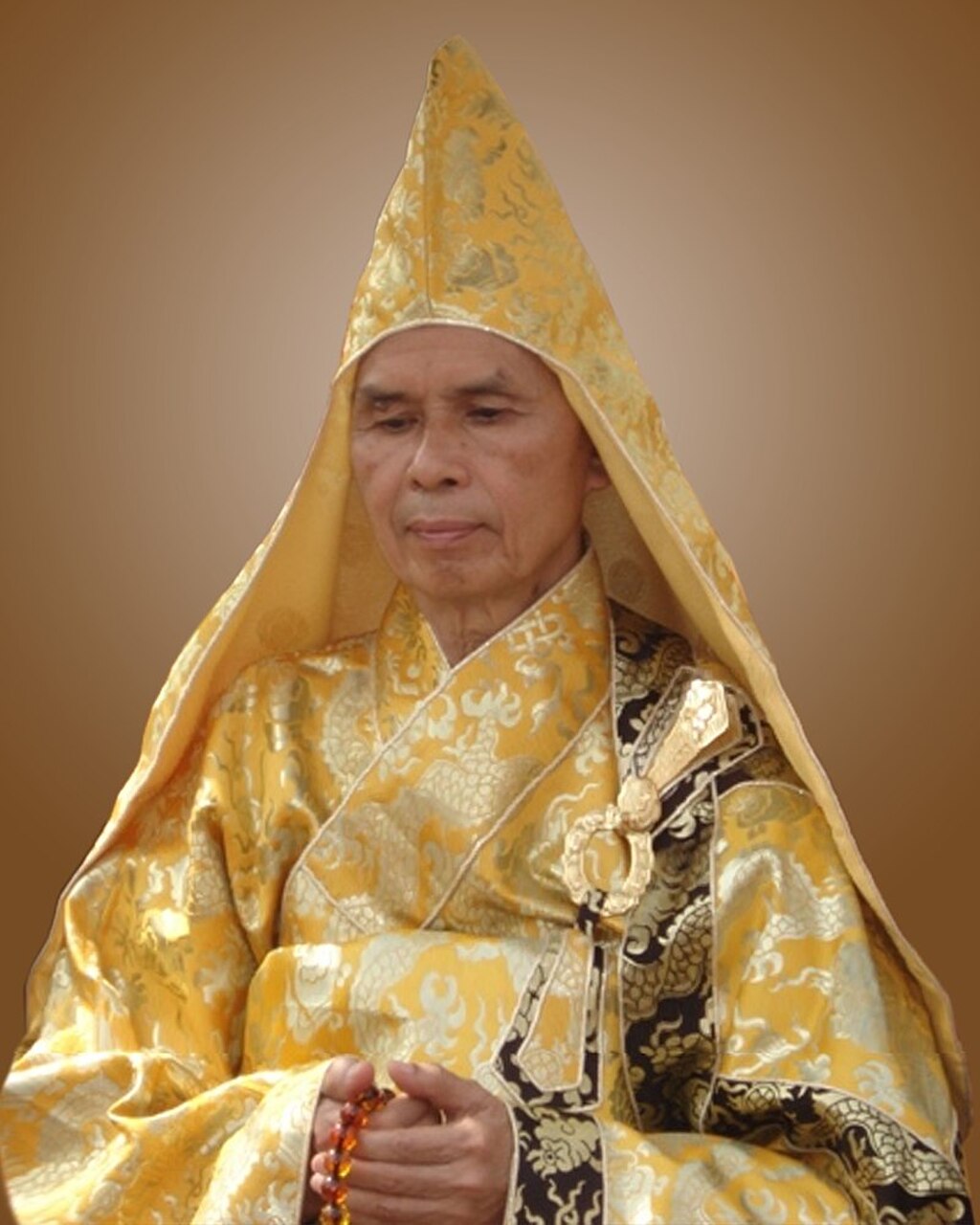
The Tapestry of Existence: Embracing Our Interbeing
Thich Nhat Hanh's poignant assertion, "You are everything you have ever loved, ever met, ever lost," invites us to reflect on the profound interconnectedness of our experiences. This statement encapsulates the essence of our existence, suggesting that our identities are woven from the threads of our relationships and encounters. In a world often characterized by isolation and fragmentation, understanding this interconnectedness can lead to deeper compassion and a more meaningful life.
At its core, this quote challenges the conventional notion of individuality, urging us to recognize that our essence is not solely defined by our own actions or thoughts. Instead, it is shaped by the love we have shared, the people we have encountered, and the losses we have endured. This perspective is not merely philosophical; it has practical implications for how we navigate our lives and relationships, fostering a sense of unity and belonging in an often chaotic world.
The image / the metaphor
The imagery in Thich Nhat Hanh's quote evokes a rich tapestry, where each thread represents a person, experience, or emotion that has touched our lives. The verbs "loved," "met," and "lost" are laden with emotional weight, suggesting that our connections are not fleeting but rather integral to our being. Each interaction leaves an imprint, shaping our understanding of ourselves and the world around us. This metaphor of a tapestry illustrates how our lives are interwoven with the lives of others, creating a complex and beautiful design that reflects our shared humanity.
Diving deeper into this metaphor, we can see that the act of loving, meeting, and losing is not a linear process but a cyclical one. Each relationship we form, whether joyful or painful, contributes to our growth and understanding. In this sense, our losses become as significant as our loves, teaching us resilience and empathy. The tapestry of our existence is not merely a collection of experiences; it is a living, breathing entity that evolves as we do, reminding us that we are never truly alone.
In the speaker's tradition
Thich Nhat Hanh's teachings are deeply rooted in the Buddhist concept of interbeing, which posits that all things are interconnected and that nothing exists in isolation. This idea resonates with the notion of sunyata, or emptiness, which suggests that our identities are fluid and shaped by our relationships with others. In recognizing that we are composed of our experiences with love, loss, and connection, we begin to understand the essence of dharma—the natural law that governs our existence and the interdependent nature of all beings.
In his work, Thich Nhat Hanh often draws upon the teachings of the Buddha, particularly the concept of dependent origination, which emphasizes that all phenomena arise in dependence upon conditions. This principle is echoed in the Heart Sutra, where it is stated that form is emptiness and emptiness is form. By embracing the idea that we are everything we have ever loved, met, and lost, we align ourselves with this profound understanding of existence, recognizing that our lives are a reflection of the interconnected web of life itself.
Living the teaching
Consider a modern scenario where this teaching resonates: a person navigating the complexities of grief after losing a loved one. In this moment of profound sorrow, the individual may feel isolated, consumed by their loss. However, by reflecting on Thich Nhat Hanh's words, they can begin to see that their loved one lives on within them, through the memories shared and the love exchanged. This realization can transform their grief into a celebration of the relationship, allowing them to carry forward the essence of that person in their heart.
Another application of this teaching can be found in the realm of relationships. Imagine a couple facing challenges in their partnership. Instead of viewing their struggles as a sign of failure, they can embrace the idea that their love is a culmination of all their shared experiences—both joyful and painful. By recognizing that they are shaped by their interactions, they can approach their difficulties with compassion and understanding, fostering a deeper connection that honors the entirety of their journey together.
A reflection
As we contemplate Thich Nhat Hanh's profound insight, we are invited to consider how our lives are intertwined with those around us. What does it mean for you to acknowledge that you are everything you have ever loved, met, and lost? In what ways can this understanding deepen your connections and enrich your experience of life? Allow these questions to guide your reflections, opening your heart to the beauty of interbeing and the shared journey of existence.


Join the BrightStar Community
Stay connected with daily inspiration, event announcements, and community wisdom