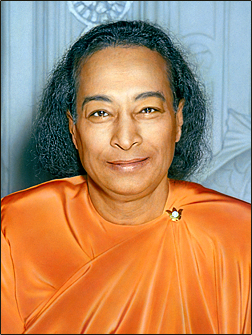
The Privilege of Choice: Embracing Our Free Will
Paramahansa Yogananda eloquently states, "Man has been given free will to choose between good and evil. This is the highest privilege of a human incarnation." In this profound assertion, Yogananda invites us to reflect on the essence of our existence and the sacred gift of free will. The ability to choose is not merely a function of our human experience; it is the very foundation upon which our spiritual journey unfolds. This privilege carries with it immense responsibility, as our choices shape not only our lives but also the lives of those around us.
Delving deeper, we recognize that the concept of free will transcends mere decision-making. It is a dynamic interplay between our inner nature and the external world, a dance of consciousness that allows us to navigate the complexities of life. Each choice we make, whether aligned with goodness or veering towards negativity, serves as a reflection of our evolving understanding of self and the universe. Yogananda's insight beckons us to embrace this privilege with mindfulness, urging us to consider the implications of our choices on our spiritual evolution.
The image / the metaphor
At the heart of Yogananda's quote lies the imagery of free will as a divine privilege. The verbs "choose" and "given" evoke a sense of agency and responsibility, suggesting that our capacity to discern between good and evil is not merely a right but a sacred endowment. This imagery conjures a landscape where each decision is a stepping stone on the path of our spiritual journey, illuminating the way toward higher consciousness. The felt sense of this privilege is one of empowerment, inviting us to engage actively with our lives rather than passively accepting circumstances.
Going deeper into the metaphor, we can envision free will as a compass guiding us through the labyrinth of existence. Each choice we make is akin to a brushstroke on the canvas of our lives, contributing to the larger masterpiece of our spiritual evolution. The notion of good and evil, while often perceived as binary opposites, can be understood as a spectrum of choices that reflect our inner state. In this light, our free will becomes a tool for self-discovery, allowing us to explore the depths of our being and the interconnectedness of all life.
In the speaker's tradition
Paramahansa Yogananda's teachings are deeply rooted in the rich tradition of Hindu philosophy, where the concepts of dharma and karma play pivotal roles in understanding free will. Dharma, often translated as righteousness or duty, emphasizes the importance of aligning our choices with the greater good. In this context, free will is not an arbitrary exercise but a sacred responsibility to act in accordance with our higher purpose. The interplay of free will and dharma invites us to consider how our choices contribute to the harmony of the universe.
Moreover, Yogananda's perspective resonates with the idea of kenosis, or self-emptying, found in various spiritual traditions. This concept encourages us to transcend the ego and embrace a state of openness to divine guidance. In the Bhagavad Gita, Krishna imparts wisdom on the importance of making choices aligned with one's true nature, reinforcing the notion that our free will is most potent when it is in service to a higher calling. The sacred texts remind us that our choices are not isolated acts but integral parts of a larger cosmic tapestry.
Living the teaching
Consider a modern scenario where the teaching of free will manifests in the workplace. Imagine a colleague facing ethical dilemmas, torn between the pressure to conform to a toxic culture and the desire to uphold integrity. In this moment, the privilege of free will becomes a beacon of hope, empowering the individual to choose a path that aligns with their values. By exercising their free will to advocate for a healthier work environment, they not only honor their own integrity but also inspire others to reflect on their choices, creating a ripple effect of positive change.
In the realm of relationships, the concept of free will can be equally transformative. Picture a couple navigating a challenging phase in their partnership, where misunderstandings and resentment have taken root. Each partner stands at a crossroads, faced with the choice to either engage in blame or to extend compassion and understanding. By consciously choosing to communicate openly and to listen deeply, they exercise their free will in a manner that fosters healing and connection. This choice not only strengthens their bond but also serves as a testament to the power of love and the privilege of choice in shaping their shared journey.
A reflection
As we contemplate Yogananda's profound assertion, we are invited to reflect on the nature of our own choices. In what ways do we recognize the privilege of free will in our lives, and how do we navigate the delicate balance between good and evil? Consider this contemplative question: How can we cultivate a deeper awareness of our choices, ensuring that they align with our highest selves and contribute to the greater good of all beings?




Join the BrightStar Community
Stay connected with daily inspiration, event announcements, and community wisdom