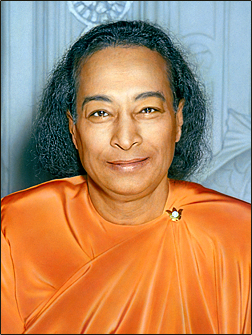
The Journey of Reunion: Finding Stillness in Restlessness
Paramahansa Yogananda's assertion that "Meditation is the science of reuniting the soul with the Spirit" speaks to the profound journey of self-discovery and inner peace. He acknowledges the challenge faced by the ordinary individual, whose restless thoughts often obstruct this sacred reunion. This quote invites us to explore the depths of meditation not merely as a practice, but as a transformative science that bridges the gap between our fragmented selves and the divine essence within us. Understanding this relationship is crucial for anyone seeking a deeper connection to their spiritual nature.
Yogananda's insight resonates deeply in a world where distractions abound and the mind is often a cacophony of competing thoughts. The struggle to quiet the mind and attain a state of inner stillness is a universal experience, one that many encounter on their spiritual paths. The essence of this teaching lies in recognizing that meditation is not just a technique but a profound journey toward wholeness. It beckons us to confront our restlessness and, through disciplined practice, to cultivate a sanctuary of peace within.
The image / the metaphor
The imagery in Yogananda's quote is rich and evocative, suggesting a process of reunion that is both intimate and profound. The term "reuniting" implies a prior separation, a longing that exists within the soul, yearning to reconnect with the Spirit. This reunion is not merely a return to a previous state but a transformative experience that elevates the soul to a higher understanding of its divine nature. The use of the word "science" further emphasizes that this process is systematic and can be cultivated through dedicated practice, much like a scientist conducting experiments to uncover truths.
Diving deeper into the metaphor, we can see that the "ordinary man" represents each of us, caught in the whirlwind of daily life, where thoughts race and distractions pull us in myriad directions. The "restless thoughts" symbolize the noise of the external world and the internal chatter that often clouds our perception of the divine. Yogananda's words invite us to consider meditation as a means to quiet this storm, to still the waters of our minds, and to create a space where the soul can recognize its inherent connection to the Spirit. This metaphor of reunion speaks to the heart of spiritual practice: the journey from fragmentation to wholeness.
In the speaker's tradition
Paramahansa Yogananda's teachings are deeply rooted in the rich tradition of Hindu philosophy, where concepts such as dharma, the moral order of the universe, and bhakti, the path of devotion, play pivotal roles. The notion of reuniting the soul with the Spirit aligns with the Hindu understanding of the ultimate goal of life: to realize one's true nature as Atman, the individual soul, which is fundamentally one with Brahman, the universal Spirit. This reunion is often described in terms of kenosis, the self-emptying of the ego, allowing the divine essence to flow freely through us.
In the context of sacred texts, we can draw parallels to the Bhagavad Gita, where Krishna guides Arjuna toward self-realization and the understanding of the eternal nature of the soul. The Gita emphasizes the importance of meditation and self-discipline as tools for achieving clarity and union with the divine. Yogananda's perspective enriches this understanding, framing meditation as a scientific approach to achieving this profound state of unity, where the soul transcends its limitations and recognizes its divine heritage.
Living the teaching
Consider a modern scenario where an individual grapples with the demands of work and family life, feeling overwhelmed by responsibilities and the incessant noise of daily existence. In such moments, the practice of meditation can serve as a refuge, a sacred space where one can step back from the chaos and reconnect with the inner self. By dedicating even a few minutes each day to sit in stillness, the individual can begin to quiet the restless thoughts that cloud their mind, allowing for a deeper awareness of their true essence and a renewed sense of purpose.
In relationships, the teaching of reuniting the soul with the Spirit can manifest in the way we approach conflict and communication. When faced with a difficult moment, such as a disagreement with a loved one, the practice of meditation can help us cultivate patience and empathy. By taking a moment to breathe and center ourselves, we can move beyond our initial reactions and respond from a place of love and understanding, fostering a deeper connection that honors both our individuality and our shared spirit.
A reflection
As we contemplate Yogananda's profound insight, we are invited to reflect on our own experiences of restlessness and the longing for reunion with the Spirit. What practices can we incorporate into our daily lives to cultivate stillness and foster a deeper connection with our true selves? In moments of chaos, how might we remember that the journey of meditation is not just about quieting the mind, but about embracing the sacred reunion that awaits us within?




Join the BrightStar Community
Stay connected with daily inspiration, event announcements, and community wisdom