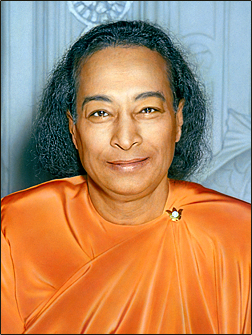
Awakening to the Soul's Guidance
Paramahansa Yogananda's assertion that "the divine plan was that man should be governed by his soul, not his senses" invites us to reflect on the profound distinction between our inner essence and the external stimuli that often dictate our actions. In a world saturated with sensory experiences, this quote challenges us to prioritize the deeper, more enduring guidance of our soul. The stakes are high; our ability to navigate life with purpose hinges on this fundamental understanding of self-governance.
To delve deeper, we must recognize that the senses, while essential for experiencing the world, can lead us astray if they become our primary compass. Yogananda's wisdom encourages us to cultivate a relationship with our soul, which serves as a beacon of truth and clarity amidst the noise of sensory distractions. This journey toward soul governance is not merely an abstract idea; it is a practical path toward realizing our highest potential and fulfilling our unique purpose in life.
The image / the metaphor
At the heart of Yogananda's quote lies a vivid metaphorical landscape. The "soul" represents our true self, the eternal essence that connects us to the divine and to one another, while the "senses" symbolize the transient experiences that can cloud our judgment. The verbs chosen—"governed"—imply a dynamic relationship where the soul is not a passive observer but an active leader, guiding our thoughts, emotions, and actions. This imagery evokes a sense of inner authority, suggesting that true mastery comes from aligning with our soul rather than being swayed by fleeting sensory experiences.
Diving deeper into this metaphor, we can envision the soul as a wise ruler, seated on a throne, while the senses are akin to a bustling court filled with advisors, each vying for attention. The challenge lies in discerning which voices to heed. When we allow our senses to dominate, we risk becoming mere spectators in our own lives, reacting to external stimuli rather than responding from a place of inner wisdom. Yogananda's call to be governed by the soul is an invitation to reclaim our agency and live authentically.
In the speaker's tradition
Within the rich tapestry of Hindu philosophy, Yogananda's teaching resonates with several key concepts. The notion of dharma, or one's righteous duty, aligns closely with the idea of being governed by the soul. When we act in accordance with our soul's guidance, we fulfill our dharma, contributing to the greater harmony of existence. Additionally, the practice of bhakti, or devotion, emphasizes surrendering to the divine will, which can be seen as a pathway to aligning with the soul's purpose.
To further illustrate this, we can reference the Bhagavad Gita, where Krishna advises Arjuna to act according to his higher self rather than being swayed by the tumult of his senses and emotions. This ancient text underscores the timeless nature of Yogananda's message, reminding us that the struggle between the soul and the senses is a universal human experience. By embracing this teaching, we can cultivate a deeper understanding of our own spiritual journey and the divine plan that guides it.
Living the teaching
Consider a modern scenario where this teaching can be applied: a busy professional facing the pressures of deadlines and expectations. In such a context, it is easy to become overwhelmed by the demands of the senses—emails, notifications, and the incessant buzz of productivity. However, by taking a moment to connect with the soul through meditation or quiet reflection, the individual can gain clarity on their true priorities and values, allowing them to navigate their responsibilities with a sense of purpose rather than mere reaction.
In a different application, imagine a relationship where misunderstandings and emotional triggers frequently arise. By recognizing that the senses often amplify feelings of hurt or frustration, one can choose to pause and connect with their soul's wisdom. This practice of stepping back to listen to the deeper self can transform interactions, fostering compassion and understanding rather than conflict. In both scenarios, the essence of Yogananda's teaching becomes a guiding light, illuminating the path toward a more conscious and fulfilling life.
A reflection
As we contemplate Yogananda's profound insight, we are invited to ask ourselves: How often do I allow my senses to dictate my choices, and how might my life change if I were to prioritize the guidance of my soul? This question serves as a powerful touchstone for self-inquiry, encouraging us to explore the ways in which we can cultivate a deeper connection with our inner essence. In doing so, we may find that the divine plan unfolds more clearly, revealing the purpose and direction that our souls have always intended for us.




Join the BrightStar Community
Stay connected with daily inspiration, event announcements, and community wisdom