The Collective Stream of Thought
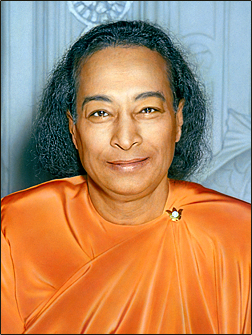
Paramahansa Yogananda's assertion that "thoughts are universally and not individually rooted" invites us to reconsider the nature of our consciousness. He suggests that what we perceive as our own thoughts are merely fragments of a larger, collective stream of consciousness. This perspective challenges the notion of individualism in thought, urging us to recognize that our mental processes are interconnected with a broader tapestry of ideas and emotions that permeate the universe. Understanding this can profoundly affect how we engage with our inner lives and the world around us.
This insight carries significant implications for our spiritual journey. If we accept that our thoughts are not solely our own, we begin to see the importance of cultivating awareness and discernment in our mental processes. The realization that we are "catching" thoughts rather than originating them compels us to examine the quality of the thoughts we allow into our consciousness. This awareness can lead to a more profound understanding of our place in the cosmos and our responsibility in shaping the collective consciousness.
The image / the metaphor
The imagery in Yogananda's quote evokes a sense of fluidity and interconnectedness. The phrase "thoughts that are floating about him" conjures a vision of an ethereal realm where ideas drift like leaves on a breeze, accessible to anyone who is open to receiving them. The verbs "think" and "catch" suggest an active engagement with this stream of thought, yet they also imply a certain passivity in the individual experience. This duality highlights the tension between individual agency and the collective nature of consciousness.
In the speaker's tradition
Within the context of Yogananda's teachings, this idea resonates deeply with the Hindu concepts of dharma and prajna. Dharma, often translated as duty or righteousness, emphasizes the interconnectedness of all beings and the importance of aligning one's thoughts and actions with the greater good. Prajna, or wisdom, invites us to discern the nature of our thoughts and their origins, encouraging a deeper understanding of the self in relation to the universe. Yogananda's perspective aligns with these principles, suggesting that true wisdom arises from recognizing our thoughts as part of a larger cosmic dialogue.
Moreover, this notion echoes the Buddhist concept of sunyata, or emptiness, which teaches that all phenomena, including thoughts, are interdependent and lack inherent existence. Just as sunyata invites practitioners to see beyond the illusion of separateness, Yogananda's assertion encourages us to transcend the ego's grasp on individual thought. In this way, both traditions guide us toward a more expansive view of consciousness, one that embraces the interconnectedness of all beings and the shared nature of our mental experiences.
Living the teaching
Consider a modern scenario where this teaching manifests: a heated discussion about a contentious social issue. In such moments, individuals often believe they are expressing their own unique perspectives. However, upon reflection, one might realize that their opinions are heavily influenced by media narratives, peer pressure, and societal expectations. Recognizing that these thoughts are not solely one's own can foster a sense of humility and openness, allowing for a more compassionate dialogue that transcends personal biases and taps into the collective consciousness.
In the realm of relationships, this teaching can be particularly transformative. Imagine a conflict with a loved one, where both parties are entrenched in their viewpoints. By acknowledging that their thoughts may be influenced by external factors—past experiences, cultural conditioning, or even the emotional state of those around them—each person can approach the situation with greater empathy. This awareness can facilitate healing and understanding, as both individuals learn to navigate their thoughts with a sense of shared humanity, rather than rigid individualism.
A reflection
As we contemplate Yogananda's profound insight, we are invited to ask ourselves: What thoughts am I currently engaging with, and where do they originate? This question encourages us to explore the roots of our mental patterns and consider how they are shaped by the collective consciousness. By cultivating awareness around our thoughts, we can begin to discern which ideas resonate with our true selves and which may be mere echoes of the world around us. In this exploration lies the potential for deeper understanding and connection with both ourselves and others.




Join the BrightStar Community
Stay connected with daily inspiration, event announcements, and community wisdom