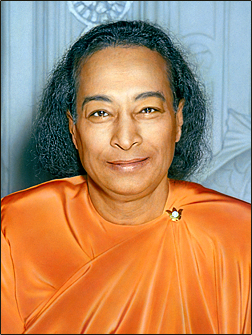
The Alchemy of Wisdom: Embodying Truth Beyond the Mind
Paramahansa Yogananda's assertion that "Wisdom is not assimilated with the eyes, but with the atoms" invites us to reconsider the nature of wisdom itself. He suggests that true wisdom transcends mere intellectual understanding; it must permeate our very being, becoming part of our physical and spiritual essence. This perspective challenges the conventional notion that knowledge is solely a product of observation and cognition, emphasizing instead the importance of a holistic integration of truth into our lives. The stakes are high: without this deeper assimilation, we risk living in a state of disconnection from the profound truths that can guide our existence.
In a world increasingly dominated by superficial information and fleeting insights, Yogananda's words resonate with urgency. They remind us that wisdom is not merely an accumulation of facts or theories but a lived experience that transforms our very atoms—our essence. This transformation requires a commitment to embodying our convictions, allowing them to shape our actions, relationships, and interactions with the world. The journey toward such wisdom is not only a personal endeavor but a collective call to cultivate a deeper understanding of our interconnectedness and the truths that bind us.
The image / the metaphor
Yogananda's metaphor of wisdom being assimilated "with the atoms" evokes a vivid image of a profound internalization process. The choice of the word "atoms" suggests a fundamental, almost elemental transformation, indicating that wisdom must penetrate to the core of our being. It implies that wisdom is not merely an abstract concept to be understood but a tangible force that can alter our very fabric. This imagery invites us to consider how deeply our beliefs and insights can influence our physical and emotional states, shaping our responses to life’s challenges.
Diving deeper into this metaphor, we can see that Yogananda is calling for a kind of wisdom that is visceral and experiential. It is not enough to know something intellectually; we must feel it, live it, and allow it to resonate within us. This embodiment of wisdom transforms our perceptions and actions, leading to a more authentic existence. When wisdom spreads to our atoms, it becomes a guiding light, illuminating our path and enabling us to navigate the complexities of life with grace and understanding.
In the speaker's tradition
Paramahansa Yogananda's teachings are deeply rooted in the rich tradition of Hindu philosophy, where concepts such as dharma, the moral order of the universe, and prajna, or wisdom, play pivotal roles. In this context, wisdom is not merely an intellectual pursuit but a way of living in harmony with the universe. The idea of kenosis, or self-emptying, resonates here as well; to truly embody wisdom, one must let go of ego-driven desires and open oneself to the deeper truths of existence. This aligns with the notion of bhakti, or devotion, where the heart and mind unite in the pursuit of divine understanding.
Yogananda's emphasis on the embodiment of wisdom can also be seen in the teachings of the Bhagavad Gita, where Krishna imparts profound truths to Arjuna, urging him to act in accordance with his higher self. The Gita teaches that wisdom is not merely theoretical; it is a call to action that requires us to engage with the world from a place of deep understanding and compassion. This integration of knowledge and action is essential for living a life aligned with one's true purpose.
Living the teaching
Consider a modern scenario where this teaching can be applied: a workplace filled with stress and competition. In such an environment, it is easy to become consumed by the need to succeed, often at the expense of our values and relationships. However, if one embodies the wisdom that Yogananda speaks of—allowing convictions to permeate one's very being—this individual might approach challenges with a sense of calm and integrity. They would recognize that true success is not merely measured by accolades but by the quality of their interactions and the authenticity of their contributions.
In a different context, imagine a relationship strained by misunderstandings and unspoken grievances. Here, embodying wisdom means moving beyond intellectual debates and engaging in heartfelt communication. It requires vulnerability and the willingness to listen deeply, allowing the essence of one's convictions to inform the dialogue. By doing so, both partners can cultivate a deeper understanding of each other, transforming the relationship into a space of mutual growth and support, rather than conflict.
A reflection
As we contemplate Yogananda's profound insight, we are invited to reflect on the nature of our own wisdom. Are our beliefs and convictions merely intellectual exercises, or have they truly permeated our being? In what ways can we allow the truths we hold dear to spread to our very atoms, transforming not just our understanding but our actions and interactions? This contemplation invites us to explore the depth of our wisdom and its embodiment in our daily lives.




Join the BrightStar Community
Stay connected with daily inspiration, event announcements, and community wisdom