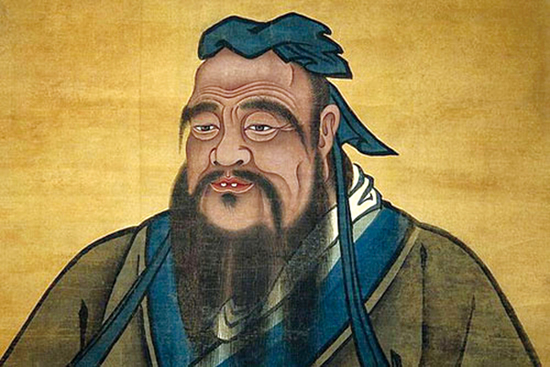
The Polestar of Virtue: A Guiding Light in Governance
In the words of Confucius, "He who governs by his virtue is like the polestar; he stays in his place, and the multitude of stars pay homage to him." This profound statement encapsulates the essence of virtuous leadership, suggesting that true authority emanates not from force or coercion but from an unwavering commitment to moral integrity. The stakes of this teaching are high, as it invites us to reflect on the nature of governance and the qualities that elevate a leader above the chaos of the multitude.
Confucius presents a compelling image of the polestar, a fixed point in the night sky that guides travelers through darkness. This metaphor serves as a reminder that virtue is not merely an abstract ideal but a tangible force that can stabilize and orient communities. In an age where leadership often seems adrift, the call to embody virtue becomes a clarion call for those who aspire to guide others with wisdom and integrity.
The image / the metaphor
The imagery of the polestar is rich with meaning. The polestar, or North Star, is a celestial body that remains constant in its position, providing direction to those who seek it. In contrast, the multitude of stars represents the ever-changing and chaotic nature of human affairs. The verbs chosen—"governs," "stays," and "pays homage"—evoke a sense of stability and reverence, suggesting that a virtuous leader commands respect not through dominance but through the strength of character and moral clarity.
Diving deeper into the metaphor, we see that the polestar symbolizes an ideal of leadership that transcends the transient whims of popularity or power. Just as the stars revolve around the polestar, so too do individuals and communities gravitate toward those who embody virtue. This gravitational pull is not a matter of coercion; rather, it is an acknowledgment of the leader's steadfastness and moral compass, which provides guidance and inspiration to others.
In the speaker's tradition
Within the context of Confucianism, this quote resonates with the broader themes of virtue, harmony, and moral governance. Confucius emphasized the importance of "ren," often translated as humaneness or benevolence, which serves as the foundation for ethical leadership. This concept parallels ideas found in other spiritual traditions, such as "dharma" in Hinduism, which denotes the moral order of the universe, and "kenosis" in Christian thought, which speaks to the self-emptying of one’s own desires for the sake of others.
Moreover, the Analects, where this quote is found, is a treasure trove of teachings that underscore the significance of virtue in leadership. For instance, in Analects 1.2, Confucius states, "The Master said, 'Is it not a joy to have friends come from afar? Is it not a joy to learn and practice what you have learned? Is it not a joy to be unashamed when you are not able to?" This passage reinforces the idea that true learning and growth are rooted in virtuous relationships and the pursuit of moral excellence, echoing the sentiment of the polestar as a guiding principle in governance.
Living the teaching
Consider a modern scenario in which a community faces a crisis, such as a natural disaster. In such moments, leaders who embody virtue—those who demonstrate compassion, integrity, and a commitment to the common good—become the polestars for their communities. Their steadfastness inspires trust and cooperation, allowing the multitude to rally together in the face of adversity. This illustrates how the principles of Confucius can manifest in real-world situations, where virtuous leadership becomes a beacon of hope and direction.
In personal relationships, the teaching of governing by virtue can also be applied. Imagine a difficult moment in a friendship where misunderstandings arise. A person who embodies the qualities of the polestar—patience, empathy, and honesty—can navigate the turbulence with grace. By remaining true to their values and fostering open communication, they create a space for healing and reconciliation, demonstrating that virtue is not just a lofty ideal but a practical guide for everyday interactions.
A reflection
As we contemplate the wisdom of Confucius, we are invited to ask ourselves: How can I embody the qualities of the polestar in my own life and relationships? This question encourages a deep reflection on our values and the ways we can lead by example, whether in our communities, workplaces, or personal interactions. By striving to govern our actions with virtue, we not only honor the teachings of Confucius but also contribute to a more harmonious and compassionate world.


