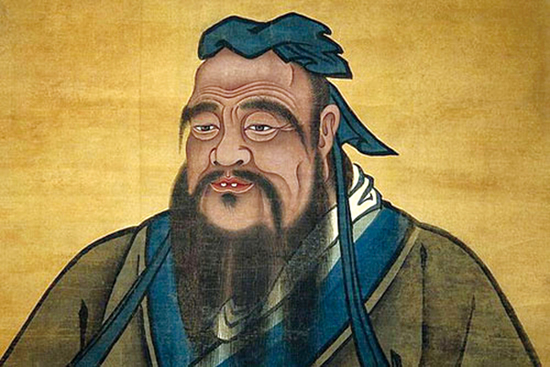
The Path of Thoughtful Learning
Confucius profoundly states, "He who learns but does not think is lost." This assertion encapsulates the essence of true education, emphasizing that mere accumulation of knowledge without reflection leads to a disoriented existence. In a world inundated with information, this wisdom serves as a crucial reminder that understanding and wisdom arise not just from learning but from the thoughtful integration of that knowledge into our lives. The stakes are high; without the ability to think critically about what we learn, we risk becoming passive recipients of information rather than active participants in our own growth.
Delving deeper into this quote, we recognize that Confucius invites us to engage in a dynamic interplay between learning and contemplation. The act of learning is not a solitary endeavor; it requires the engagement of the mind, heart, and spirit. When we learn without the accompanying practice of reflection, we may find ourselves adrift, unable to navigate the complexities of life. This teaching urges us to cultivate a habit of introspection, to question, and to synthesize our experiences, thereby transforming knowledge into wisdom that can guide our actions and decisions.
The image / the metaphor
At its core, the quote presents a vivid image of a traveler who has acquired a map but lacks the ability to interpret it. The verbs "learns" and "thinks" are pivotal; they suggest a duality that must coexist for meaningful progress. Learning is often seen as a passive act, akin to filling a vessel with water, while thinking is an active process that requires engagement and discernment. The felt sense of being "lost" evokes a profound disconnection, highlighting the importance of not just knowing but understanding how to apply that knowledge in the world.
Moreover, the metaphor extends beyond mere navigation; it speaks to the essence of human existence. To be lost is to wander aimlessly, devoid of purpose or direction. In this light, thinking becomes the compass that guides us through the complexities of life. It is through contemplation that we can chart our course, making sense of the myriad experiences that shape our journey. Thus, the quote serves as a powerful reminder that learning must be accompanied by the thoughtful application of that knowledge to avoid the pitfalls of confusion and aimlessness.
In the speaker's tradition
Within the rich tapestry of Confucian thought, this quote resonates deeply with the concept of *ren*, or humaneness, which emphasizes the importance of moral character and ethical relationships. Learning, in the Confucian tradition, is not merely an intellectual pursuit but a means to cultivate virtue and contribute to the well-being of society. This aligns with the idea of *dharma* in other traditions, where the pursuit of knowledge is intertwined with ethical living and responsibility towards others. The call to think critically about what we learn is a call to embody these virtues in our daily lives.
Furthermore, the *Analects*, where this quote is found, serves as a foundational text for understanding the interplay between knowledge and moral action. Confucius often emphasized the importance of self-cultivation and reflection, urging his followers to engage deeply with their learning. In *Analects 2.15*, he underscores that knowledge devoid of reflection leads to a disconnection from one's moral compass, echoing the sentiments found in other philosophical traditions that advocate for the integration of wisdom and ethical living.
Living the teaching
Consider a modern scenario where a student diligently studies for exams, absorbing facts and figures but neglects to reflect on their significance. This student may excel academically yet find themselves unprepared for real-world applications of their knowledge. In this context, the teaching of Confucius becomes particularly relevant; it encourages the student to engage in discussions, seek mentorship, and reflect on how their learning can be applied to solve real problems. By doing so, they transform rote memorization into a deeper understanding that enriches their life and the lives of those around them.
In a different application, imagine a relationship where one partner is constantly learning about communication techniques but fails to think critically about their emotional responses. This partner may read books and attend workshops yet struggle to connect meaningfully with their loved one. Here, the teaching of Confucius invites them to not only learn about communication but to reflect on their feelings, motivations, and the dynamics of their relationship. By integrating thought with learning, they can foster a deeper connection, moving beyond surface-level interactions to a more profound understanding of each other.
A reflection
As we contemplate the wisdom of Confucius, we are invited to reflect on our own learning journeys. Are we merely accumulating knowledge, or are we engaging in the thoughtful practice of reflection that leads to true understanding? In what areas of our lives can we deepen our thinking to transform our learning into wisdom? These questions encourage us to examine our relationship with knowledge and challenge us to cultivate a practice of reflection that enriches our lives and the lives of those around us.


