The Essence of Meaning: Virtue Beyond Wealth and Honor
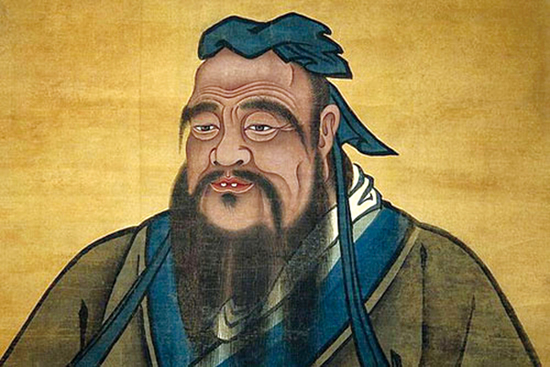
Confucius profoundly asserts that without virtue, wealth and prestige are devoid of significance. This statement invites us to reflect on the true essence of our pursuits in life. In a world often driven by material gain and social status, the wisdom of Confucius serves as a reminder that the foundation of a meaningful existence lies not in external accolades but in the cultivation of inner character and moral integrity. The stakes are high; without virtue, our achievements may lead to emptiness rather than fulfillment.
Delving deeper, we find that Confucius's assertion challenges the very fabric of societal values. It compels us to question the motivations behind our ambitions and the nature of our desires. Are we chasing riches and honor for their own sake, or are we seeking to embody virtues that enrich our lives and the lives of others? This inquiry is not merely philosophical; it has practical implications for how we engage with the world and the legacy we leave behind. In essence, Confucius invites us to redefine success through the lens of virtue.
The image / the metaphor
At the heart of Confucius's quote lies a vivid imagery that juxtaposes virtue with riches and honor. The verbs "have meaning" suggest a deeper existential inquiry, implying that wealth and status are mere tools that require the guiding light of virtue to illuminate their true purpose. Without this moral compass, riches become burdensome, and honor transforms into a hollow facade. The imagery evokes a sense of disconnection; it paints a picture of a life where external achievements are not anchored in ethical grounding, leading to a dissonance between one's actions and one's values.
Going further into the metaphor, we can envision a garden where virtue acts as the soil nourishing the plants of wealth and honor. Without this fertile ground, the plants may sprout but will ultimately wither, lacking the sustenance needed for growth. This metaphor emphasizes that virtue is not merely an accessory to our achievements but rather the very essence that allows them to flourish. In this light, we begin to see that the pursuit of virtue is not an abstract ideal but a practical necessity for a life well-lived.
In the speaker's tradition
Confucius's teachings are deeply rooted in the tradition of Confucianism, which emphasizes the importance of moral integrity, social harmony, and the cultivation of virtuous character. Central to this tradition is the concept of "ren," often translated as "benevolence" or "humaneness," which embodies the ideal of treating others with kindness and respect. This notion aligns closely with the idea of dharma in other spiritual traditions, where ethical living is seen as essential to the well-being of both the individual and society. In Confucian thought, virtue is not an isolated quality but a relational one, deeply intertwined with our interactions and responsibilities toward others.
Moreover, the Analects, where this quote is found, serves as a foundational text that encapsulates Confucius's insights on ethics and governance. In this work, he frequently emphasizes the importance of moral leadership, suggesting that a ruler's virtue is paramount for the prosperity of the state. This echoes the sentiment found in other philosophical traditions, such as Aristotle's notion of eudaimonia, where the highest good is achieved through virtuous living. Thus, Confucius's assertion resonates not only within his own tradition but also across various philosophical landscapes, reinforcing the universal significance of virtue.
Living the teaching
Consider a modern scenario where an individual is offered a lucrative job that promises wealth and prestige but requires compromising personal values. In this situation, the teaching of Confucius becomes particularly relevant. The choice to prioritize virtue over material gain can lead to a more fulfilling and authentic life. This decision may not only impact the individual’s sense of self-worth but also influence the culture of the workplace, fostering an environment where ethical considerations are valued alongside financial success.
In a different context, imagine a relationship strained by misunderstandings and conflicts. Here, the application of Confucian virtue can manifest as a commitment to empathy and open communication. By prioritizing virtues such as patience and understanding, individuals can navigate their differences with grace, ultimately strengthening their bond. This practice of embodying virtue in everyday interactions serves as a reminder that the essence of our relationships is built not on external accolades but on the moral fabric that binds us together.
A reflection
As we contemplate Confucius's assertion that "without virtue, neither riches nor honor have meaning," we are invited to reflect on our own lives. What virtues do we hold dear, and how do they inform our pursuits? In a world that often equates success with material wealth and social standing, how can we cultivate a deeper sense of meaning through our actions and choices? This contemplation encourages us to align our aspirations with our values, fostering a life that resonates with authenticity and purpose.


