Journeying Inward: The Impersonal Depth of Self-Discovery
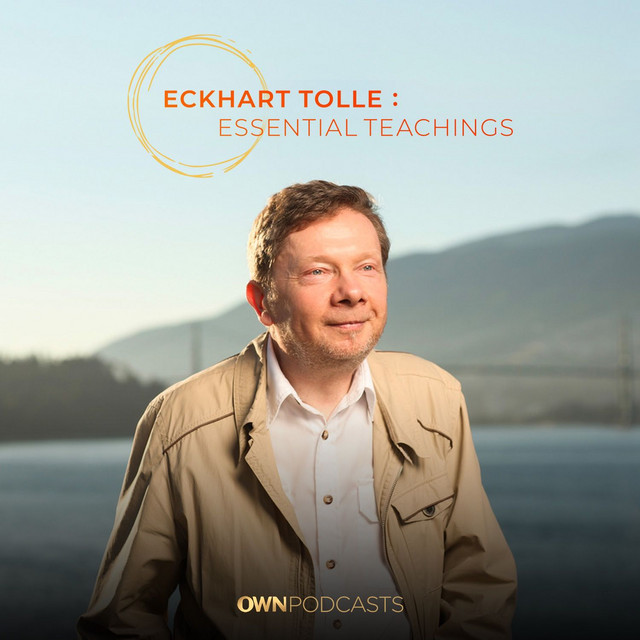
Eckhart Tolle's assertion that "the deeper you go into yourself, the more impersonal you become" invites us to explore the profound layers of our inner being. This statement suggests that as we delve into the depths of our consciousness, we begin to transcend the ego and its attachments, revealing a more universal essence that connects us to all existence. The stakes of this journey are high; in a world often dominated by personal narratives and individual identities, the path inward can lead to a liberation that is both transformative and expansive.
To understand this journey, we must recognize that the process of self-exploration is not merely about uncovering personal truths but about dissolving the very boundaries that define our individuality. As we peel back the layers of our conditioned self, we encounter a vast, impersonal space where the distinctions of self and other blur. This exploration is not just a psychological endeavor; it is a spiritual awakening that challenges our conventional understanding of identity and invites us to embrace a more profound interconnectedness with all life.
The image / the metaphor
The imagery in Tolle's quote evokes a sense of depth and exploration, akin to diving into an ocean where the surface is merely a reflection of the sky above. The verbs "go" and "become" suggest an active journey and a transformative process. As one ventures deeper into the self, the layers of personal history, beliefs, and attachments begin to dissolve, revealing an essence that is not defined by individual experiences but rather by a shared existence. This felt sense of impersonal depth can be both liberating and daunting, as it challenges the very foundations of our self-concept.
In the speaker's tradition
Eckhart Tolle's teachings are deeply rooted in the non-dual tradition, which emphasizes the interconnectedness of all beings and the illusion of separateness. Concepts such as *sunyata* (emptiness) in Buddhism and *fana* (annihilation of the self) in Sufism resonate with Tolle's assertion. Both traditions highlight the importance of transcending the ego to experience a more profound reality, where the self is not an isolated entity but a part of the greater whole. This impersonal essence aligns with the idea of *dharma*, where one's true nature is realized not through personal gain but through a recognition of our shared existence.
In Tolle's work, particularly in *A New Earth*, he draws parallels to the teachings of various spiritual traditions, emphasizing that the journey inward is universal. The notion of *kenosis*, or self-emptying, found in Christian mysticism, echoes this sentiment, suggesting that true fulfillment arises not from clinging to the self but from surrendering to a greater reality. Such teachings remind us that the path to understanding our essence is often paved with the relinquishment of our personal narratives.
Living the teaching
Consider a modern scenario where an individual faces a significant life transition, such as a career change or the end of a relationship. In these moments, the instinct may be to cling to the familiar narratives that define one's identity. However, if one embraces Tolle's teaching and ventures deeper into the self, they may discover that their essence is not tied to their job title or relationship status. This realization can lead to a profound sense of freedom, allowing them to navigate the transition with grace and openness, unencumbered by the weight of personal expectations.
In the context of relationships, this teaching can manifest during conflicts or misunderstandings. When tensions arise, individuals often become entrenched in their personal perspectives, leading to a cycle of blame and defensiveness. By applying Tolle's insight, one can step back and recognize that their true essence is not defined by the conflict but by a shared humanity. This shift in perspective fosters compassion and understanding, allowing for deeper connections that transcend the personal grievances that often cloud our interactions.
A reflection
As we contemplate Tolle's profound statement, we are invited to reflect on our own journeys inward. What aspects of your identity are you clinging to that may be limiting your experience of interconnectedness? In what ways can you embrace the impersonal essence of your being, allowing it to guide you toward a more expansive understanding of yourself and your place in the world? This inquiry invites us to explore the depths of our consciousness, revealing the beauty of our shared existence.