Embracing Freedom Beyond the Mind
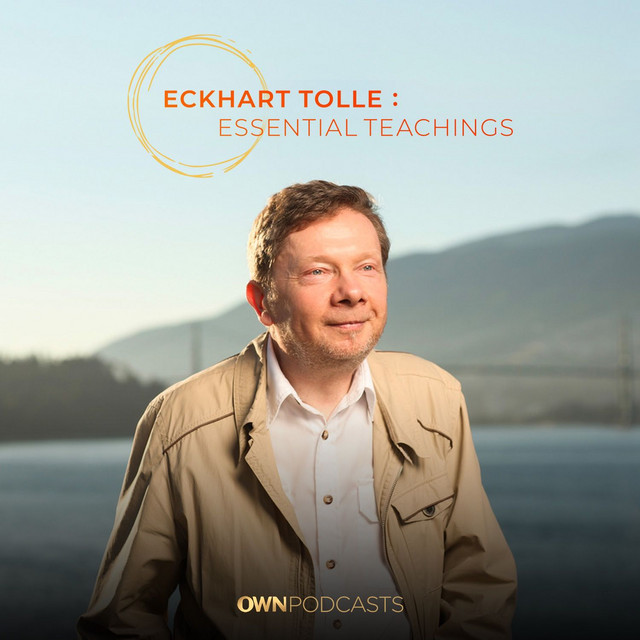
The quote "You give up identification with the mind, you become free," spoken by Eckhart Tolle, invites us to explore the profound liberation that arises when we detach from our thoughts and mental constructs. In a world where our identities are often intertwined with our thoughts, beliefs, and narratives, this teaching challenges us to reconsider what it means to be truly free. The stakes are high; our mental attachments can lead to suffering, anxiety, and a sense of disconnection from our true selves. Tolle's assertion serves as a beacon for those seeking a deeper understanding of their existence beyond the confines of the mind.
Delving deeper into this idea, we recognize that the mind, while a powerful tool for navigation and understanding, can also become a prison. The incessant chatter of thoughts can cloud our perception of reality, trapping us in cycles of judgment, fear, and desire. Tolle's invitation to relinquish this identification is not merely a call for detachment but a pathway to experiencing life in its fullness. By stepping back from the mind's narratives, we open ourselves to a state of being that is more expansive, more authentic, and ultimately, more liberating.
The image / the metaphor
At the heart of Tolle's quote lies a vivid metaphorical landscape. The act of "giving up identification with the mind" suggests a shedding of layers, much like a snake sloughing off its skin. This imagery evokes a sense of renewal and transformation, where the individual emerges not as a collection of thoughts but as a pure essence of being. The verb "give up" carries a weight of surrender, indicating that this freedom is not something to be grasped or achieved but rather a release of what no longer serves us.
Going deeper into this metaphor, we can envision the mind as a vast, turbulent ocean, filled with waves of thoughts and emotions that can easily overwhelm us. When we identify with this ocean, we become lost in its depths, tossed about by its currents. However, by stepping back and observing the ocean from the shore, we can appreciate its beauty without being consumed by it. This shift in perspective is the essence of Tolle's teaching, encouraging us to become the observer of our thoughts rather than the participant in their chaos.
In the speaker's tradition
Eckhart Tolle's teachings are deeply rooted in the non-dual tradition, which emphasizes the interconnectedness of all existence and the illusion of separateness. Concepts such as *sunyata* (emptiness) in Buddhism and *fana* (annihilation of the self) in Sufism resonate with Tolle's assertion. These teachings suggest that true freedom arises when we transcend the ego and its attachments, allowing us to experience the unity of all life. In this context, the mind's identification becomes a veil that obscures our inherent nature, which is boundless and free.
Living the teaching
Consider a modern scenario where this teaching can be applied: imagine a busy professional overwhelmed by the demands of work and life. The constant pressure to perform, to meet expectations, and to maintain a certain image can lead to a sense of entrapment. By practicing Tolle's teaching of detaching from the mind, this individual can begin to observe their thoughts without judgment. They might notice how their self-worth is tied to their job performance and, through this awareness, start to cultivate a sense of freedom that exists beyond their professional identity.
In a different context, think about a relationship that has become strained due to misunderstandings and emotional triggers. By applying Tolle's wisdom, one partner can learn to step back from their reactive thoughts and instead approach the situation with curiosity and compassion. This shift allows for deeper communication and connection, as both individuals begin to see each other beyond their mental narratives. In daily practice, this might involve mindfulness techniques that encourage presence and awareness, fostering a space where love and understanding can flourish.
A reflection
As we contemplate Tolle's profound statement, we are invited to reflect on our own relationship with the mind. What thoughts or identities are we clinging to that may be limiting our experience of freedom? In this moment of introspection, consider this contemplative question: How might your life change if you were to release your identification with your thoughts and embrace the essence of your being? Allow this inquiry to guide you toward a deeper understanding of your true self, beyond the confines of the mind.