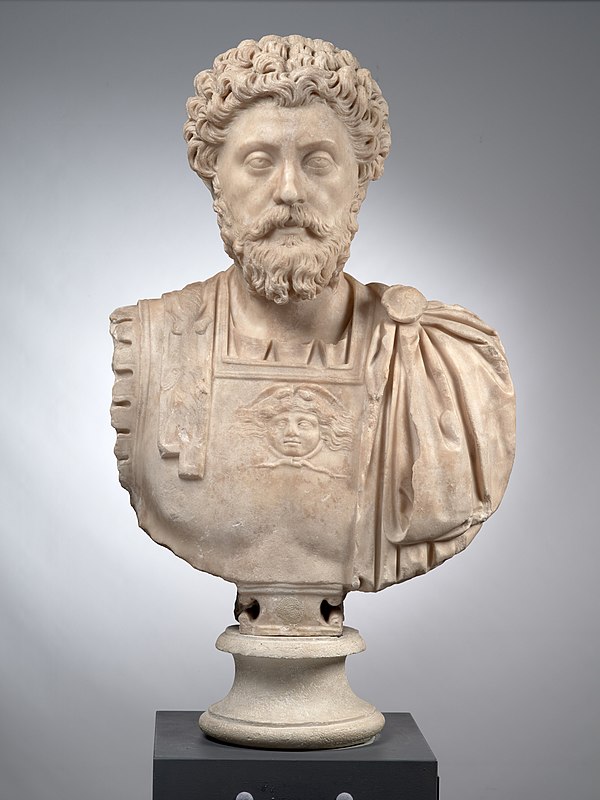
Embodying Authenticity: The Stoic Call to Live Fully
In the words of Marcus Aurelius, “Let men see, let them know, a real man, who lives as he was meant to live.” This profound statement invites us to reflect on the essence of authenticity and virtue. It challenges us to embody our true selves in a world often filled with pretense and distraction. The stakes are high; in a society that frequently rewards superficiality, the call to live genuinely becomes a radical act of courage and integrity.
To live as one was meant to live is not merely a personal endeavor; it is a communal invitation. When we embody our true nature, we inspire others to do the same, creating a ripple effect of authenticity. This quote resonates deeply within the Stoic tradition, which emphasizes the importance of virtue and the alignment of one’s actions with one’s true self. In a time when external validation often overshadows inner truth, Aurelius’s words serve as a beacon, guiding us back to the core of our being.
The image / the metaphor
At first glance, the imagery in Aurelius’s quote evokes a sense of visibility and recognition. The verbs “see” and “know” suggest an unveiling, a revelation of the self that is both powerful and vulnerable. The phrase “a real man” conjures an archetype of authenticity, one who is not merely defined by societal expectations but by an intrinsic understanding of virtue and purpose. This image invites us to consider what it means to be “real” in a world that often celebrates the artificial.
Diving deeper into the metaphor, we find that Aurelius is not merely advocating for visibility; he is calling for a life lived in accordance with one’s true nature. The “real man” embodies the Stoic ideal of virtue, where actions are aligned with reason and moral integrity. This metaphor extends beyond gender, inviting all individuals to reflect on their authenticity and the courage it takes to live truthfully. In this light, the quote becomes a challenge to confront the masks we wear and to strive for a life that resonates with our deepest values.
In the speaker's tradition
Marcus Aurelius stands as a pillar of Stoic philosophy, a tradition that emphasizes the cultivation of virtue as the highest good. Central to Stoicism is the concept of living in accordance with nature, which parallels ideas found in other spiritual traditions, such as dharma in Hinduism or the notion of kenosis in Christian thought. Just as dharma calls individuals to fulfill their true purpose in life, Aurelius urges us to align our actions with our authentic selves, thereby contributing to the greater good of humanity.
In his work "Meditations," Aurelius often reflects on the importance of virtue and the transient nature of life. He writes, “You have power over your mind—not outside events. Realize this, and you will find strength.” This echoes the sentiment of his quote, emphasizing that true strength lies in living authentically, regardless of external circumstances. The Stoic practice of self-examination and mindfulness serves as a tool for individuals to uncover their true selves and act in accordance with their values.
Living the teaching
Consider a modern scenario where this teaching resonates: a workplace filled with competition and superficiality. In such an environment, one might feel pressured to conform to the prevailing norms, sacrificing authenticity for acceptance. However, by embodying the principles of Aurelius, an individual can choose to act with integrity, fostering a culture of honesty and collaboration. This choice not only enriches their own experience but also encourages colleagues to embrace their true selves, creating a more authentic workplace.
Another application of this teaching can be found in personal relationships. Imagine a moment of conflict where one partner feels compelled to hide their true feelings to avoid confrontation. By choosing to express themselves honestly, they honor their own authenticity and invite deeper connection. This act of vulnerability can transform the relationship, allowing both partners to engage more fully and authentically. In this way, Aurelius’s call to live as one was meant to live becomes a guiding principle in nurturing genuine connections.
A reflection
As we contemplate the essence of Aurelius’s words, we are invited to reflect on our own lives: Are we living authentically, in alignment with our true selves? What masks do we wear that prevent us from being seen and known as we truly are? In this moment of introspection, let us consider how we might embrace our authenticity and inspire others to do the same, creating a world where real men and women can thrive in their truth.




Join the BrightStar Community
Stay connected with daily inspiration, event announcements, and community wisdom