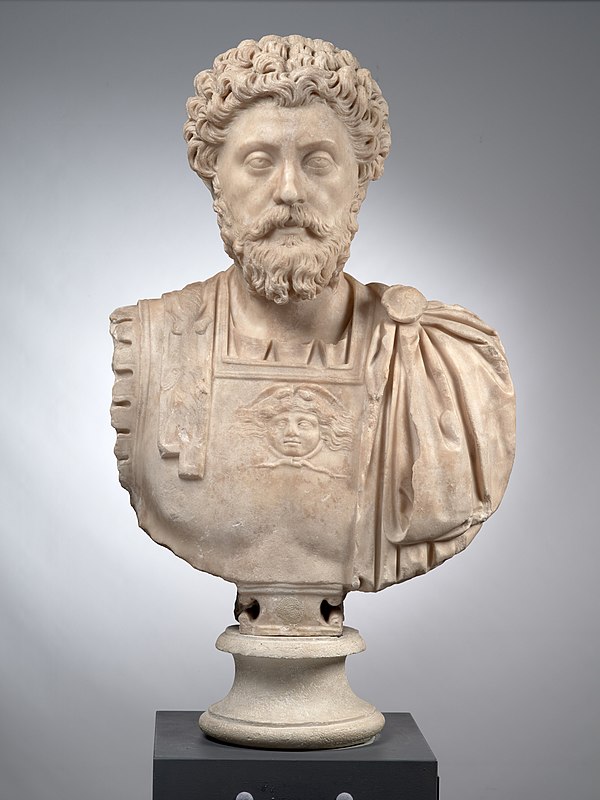
Becoming the Good: A Stoic Call to Action
Marcus Aurelius, the Roman emperor and philosopher, succinctly captures a profound truth in his assertion: "Waste no more time arguing what a good man should be. Be one." This statement urges us to transcend the endless debates and theoretical discussions about virtue and morality, advocating instead for direct action. In a world rife with distractions and moral dilemmas, Aurelius's words serve as a clarion call to embody the principles we espouse, emphasizing that our character is defined not by our words but by our deeds.
In a society that often prioritizes rhetoric over action, Aurelius's exhortation resonates deeply. It challenges us to confront our own hesitations and excuses, pushing us to take responsibility for our moral choices. The essence of this quote lies in its simplicity and urgency; it compels us to reflect on our daily lives and consider how we can actively contribute to the greater good. By embodying the qualities of a good person, we not only elevate ourselves but also inspire those around us to do the same.
The image / the metaphor
At first glance, Aurelius's quote presents a straightforward directive: stop debating and start being. The imagery of "arguing" evokes a sense of conflict, suggesting that discussions about morality can often lead to paralysis rather than progress. The verb "be" is particularly powerful, as it calls for a transformation of identity rather than mere compliance with external standards. This shift from intellectual discourse to lived experience encapsulates the Stoic belief that true wisdom is demonstrated through action, not just contemplation.
Diving deeper into the metaphor, we can see that Aurelius is inviting us to embody the virtues we admire. The act of "being" implies a continuous process of growth and self-improvement, where our actions align with our values. This notion of alignment is central to Stoicism, which teaches that our character is shaped by our choices and responses to life's challenges. In this light, the quote becomes a reminder that our moral compass is not merely a theoretical construct but a lived reality that requires our active participation.
In the speaker's tradition
Marcus Aurelius's philosophy is rooted in Stoicism, a tradition that emphasizes virtue as the highest good. Central to Stoic thought is the concept of living in accordance with nature, which can be likened to the idea of dharma in Eastern philosophies. Just as dharma calls individuals to fulfill their roles in harmony with the universe, Aurelius's call to "be" reflects the Stoic understanding that we must act in alignment with our rational nature and the greater good. This alignment fosters a sense of purpose and strength, allowing us to navigate life's complexities with wisdom.
In his seminal work, "Meditations," Aurelius often reflects on the importance of personal responsibility and the cultivation of virtue. He writes, "You have power over your mind—not outside events. Realize this, and you will find strength." This passage complements the quote at hand, emphasizing that our true strength lies not in external validation or theoretical discussions but in our ability to govern our thoughts and actions. By embodying the virtues we seek, we reclaim our agency and contribute meaningfully to the world around us.
Living the teaching
Consider a modern scenario where this teaching can be applied: a workplace filled with gossip and negativity. Employees might spend hours discussing the shortcomings of their colleagues or the inefficiencies of their organization, yet little changes as a result. In this context, Aurelius's quote serves as a powerful reminder that instead of engaging in endless discussions about what a good workplace should look like, individuals can take the initiative to foster a positive environment. By embodying kindness, integrity, and collaboration, they can inspire others to follow suit, transforming the culture from within.
Another application of this teaching can be found in personal relationships. Imagine a situation where one partner feels unappreciated and begins to voice complaints about the other's behavior. Instead of arguing about what constitutes a good partner, Aurelius's wisdom encourages both individuals to reflect on their actions and strive to embody the qualities they desire in one another. By focusing on being loving, supportive, and understanding, they can create a more harmonious relationship, demonstrating that the essence of love is not merely in words but in the daily choices we make.
A reflection
As we contemplate Marcus Aurelius's call to action, we are invited to reflect on our own lives: What does it mean for us to "be" the good we seek? In what areas are we caught in the cycle of debate rather than action? This quote challenges us to examine our intentions and behaviors, urging us to step into our roles as active participants in the moral fabric of our communities. By embracing this challenge, we not only honor Aurelius's legacy but also contribute to a more virtuous world.



Join the BrightStar Community
Stay connected with daily inspiration, event announcements, and community wisdom