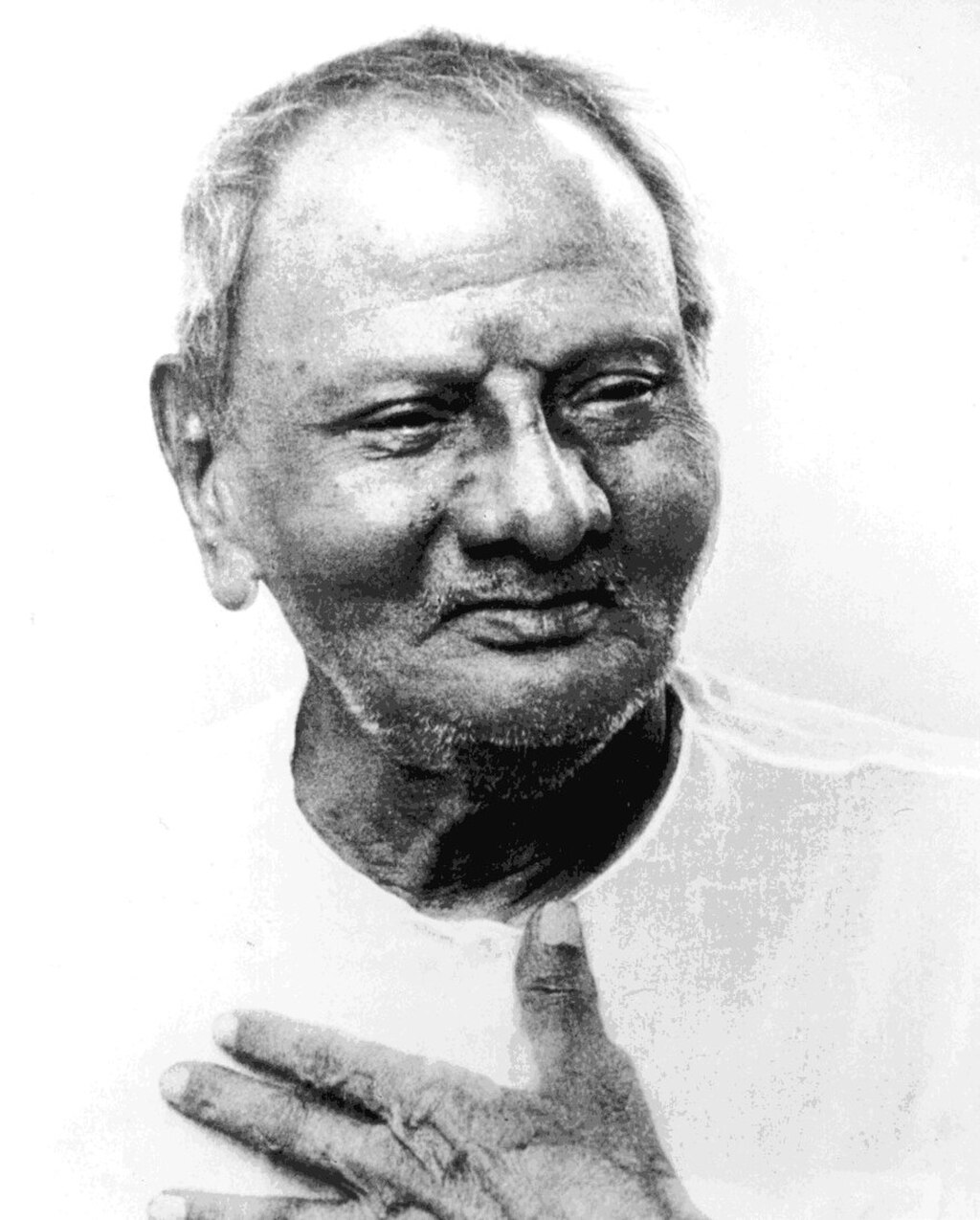
The Art of Simply Being
In the profound simplicity of Nisargadatta Maharaj's words, "Do not deny. Do not affirm. Just be," we find an invitation to embrace existence without the burdens of judgment or assertion. This teaching beckons us to step beyond the dualities of affirmation and negation, suggesting that true understanding lies in the acceptance of our being as it is. In a world rife with opinions and certainties, this perspective holds the potential to liberate us from the confines of our conditioned minds, allowing for a deeper connection with our true selves.
To "just be" is not merely a passive state; it is an active engagement with the essence of existence. It calls us to recognize the transient nature of thoughts and beliefs, urging us to transcend the dichotomies that often govern our lives. In this way, Maharaj's teaching resonates with the core of non-dual philosophy, where the essence of reality is perceived as a singular, undivided whole. The stakes are high: in learning to simply be, we may discover a profound peace that eludes us when we cling to the need to define or defend our existence.
The image / the metaphor
The imagery in Maharaj's quote evokes a sense of stillness and presence. The verbs "deny" and "affirm" suggest a dynamic interplay of thoughts and beliefs that often distract us from the essence of our being. To deny implies a rejection of what is, while to affirm suggests an attachment to a particular view or identity. In contrast, the invitation to "just be" offers a sanctuary of acceptance, where we can rest in the simplicity of existence without the need for labels or definitions.
Diving deeper into this metaphor, we can see that "just being" is akin to the stillness of a pond, undisturbed by the winds of thought and emotion. When we cease to engage in the push and pull of affirmation and denial, we allow ourselves to experience the depth of our true nature. This state of being is not passive resignation but rather an active presence that acknowledges the fullness of life without the need to categorize or control it. In this stillness, we can begin to perceive the interconnectedness of all things, recognizing that our essence is woven into the fabric of existence itself.
In the speaker's tradition
Nisargadatta Maharaj's teachings are deeply rooted in the non-dual tradition, which emphasizes the unity of existence beyond the apparent dualities of self and other, subject and object. Concepts such as *sunyata* (emptiness) and *fana* (annihilation of the self) resonate with the essence of his message, suggesting that liberation arises from the dissolution of the ego and the recognition of our inherent oneness with the universe. In this context, the act of simply being becomes a profound expression of *dharma*, or the natural order of existence, where we align ourselves with the flow of life rather than resist it.
In his seminal work, *I Am That*, Maharaj articulates the notion that the self is not a fixed entity but rather a dynamic process of becoming. This aligns with the Buddhist concept of *prajna*, or wisdom, which invites us to see beyond the illusions of the mind. By embracing the teaching of "just being," we cultivate a deeper understanding of our true nature, allowing us to navigate the complexities of life with grace and clarity. This understanding is not merely intellectual; it is a lived experience that transforms our relationship with ourselves and the world around us.
Living the teaching
Consider a modern scenario where this teaching can be applied: imagine a moment of frustration at work, where the pressures of deadlines and expectations create a whirlwind of thoughts and emotions. In such a situation, the instinct may be to deny the stress or to affirm one's competence through overexertion. However, by practicing the art of "just being," one can pause, breathe, and acknowledge the feelings without judgment. This simple act of presence can transform the experience, allowing for clarity and a more grounded response to the challenges at hand.
In the realm of relationships, the teaching of "just be" can serve as a powerful tool for connection. When faced with conflict or misunderstanding, the tendency may be to defend one's position or to deny the validity of the other’s feelings. Instead, embracing the invitation to simply be allows for a space of openness and vulnerability. By letting go of the need to assert or deny, we create an environment where authentic communication can flourish, fostering deeper understanding and compassion between individuals.
A reflection
As we contemplate the essence of Maharaj's teaching, we might ask ourselves: What would it mean to fully embrace the state of simply being in my daily life? This question invites us to explore the areas where we may be clinging to affirmation or denial, challenging us to cultivate a deeper awareness of our thoughts and emotions. In this exploration, we may uncover the profound peace that arises from accepting ourselves and our experiences as they are, free from the constraints of judgment and expectation.


