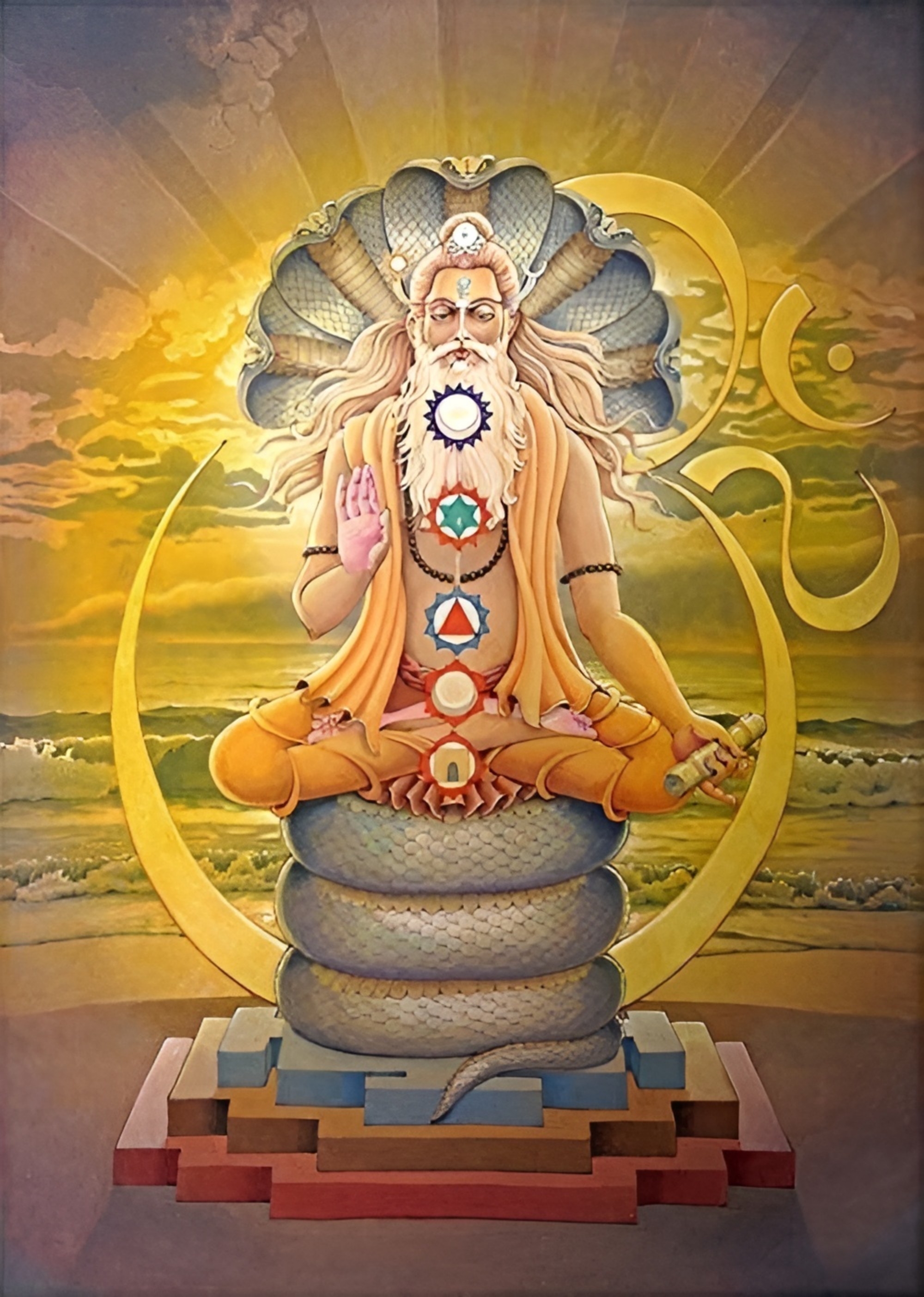
The Sacred Sound of Being: Unpacking Om in Patanjali's Wisdom
In the profound words of Patanjali, "His designation is the sacred syllable Om," we encounter a gateway into the essence of yoga and the universe itself. This quote encapsulates the significance of Om, a sound that transcends mere phonetics to embody the very fabric of existence. Understanding this sacred syllable is not just an intellectual pursuit; it is a journey into the heart of spiritual practice, inviting us to explore the depths of our consciousness and the interconnectedness of all beings.
As we delve deeper into the meaning of Om, we recognize its role as a primordial sound, a vibration that resonates with the universe's creation and sustenance. This syllable serves as a bridge between the material and the spiritual, the finite and the infinite. In a world often filled with noise and distraction, Patanjali's emphasis on Om invites us to return to a state of awareness, to listen deeply, and to attune ourselves to the sacred rhythms of life. The stakes are high: in understanding Om, we may find a pathway to inner peace and a deeper connection to the cosmos.
The image / the metaphor
At its core, the quote presents Om as a designation, a name that encapsulates the essence of the divine. The word "designation" suggests a formal recognition, a title that carries weight and significance. Om is not merely a sound; it is a symbol of the ultimate reality, the source from which all creation flows. The imagery of sound evokes a sense of vibration, a resonance that permeates our being and the universe around us. This sacred syllable is a reminder that our existence is intertwined with the cosmic dance of creation, and that each utterance of Om reverberates with the energy of the universe.
Diving deeper into the metaphor, we can see that Om represents the totality of existence—the past, present, and future, the seen and the unseen. It embodies the concept of non-duality, where distinctions dissolve, and we recognize our unity with all that is. The sound of Om is a call to return to our true nature, to remember that we are not separate from the divine but rather expressions of it. In this way, Om serves as both a sound and a profound teaching, inviting us to explore the depths of our own consciousness and the interconnectedness of all life.
In the speaker's tradition
Patanjali's teachings are rooted in the ancient tradition of yoga, which emphasizes the union of the individual self with the universal consciousness. The concept of dharma, or one's duty and purpose, is intricately linked to the understanding of Om. By recognizing Om as the sacred sound, practitioners are reminded of their place within the cosmic order and the importance of aligning their actions with their true nature. This alignment fosters a sense of kenosis, or self-emptying, allowing individuals to transcend their ego and connect with the divine essence that permeates all existence.
In the Yoga Sutras, Patanjali also speaks of the importance of prajna, or wisdom, which arises from a deep understanding of the self and the universe. The recognition of Om as the sacred syllable can lead to a profound awakening, where practitioners experience a shift in consciousness and a deeper connection to the divine. This is echoed in other texts, such as the Upanishads, where Om is described as the sound of the universe, the essence of all that is, and the key to understanding the nature of reality itself.
Living the teaching
Consider a modern scenario where the teaching of Om might resonate: a busy professional navigating the demands of work and life. In the midst of deadlines and distractions, the practice of chanting Om can serve as a grounding technique, a moment to pause and reconnect with the sacred. By taking a few moments to breathe deeply and chant Om, one can cultivate a sense of calm and clarity, allowing the noise of the external world to fade away. This practice not only enhances focus but also fosters a deeper awareness of one's connection to the universe.
In relationships, the teaching of Om can manifest in the way we communicate and listen to one another. When faced with conflict or misunderstanding, invoking the essence of Om can remind us to approach each interaction with compassion and openness. By recognizing the sacredness in each person, we can transcend our differences and cultivate a deeper sense of unity. This practice encourages us to listen not just to the words spoken but to the underlying vibrations of emotion and intention, fostering a more profound connection with those around us.
A reflection
As we contemplate Patanjali's assertion that "His designation is the sacred syllable Om," we are invited to reflect on our own relationship with sound and silence. How often do we pause to listen to the sacred vibrations that surround us? In what ways can we incorporate the essence of Om into our daily lives, fostering a deeper connection to ourselves and the universe? These questions invite us to explore the transformative power of sound and the sacredness inherent in our existence.


