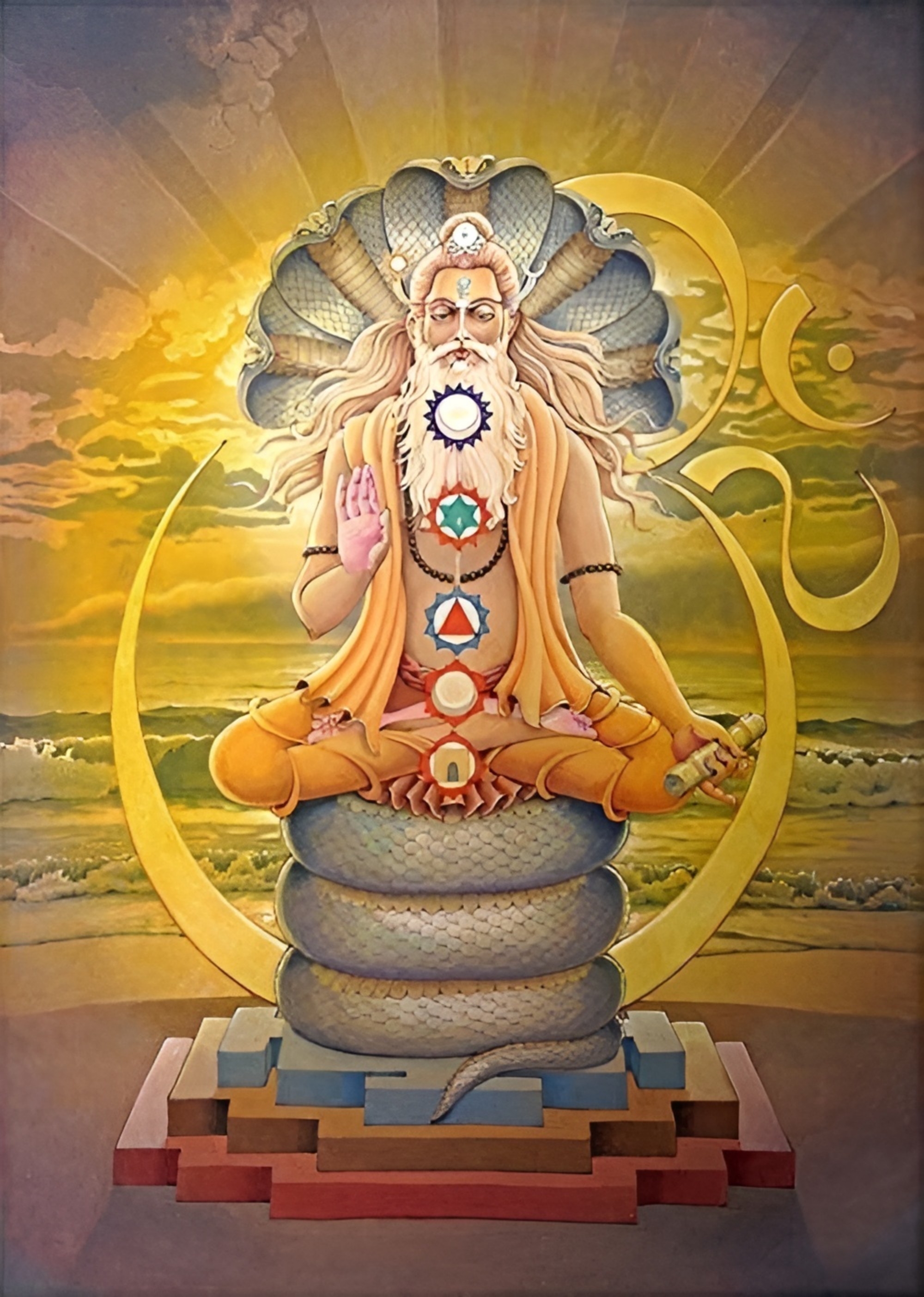
The Infinite Capacity of the Mind
Patanjali's assertion that "His mind becomes capable of attaining anything, from the smallest atom to the infinite" invites us to explore the vast potential of the human mind. This quote encapsulates the essence of mastery, suggesting that through disciplined practice and focused intention, we can transcend limitations and access both the minutiae of existence and the boundless cosmos. The stakes are high; in a world often dominated by distraction and superficiality, understanding the depth of our mental capabilities can lead to profound transformation.
Delving deeper, we recognize that this statement is not merely about intellectual achievement or the accumulation of knowledge. It speaks to a holistic mastery that encompasses emotional, spiritual, and existential dimensions. The journey to such mastery requires dedication, introspection, and a willingness to confront the complexities of both the self and the universe. In this light, Patanjali's words serve as a beacon, guiding us toward a more integrated understanding of our place within the grand tapestry of life.
The image / the metaphor
The imagery in Patanjali's quote evokes a sense of expansiveness and depth. The juxtaposition of "the smallest atom" with "the infinite" suggests a continuum where the micro and macro are interconnected. The verbs "becomes capable of attaining" imply a dynamic process of growth and evolution, emphasizing that mastery is not a static state but a journey of continuous development. This evokes a felt sense of both humility and empowerment, as we recognize our potential to engage with both the tangible and the ethereal.
Diving deeper into the metaphor, we can see that the mind is portrayed as a vessel capable of navigating the vast seas of existence. Just as a skilled sailor learns to read the winds and currents, so too must we cultivate our mental faculties to traverse the complexities of life. This metaphor invites us to consider the tools we possess—our thoughts, emotions, and intentions—as instruments that can either confine us or liberate us, depending on how we choose to wield them.
In the speaker's tradition
Patanjali's teachings are rooted in the ancient tradition of yoga, which emphasizes the union of body, mind, and spirit. Central to this tradition is the concept of dharma, or one's rightful path, which encourages individuals to align their actions with their highest purpose. This alignment fosters a state of kenosis, or self-emptying, allowing the practitioner to transcend the ego and connect with a greater reality. In this context, the mind's capacity to attain anything becomes a reflection of our ability to align with the universal flow of existence.
Moreover, Patanjali's insights resonate with the Buddhist concept of sunyata, or emptiness, which suggests that true understanding arises when we let go of fixed notions and attachments. In the Yoga Sutras, the cultivation of prajna, or wisdom, is essential for realizing this potential. By quieting the fluctuations of the mind through practices such as meditation and mindfulness, we can access deeper layers of awareness that reveal the interconnectedness of all things, thus embodying the essence of Patanjali's profound statement.
Living the teaching
Consider a modern scenario where this teaching can be applied: a professional facing a significant challenge at work. The pressure to perform can often lead to feelings of inadequacy and self-doubt. However, by embracing the idea that the mind can attain mastery over both the minute details of a project and the broader vision of one's career, the individual can shift their perspective. This shift allows them to approach challenges with a sense of curiosity and resilience, recognizing that their mental capacity can be harnessed to navigate complexities and achieve success.
In a different application, imagine a relationship experiencing tension and misunderstanding. By embodying Patanjali's teaching, one partner can cultivate a mindset open to understanding the other's perspective, moving from a place of conflict to one of connection. This requires a willingness to engage deeply, to listen actively, and to transcend the ego's need to be right. In doing so, both partners can access a shared space of empathy and love, illustrating how the mastery of the mind can transform interpersonal dynamics and foster deeper bonds.
A reflection
As we contemplate Patanjali's assertion, we are invited to reflect on our own mental landscapes. What limitations do we impose on ourselves, and how might we begin to dismantle them? In what ways can we cultivate a mindset that embraces both the minutiae of daily life and the vastness of our aspirations? These questions serve as a starting point for a deeper exploration of our potential, encouraging us to engage with the world around us in a more profound and meaningful way.


