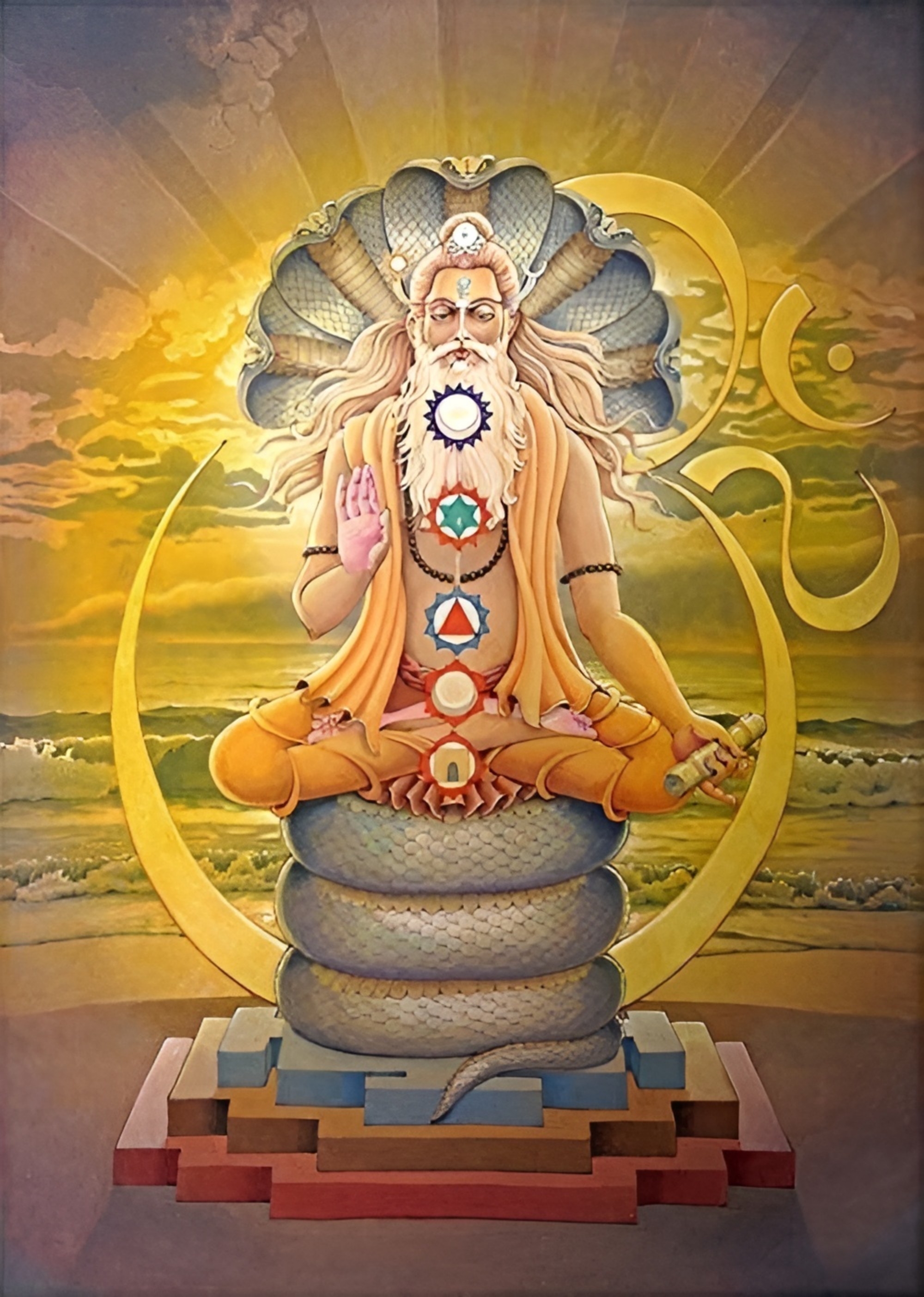
The Dance of Integration: Understanding Samyama
Patanjali's assertion that "these three together — dharana, dhyana, samadhi — constitute samyama" invites us to explore the profound interconnectedness of concentration, meditation, and absorption. This triad is not merely a sequence of practices but a holistic framework that embodies the essence of yoga. By understanding samyama, we can unlock deeper layers of awareness and cultivate a more integrated approach to our spiritual journey. The stakes are high; in a world often fragmented by distraction, the call to unify our mental faculties is both timely and essential.
As we delve deeper into this quote, we recognize that samyama represents a synthesis of mental disciplines that can lead to transformative experiences. Each component—dharana (concentration), dhyana (meditation), and samadhi (absorption)—is a step toward a greater understanding of the self and the universe. This integration is not simply about achieving a state of bliss or enlightenment; it is about embodying a way of being that transcends the ordinary, allowing us to navigate life with clarity and purpose. In this exploration, we find not only the potential for personal growth but also the capacity to contribute positively to the world around us.
The image / the metaphor
The imagery within Patanjali's quote evokes a sense of progression and unity. Dharana, dhyana, and samadhi are not isolated practices; they are interwoven threads in the tapestry of spiritual development. The verbs chosen—concentrate, meditate, absorb—suggest a dynamic process where each stage builds upon the last, culminating in samyama, a state of profound integration. This progression reflects the journey of the seeker, moving from the initial focus of the mind to a deep, abiding presence in the moment.
Metaphorically, samyama can be likened to a musician mastering an instrument. Initially, one must concentrate on the notes (dharana), then practice playing them fluidly (dhyana), and finally, lose oneself in the music (samadhi). In this way, the musician becomes one with the sound, transcending the self and creating a harmonious expression of art. This metaphor illustrates the essence of samyama: it is not merely about individual practices but about the seamless integration of these practices into a unified expression of being.
In the speaker's tradition
Patanjali's teachings are rooted in the broader context of yoga philosophy, which emphasizes the importance of self-realization and the pursuit of dharma, or righteous living. The concept of samyama aligns with the idea of kenosis, or self-emptying, found in various spiritual traditions, where the practitioner relinquishes the ego to experience a deeper connection with the divine. This surrender is echoed in the Buddhist notion of sunyata, or emptiness, which invites us to let go of attachments and preconceived notions to experience reality as it is.
In the Yoga Sutras, Patanjali elaborates on the significance of these practices in achieving higher states of consciousness. For instance, in Sutra 1.2, he states, "Yoga is the cessation of the fluctuations of the mind." This foundational idea underscores the importance of mastering the mind through dharana, dhyana, and samadhi, ultimately leading to samyama. The integration of these practices allows the seeker to transcend the limitations of the mind, fostering a deeper understanding of the self and the universe.
Living the teaching
Consider a modern scenario where the teaching of samyama can be applied: a busy professional grappling with the demands of work and personal life. In moments of overwhelm, the individual can practice dharana by focusing on their breath, anchoring themselves in the present moment. This concentration can then evolve into dhyana, where they allow thoughts to flow without attachment, ultimately leading to samadhi, where they experience a sense of calm and clarity. Through this process, the individual learns to navigate stress with grace, embodying the principles of samyama in their daily life.
In the context of relationships, samyama can manifest as a practice of deep listening and presence. When engaged in a conversation, one might initially concentrate on the words being spoken (dharana), then move into a meditative state of empathy and understanding (dhyana), and finally reach a place of profound connection and shared experience (samadhi). This practice not only enhances communication but also fosters deeper bonds, illustrating how the integration of these principles can transform our interactions and enrich our lives.
A reflection
As we reflect on Patanjali's profound insight, we are invited to consider: How can I cultivate a deeper integration of concentration, meditation, and absorption in my own life? This question encourages us to explore our practices and relationships, seeking ways to embody the essence of samyama. In a world that often pulls us in multiple directions, the pursuit of this integration can lead to a more harmonious existence, where we are not merely surviving but thriving in the fullness of our being.


