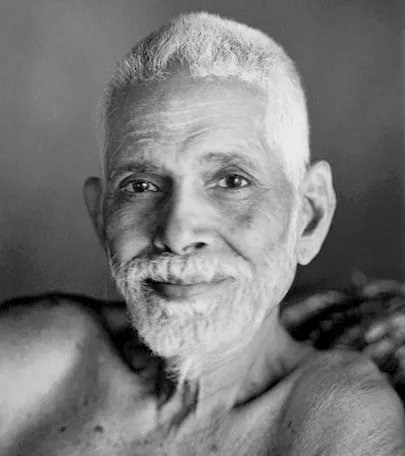
The Nature of Happiness: A Journey Within
Ramana Maharshi's assertion that "Everyone wants to be happy without interruption. That happiness is one's nature" invites us to explore the profound depths of our own existence. In this statement, he encapsulates a universal longing for unbroken joy, suggesting that such happiness is not merely a fleeting experience but an intrinsic aspect of our true selves. This exploration is vital, as it challenges us to reconsider our understanding of happiness and the often tumultuous paths we take in pursuit of it.
Delving deeper, Maharshi's words imply that the quest for happiness is not an external endeavor but rather an inward journey. The notion that happiness is our nature suggests that it is not something to be acquired or achieved through external circumstances, but rather something to be realized and embraced within. This perspective shifts the focus from seeking happiness in transient pleasures to recognizing it as a fundamental quality of our being, urging us to look beyond the distractions of the world and into the essence of who we are.
The image / the metaphor
The imagery in Maharshi's quote evokes a sense of continuity and permanence in happiness. The phrase "without interruption" suggests a state of being that is not subject to the fluctuations of life, where joy is not contingent upon external conditions. This idea resonates with the experience of a calm lake, undisturbed by the winds of change, reflecting the sky above in its tranquil surface. The verbs chosen—"wants" and "is"—indicate a yearning for something that is already inherent, highlighting the paradox of seeking what is already within us.
Going deeper into the metaphor, we can see that Maharshi's statement serves as a reminder of the duality of human experience. While we often associate happiness with external achievements or possessions, the metaphor suggests that true happiness is a state of being that transcends these externalities. It invites us to consider the possibility that our relentless pursuit of happiness may be misguided, leading us away from the realization of our own nature. Instead, it encourages us to cultivate an awareness of the stillness and contentment that lies within, waiting to be uncovered.
In the speaker's tradition
Ramana Maharshi's teachings are deeply rooted in the Advaita Vedanta tradition, which emphasizes the non-duality of the self and the ultimate reality. Concepts such as *dharma* (righteousness) and *bhakti* (devotion) play significant roles in understanding the nature of happiness as described by Maharshi. In this context, happiness is not merely an emotional state but a reflection of one's alignment with their true nature, which is inherently blissful and unchanging. The realization of this truth is akin to *kenosis*, the self-emptying that allows one to experience the fullness of existence beyond the ego's limitations.
In the *Upanishads*, a foundational text of Hindu philosophy, we find echoes of Maharshi's insights. The *Taittiriya Upanishad* speaks of *ananda* (bliss) as the ultimate reality, suggesting that true happiness arises from the recognition of our unity with the cosmos. This aligns with Maharshi's assertion that happiness is our nature, urging us to transcend the illusions of separation and embrace the interconnectedness of all beings. Such texts reinforce the idea that the pursuit of happiness is not a solitary endeavor but a journey toward recognizing our place within the greater tapestry of existence.
Living the teaching
Consider a modern scenario where an individual is caught in the relentless cycle of work and personal obligations, constantly striving for success and validation. This person may find themselves feeling unfulfilled despite achieving various milestones, illustrating the disconnect between external accomplishments and internal happiness. In this context, Maharshi's teaching serves as a poignant reminder that true contentment does not stem from accolades or material success, but from an inner recognition of one's inherent worth and the joy that arises from simply being.
In relationships, the application of this teaching can be equally transformative. Imagine a couple facing challenges, where one partner feels that their happiness is contingent upon the other's actions or approval. Maharshi's insight encourages both individuals to look within, recognizing that their happiness is not dependent on external validation but is a natural state that can be cultivated through self-awareness and acceptance. By fostering a deeper understanding of their own nature, they can create a more harmonious relationship, rooted in mutual support rather than conditional expectations.
A reflection
As we contemplate Ramana Maharshi's profound assertion, we are invited to reflect on the nature of our own happiness. Are we seeking joy in the external world, or are we willing to turn inward to discover the unbroken happiness that resides within us? In this moment of reflection, consider this question: What practices can I engage in to deepen my awareness of my true nature and cultivate the happiness that is my birthright?


