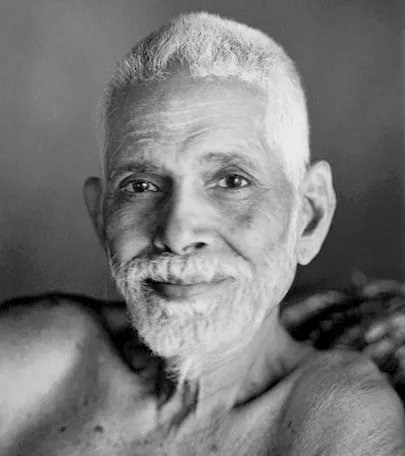
The Inner Quest for Happiness
Ramana Maharshi's assertion that "Happiness is your nature. It is not wrong to desire it. What is wrong is seeking it outside when it is inside" invites us to reconsider our understanding of happiness. He emphasizes that happiness is inherent to our being, suggesting that our pursuit of it often leads us astray when we look externally for fulfillment. This perspective is crucial in a world that frequently equates happiness with material success or external validation, urging us to turn inward to discover the true essence of joy.
In a society that often prioritizes external achievements and possessions, Maharshi's words resonate deeply. They challenge us to reflect on the nature of our desires and the sources from which we seek satisfaction. By recognizing that happiness is not a distant goal but rather an intrinsic part of who we are, we can begin to shift our focus from external pursuits to an inner exploration. This shift is not merely philosophical; it has profound implications for how we live our lives and relate to ourselves and others.
The image / the metaphor
The imagery in Maharshi's quote is striking in its simplicity yet profound in its implications. The notion that happiness is our "nature" evokes a sense of innate wholeness, suggesting that joy is not something to be acquired but rather a state of being that we can access. The verbs "desire" and "seeking" imply action, yet they also highlight a fundamental misunderstanding: the act of searching for happiness outside ourselves can lead to a perpetual cycle of dissatisfaction. This metaphor of seeking reflects our tendency to chase after fleeting pleasures, often overlooking the deeper, more enduring happiness that resides within.
In the speaker's tradition
Ramana Maharshi's teachings are deeply rooted in the Advaita Vedanta tradition, which emphasizes non-duality and the interconnectedness of all existence. Concepts such as *dharma* (righteous duty) and *kenosis* (self-emptying) resonate with his assertion that true happiness arises from within. In this context, the pursuit of external happiness is often seen as a distraction from our spiritual path, which calls for a return to the self, or *Atman*. Maharshi's insights align with the idea of *sunyata* (emptiness) in Buddhism, where the realization of one's true nature leads to liberation from suffering.
In the *Upanishads*, ancient texts that explore the nature of reality and the self, we find echoes of Maharshi's wisdom. The *Chandogya Upanishad* states, "That which is the essence of all beings, that is the essence of you." This profound realization underscores the idea that our search for happiness must begin with an understanding of our true nature. By turning inward and recognizing our inherent connection to the universe, we can access the happiness that is our birthright.
Living the teaching
Consider a modern scenario where this teaching can be applied: a person who feels unfulfilled in their career may constantly seek validation through promotions, accolades, or material success. Despite achieving these external markers of success, they may still feel a sense of emptiness. By reflecting on Maharshi's words, this individual might begin to explore their passions and interests, recognizing that true fulfillment comes from aligning their work with their inner values and purpose, rather than chasing external validation.
In the realm of relationships, Maharshi's teaching can also provide valuable insight. Imagine a couple facing challenges in their relationship, each partner seeking happiness through the other's actions or approval. This external dependency can lead to resentment and disappointment. By embracing the understanding that happiness is an internal state, each partner can learn to cultivate their own joy and fulfillment, ultimately enriching the relationship. This shift encourages a healthier dynamic, where love and support flourish not from neediness but from a place of wholeness.
A reflection
As we contemplate Maharshi's profound statement, we are invited to ask ourselves: "In what ways am I seeking happiness outside of myself, and how can I begin to turn inward to discover the joy that is already within me?" This question encourages a deep exploration of our motivations and desires, prompting us to examine the sources of our happiness. By engaging with this inquiry, we can begin to unravel the layers of external expectations and societal pressures, ultimately leading us to a more authentic and fulfilling experience of life.


