The Dance of Impermanence: Embracing Life's Cycles
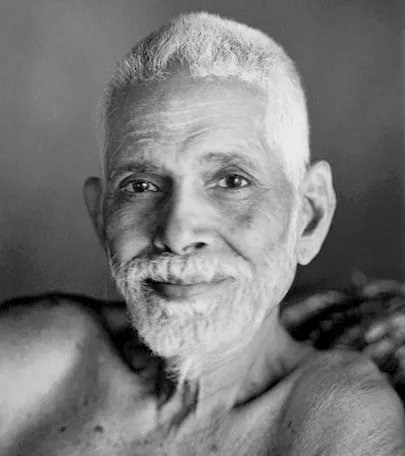
Ramana Maharshi's assertion, "If anything has a beginning, it must end," invites us to confront the fundamental nature of existence. This statement serves as a poignant reminder that all phenomena, whether they be experiences, relationships, or even our own lives, are transient. Understanding this truth is not merely an intellectual exercise; it is a profound realization that can shape our approach to life, urging us to embrace the present moment with both gratitude and acceptance.
In a world often characterized by the pursuit of permanence—be it in our careers, possessions, or emotional states—Maharshi's words challenge us to reconsider our attachments. The inevitability of endings can evoke fear, yet it also opens the door to liberation. By recognizing the fleeting nature of all things, we can cultivate a deeper appreciation for the beauty of the present, allowing us to live more fully and authentically. This contemplation of impermanence is not merely a philosophical stance; it is a call to engage with life in a way that honors its transient beauty.
The image / the metaphor
The imagery embedded in Maharshi's quote evokes a natural cycle, reminiscent of the seasons that shift from birth to decay. The verbs "has" and "must" suggest a certainty, a law of nature that governs all existence. This inevitability resonates deeply within us, as we witness the unfolding of life around us—the blooming of flowers, the aging of loved ones, and the passage of time itself. Each beginning, whether it be the dawn of a new day or the inception of a relationship, carries within it the seed of its own conclusion.
Diving deeper into the metaphor, we can see that beginnings and endings are not merely opposites but are intrinsically linked, like the yin and yang of existence. The beauty of a sunset, for instance, is heightened by the knowledge that it will give way to night. In this way, Maharshi's quote invites us to appreciate the full spectrum of life, recognizing that endings are not to be feared but embraced as integral parts of our journey. Each ending paves the way for new beginnings, creating a continuous cycle of growth and transformation.
In the speaker's tradition
Within the context of Hindu philosophy, Ramana Maharshi's teaching aligns closely with the concept of impermanence, or "anitya." This principle is foundational in many spiritual traditions, emphasizing that all conditioned phenomena are transient. The notion of dharma, or the natural order of things, also plays a crucial role here, suggesting that acceptance of impermanence is essential for living in harmony with the universe. Maharshi's insights encourage us to cultivate a sense of detachment, akin to the practice of "bhakti," or devotion, which allows us to engage with life while remaining aware of its ephemeral nature.
In texts such as the Bhagavad Gita, we find echoes of this teaching, particularly in Krishna's discourse on the eternal soul, which transcends the physical body and its inevitable demise. The Gita reminds us that while the material world is subject to change, the essence of our being remains constant. This duality of the transient and the eternal is a central theme in Maharshi's philosophy, urging us to seek the deeper truths that lie beyond the surface of our experiences.
Living the teaching
Consider a modern scenario where this teaching resonates: the experience of a job loss. In the moment, it may feel like a devastating end, yet it can also serve as a catalyst for new opportunities and growth. By embracing the impermanence of our professional lives, we can learn to navigate such transitions with grace, understanding that every ending can lead to a new beginning. This perspective allows us to approach change not with fear, but with curiosity and openness, fostering resilience in the face of uncertainty.
Similarly, in relationships, the awareness of impermanence can transform how we engage with others. When we recognize that every moment shared is fleeting, we may find ourselves more present and appreciative of our connections. This understanding can deepen our capacity for love and compassion, encouraging us to express our feelings openly and to cherish the time we have with those we care about. In this way, Maharshi's teaching becomes a guiding principle, reminding us to live fully in each moment, aware of its transient beauty.
A reflection
As we contemplate Ramana Maharshi's profound insight, we are invited to reflect on our own lives: What attachments or fears do we hold that prevent us from embracing the impermanence of existence? In recognizing the transient nature of all things, how might we shift our perspective to appreciate the present moment more fully? This inquiry can lead us to a deeper understanding of ourselves and our place within the ever-changing tapestry of life.


