The World Within: Understanding the Mind's Role in Perception
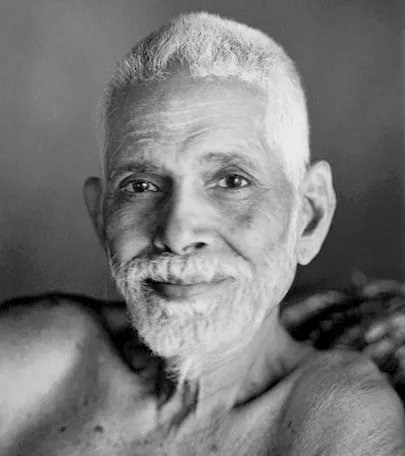
Ramana Maharshi's assertion, "If there is no mind, there is no world," invites us to contemplate the intricate relationship between consciousness and reality. This statement suggests that our perception of the world is inextricably linked to the workings of the mind. If we strip away the layers of thought and perception, what remains? The implications of this inquiry are profound, as they challenge our understanding of existence and the nature of reality itself.
At its core, Maharshi's quote serves as a reminder of the subjective nature of our experiences. The world we inhabit is not merely a collection of objects and events; it is a tapestry woven from our thoughts, beliefs, and interpretations. By recognizing that the mind shapes our reality, we are invited to explore the depths of our consciousness and the ways in which it colors our perceptions. This exploration can lead to a transformative understanding of both ourselves and the world around us.
The image / the metaphor
The imagery in Maharshi's quote evokes a sense of introspection and inquiry. The phrase "no mind" suggests a state of pure awareness, a condition where thoughts and distractions dissolve, leaving behind a pristine consciousness. The verb "is" implies a fundamental connection between mind and world, indicating that our reality is contingent upon our mental processes. This relationship invites us to consider how our thoughts construct the very fabric of our experiences, shaping our interactions with the world.
Diving deeper into the metaphor, we can see that Maharshi is not merely discussing the absence of thought but rather pointing to a state of being that transcends the ordinary workings of the mind. In this state, one might experience a profound stillness, a quietude that allows for a clearer perception of reality. This stillness can be likened to the surface of a lake, undisturbed and reflective, revealing the depths beneath. In this way, the quote serves as an invitation to explore the nature of consciousness itself, encouraging us to seek the still waters of awareness beyond the turbulent waves of thought.
In the speaker's tradition
Ramana Maharshi's teachings are deeply rooted in the Advaita Vedanta tradition, which emphasizes non-duality and the unity of the self with the ultimate reality, Brahman. Concepts such as *maya* (illusion) and *samsara* (the cycle of birth and rebirth) are central to understanding the implications of his statement. In this context, the mind is often viewed as a veil that obscures the true nature of existence. By recognizing the illusory nature of the mind, one can begin to pierce through the layers of perception and experience the world as it truly is.
A relevant text that echoes this sentiment is the *Upanishads*, which explore the nature of reality and the self. In the *Mandukya Upanishad*, for instance, the distinction between the waking state, dream state, and deep sleep illustrates the varying levels of consciousness and their impact on our perception of reality. Maharshi's quote aligns with these teachings, suggesting that the mind's fluctuations create a distorted view of the world, and that liberation lies in transcending these fluctuations to experience the underlying unity of existence.
Living the teaching
Consider a modern scenario where this teaching might resonate: a person navigating the chaos of daily life, overwhelmed by responsibilities and distractions. In such moments, the mind can become a whirlwind of thoughts, fears, and desires, distorting one's perception of reality. By recognizing that these mental constructs shape their experience, the individual can begin to cultivate mindfulness, allowing them to step back from the chaos and observe their thoughts without attachment. This practice can lead to a greater sense of clarity and peace, revealing that the world is not as chaotic as it seems when viewed through the lens of a quiet mind.
In the context of relationships, Maharshi's teaching can illuminate the dynamics between individuals. When conflicts arise, it is often the mind's interpretations and judgments that fuel misunderstandings. By applying the principle that "if there is no mind, there is no world," one can approach conflicts with a sense of detachment, recognizing that their perceptions may be clouded by personal biases. This awareness can foster compassion and understanding, allowing for deeper connections and a more harmonious coexistence.
A reflection
As we contemplate Maharshi's profound statement, we are invited to reflect on the nature of our own minds and the worlds we create through our perceptions. What would it mean for you to experience a moment without the interference of thought? In what ways might your understanding of reality shift if you were to quiet the mind and observe the world with fresh eyes? This inquiry can serve as a powerful contemplative practice, guiding us toward a deeper understanding of ourselves and the nature of existence.


