Tracing the Source of Thought: A Journey Within
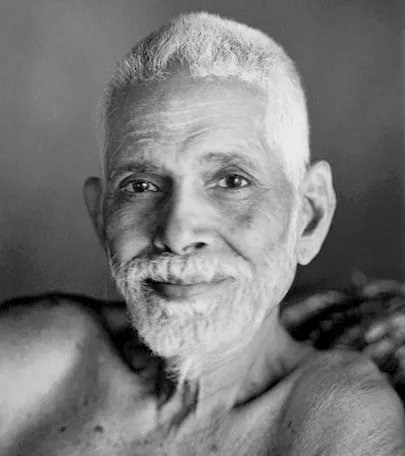
Ramana Maharshi's profound insight, "If thoughts arise, do not pursue them. Trace them to the source," invites us to engage in a deep inquiry into the nature of our minds. This quote emphasizes the importance of self-inquiry, urging us to recognize that thoughts are transient phenomena that can lead us astray if we chase after them. Instead, Maharshi encourages us to turn our attention inward, seeking the origin of these thoughts, which ultimately leads us to a deeper understanding of our true selves.
In a world where distractions abound and the mind often races with incessant chatter, this teaching becomes particularly relevant. The act of tracing thoughts back to their source is not merely an intellectual exercise; it is a transformative practice that can liberate us from the cycles of suffering and confusion. By learning to observe our thoughts without attachment, we cultivate a sense of inner peace and clarity, allowing us to navigate life's complexities with greater wisdom and compassion.
The image / the metaphor
The imagery in Maharshi's quote evokes a sense of exploration and discovery. The verbs "arise" and "pursue" suggest a dynamic interplay between the mind and its contents. When thoughts arise, they can be likened to clouds passing through the sky of our consciousness. If we chase after them, we become entangled in their fleeting nature, losing sight of the vastness of the sky itself. However, by tracing them to their source, we shift our focus from the transient to the eternal, from the surface of the mind to the depths of our being.
Delving deeper into this metaphor, we can see that tracing thoughts to their source is akin to following a river back to its spring. Just as a river may meander through various landscapes, our thoughts can take us on winding paths filled with distractions and illusions. Yet, if we are willing to embark on the journey inward, we may discover the pure, untainted source of our thoughts—a wellspring of consciousness that is both profound and serene. This journey invites us to cultivate a sense of curiosity and openness, allowing us to explore the depths of our own minds with compassion and understanding.
In the speaker's tradition
Ramana Maharshi's teachings are deeply rooted in the Advaita Vedanta tradition, which emphasizes the non-duality of the self and the ultimate reality. Concepts such as *dharma* (righteousness), *kenosis* (self-emptying), and *sunyata* (emptiness) resonate with his call to trace thoughts back to their source. In this context, the practice of self-inquiry becomes a means of realizing the true nature of the self, which is often obscured by the incessant fluctuations of the mind. Maharshi's approach aligns with the idea of *prajna*, or wisdom, which arises when we transcend the dualistic nature of thought and experience the unity of existence.
In the *Upanishads*, a foundational text of Hindu philosophy, we find similar sentiments expressed in the quest for self-knowledge. The *Chandogya Upanishad* states, "In the beginning, there was the One without a second." This echoes Maharshi's teaching that by tracing our thoughts to their source, we ultimately arrive at the realization of our oneness with the universe. The journey of self-inquiry is not merely a personal endeavor; it is a path that leads us to the recognition of our interconnectedness with all beings.
Living the teaching
Consider a modern scenario where this teaching can be applied: imagine sitting in a meeting at work, where a flurry of thoughts arises—concerns about performance, fears of judgment, and distractions from the task at hand. Instead of getting swept away by these thoughts, one can pause and practice tracing them back to their source. By recognizing that these thoughts stem from a desire for approval or fear of failure, we can cultivate a sense of detachment and clarity, allowing us to engage more authentically and effectively in the present moment.
In the realm of relationships, this teaching can also be transformative. When conflicts arise with loved ones, it is easy to become entangled in a web of reactive thoughts and emotions. By applying Maharshi's guidance, we can take a step back and inquire into the source of our feelings—perhaps insecurity, fear, or past experiences. This practice not only fosters deeper understanding and compassion for ourselves but also opens the door to more meaningful and harmonious connections with others. By tracing our thoughts to their source, we create space for healing and growth in our relationships.
A reflection
As we contemplate Ramana Maharshi's profound teaching, we are invited to engage in a reflective inquiry: What thoughts arise in my mind that distract me from my true self? By exploring this question, we can begin to uncover the layers of conditioning and belief that shape our experiences. In this process of self-inquiry, we may find that the journey inward is not only a path to understanding our thoughts but also a gateway to experiencing the boundless nature of our being.


