The Vanishing of the I: A Journey into Self-Enquiry
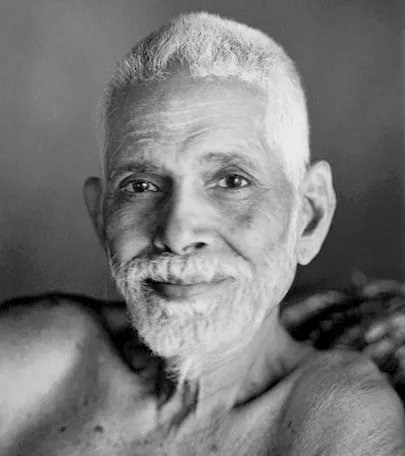
Ramana Maharshi's assertion that "If you make your vichara (Self-enquiry) continuous and intense, all other thoughts will be destroyed and finally the I-thought itself will vanish" invites us into a profound exploration of the self. In essence, he is suggesting that through relentless self-inquiry, we can dismantle the myriad distractions of the mind and ultimately dissolve the very notion of a separate self. This teaching is not merely an intellectual exercise; it is a call to engage deeply with our inner landscape, to confront the illusions that bind us, and to discover the freedom that lies beyond the confines of ego.
In a world rife with distractions and superficial engagements, Maharshi's words resonate with urgency. The continuous and intense practice of vichara is not just a technique; it is a transformative journey that leads us to the heart of our being. By focusing our attention inward, we can peel away the layers of conditioned thought and belief that obscure our true nature. This process is both liberating and daunting, as it requires us to confront the very essence of who we think we are, ultimately leading us to a state of profound peace and understanding.
The image / the metaphor
The imagery in Maharshi's quote evokes a sense of a relentless pursuit, a deep dive into the ocean of consciousness where the waves of thought crash and recede. The verbs "make" and "destroy" imply an active engagement with the mind, suggesting that self-inquiry is not a passive observation but a vigorous, almost combative act against the incessant chatter of the ego. The "I-thought" represents the core of our individual identity, the sense of self that we cling to, and its vanishing signifies a radical shift in perception—a return to the unconditioned state of being.
In the speaker's tradition
Ramana Maharshi's teaching is deeply rooted in the Advaita Vedanta tradition, which emphasizes non-duality and the realization of the self as one with the ultimate reality, Brahman. Concepts such as dharma, the moral order of the universe, and prajna, or wisdom, are integral to understanding the context of his teachings. Vichara serves as a means of aligning oneself with one's dharma, as it encourages individuals to seek their true nature and live in accordance with the universal truth that transcends individual existence.
In the context of other spiritual texts, we can draw parallels with the teachings found in the Upanishads, where the inquiry into "Who am I?" is a central theme. The Mandukya Upanishad, for instance, explores the nature of consciousness and the self, echoing Maharshi's call for self-inquiry as a path to liberation. This inquiry is not merely an intellectual pursuit but a profound engagement with the essence of existence, leading to the realization of sunyata, or emptiness, where the distinctions between self and other dissolve.
Living the teaching
Consider a modern scenario where an individual feels overwhelmed by the demands of daily life—work pressures, family obligations, and societal expectations. In such moments, the practice of vichara can serve as a refuge. By turning inward and asking oneself, "Who is experiencing this stress?" one begins to peel back the layers of identification with thoughts and emotions. This simple yet profound inquiry can shift the focus from external chaos to internal clarity, allowing for a more grounded and centered response to life's challenges.
In the context of relationships, the practice of self-inquiry can transform how we engage with others. When conflicts arise, instead of reacting with defensiveness or blame, one might pause and reflect on the underlying "I-thought" that fuels such reactions. By asking, "What part of me feels threatened?" or "What belief is being challenged?" we can cultivate a deeper understanding of ourselves and, consequently, a more compassionate approach to our interactions. This practice not only fosters personal growth but also nurtures healthier, more authentic relationships.
A reflection
As we contemplate Maharshi's profound teaching, we are invited to reflect on the nature of our own thoughts and the identities we cling to. What would it mean for us to engage in continuous and intense self-inquiry? In what ways might our lives transform if we allowed the "I-thought" to dissolve, revealing the interconnectedness of all beings? These questions serve as a guiding light on our journey toward self-discovery and liberation, urging us to delve deeper into the essence of who we truly are.


